
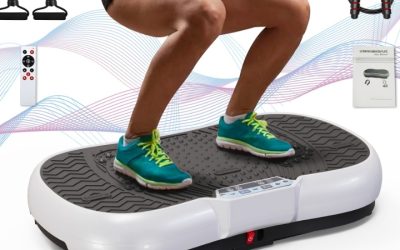
A vibration plate is roughly the size of a bathroom scale that ate a subwoofer. Most measure somewhere around 26 to 30 inches wide and 15 to 18 deep, weigh between 25 and 50 pounds, and trail a power cord. That is small enough to seem harmless when you order it and awkward enough to become a problem once it arrives, because unlike a treadmill it has no obvious home. It is too heavy to move casually, too ugly to leave in a sitting room, and too flat to store on a shelf.
Where it ends up living decides whether it gets used. A plate slid under a bed gets forgotten. One standing on end in a closet requires a two-handed lift each session, which is enough friction to kill a routine. One left out in a bedroom corner on a mat gets stepped on daily. This comparison looks at the six options through that lens: real footprint, weight, whether they store vertically, cord management, and how much visual presence each one carries in a room you also have to live in.
Our top picks


As an Amazon Associate we earn from qualifying purchases at no extra cost to you.
Quick Comparison
| Product | Best For | Standout Feature | Watch Out For |
|---|---|---|---|
| MERACH CV30 Pro Curved | Leaving out in a bedroom or study | Tidy curved shell that reads as furniture | Curve makes vertical storage unstable |
| 130-Level Vibration Plate | Compact spaces and under-bed storage | Slim profile with a low overall height | Small deck limits floor exercise options |
| Lifepro Waver | A dedicated corner with band anchors | Bands stow on the unit rather than loose | Band clutter looks messy if left out |
| SEDOZIK Vibration Plate | Homes wanting remote-controlled simplicity | No console clutter, controls travel with you | Remote is easily lost in a tidy household |
| HVX Vibration Platform | Garage or basement home gyms | Wide deck for full exercise positions | Largest footprint and hardest to relocate |
| Renoj 3D Vibration Platform | Sliding into tight gaps between uses | Manageable weight for regular moving | Lighter build wanders slightly on hard floors |
How to Choose
- Measure the used area, not the unit: You need the plate plus about two feet in front to step on and off safely, and clearance overhead if you plan to stand upright with arms raised. Tape it out before you order.
- Check the height under your bed: Most plates stand around 5 to 7 inches tall. Standard bed frames give 7 to 12 inches of clearance, so under-bed storage is usually possible but often tighter than people assume.
- Weigh the lift honestly: A 40-pound unit that must be hauled out of a closet each time will be used less than a 30-pound unit that lives on a mat in the corner. Convenience beats specification almost every time.
- Plan the cord route: These need mains power. A cord crossing a walkway is both a trip hazard and a visual annoyance, so choose a spot within a few feet of an outlet rather than running an extension across the room.
- Put a mat down permanently: A dark rubber mat defines the space, protects the floor from indentation, damps vibration, and makes the setup look intentional rather than like equipment abandoned mid-room.
Top Picks Reviewed
Best Looking Left Out: MERACH CV30 Pro Curved
The curved shell and clean finish are the least clinical of the group, which sounds trivial until you realize the alternative is a black rectangle in the corner of a bedroom for the next three years. The quiet motor supports leaving it in a living space too.
The curved underside means it does not stand reliably on end. If your plan was vertical closet storage, this is the wrong shape for it.
Smallest Footprint: 130-Level Vibration Plate
A slim, low-profile design that genuinely slides under most bed frames, and light enough to pull out one-handed. For a small apartment this is the practical answer.
The compact deck limits what you can do on it. Wide squat stances and kneeling positions feel cramped, so it suits standing work and calf raises better than a full routine.
Best Organized Setup: Lifepro Waver
The bands stow with the unit, which keeps a set of straps from ending up tangled in a drawer. Set up in a corner with a mat, it forms a tidy, self-contained little station.
Left out with the bands attached, it looks like gym equipment in a way the sleeker units do not. Fine in a spare room, less so in a living area.
Cleanest Controls: SEDOZIK Vibration Plate
No fussy console, no reaching down mid-session. The handheld remote keeps the unit itself visually simple, which helps when it lives somewhere visible.
Small remotes disappear into sofa cushions and drawers. Tape a hook to the wall by the mat or you will spend more time hunting than exercising.
Best Dedicated Gym Piece: HVX Vibration Platform
If you have a garage or basement gym, the wide 450-pound-rated deck gives room for planks, kneeling work and proper squat stances that narrower plates cannot support.
It is big and heavy, and moving it up a flight of stairs is a two-person job. Decide where it lives before it arrives, because you will not casually reposition it.
Easiest to Move: Renoj 3D Vibration Platform
Light enough to lift with one hand and slide into a gap beside a wardrobe, which makes it realistic for a room that must serve other purposes during the day.
Lower mass means it can creep slightly on smooth hard floors at higher speeds. A rubber mat solves this and should be considered part of the purchase.
Frequently Asked Questions
How much floor space do I really need?
Plan on roughly a 3-by-5-foot zone including step-on space, and make sure you can stand fully upright with arms overhead if you want to use it for stretching.
Can a vibration plate damage flooring?
Sustained vibration can loosen floating floor joints over time and the feet can leave marks on soft wood or vinyl. A dense rubber mat prevents both issues completely.
Do these need to stay plugged in?
Yes, all of these run on mains power. Unplugging between sessions is safer and costs you only a few seconds, but it does mean the outlet location dictates placement.
Is it safe to store one on its side?
Many can be stood upright against a wall, but the motor and internal mounts are designed to sit flat. If you store it vertically, secure it so it cannot topple, especially around children.
Final Thoughts
Choose based on where the plate will physically live, because that decision drives usage more than any feature. A slim unit that slides under the bed suits a small flat; a tidy-looking curved model earns a permanent corner in a room you actually use; a wide heavy platform belongs in a dedicated gym space. Buy the mat at the same time and give it a proper home from day one.


Write Your Review
No reviews yet. Be the first to share your experience!