
Key takeaways
- Target Use Body Part: Ankle, Wrist
- Target Audience: men, teenager, women
- Specific Uses For Product: Physical Therapy, Strength Training
Ankle weights are cheap enough that most people skip the arithmetic, which is exactly how households end up owning four pairs that cover three useful loads. The smarter way to think about the purchase is total cost across the whole progression you expect to make. One adjustable cuff spanning 2 to 10 lb per pair replaces roughly four fixed sets. One half-pound fixed cuff costs very little, but if you need 0.5, 1, 2 and 3 lb to build a proper ladder, you have quietly bought four items.
The second half of the math is lifespan. A cuff used three times a week for two years sees around three hundred sessions, and the per-session cost of even a mid-priced adjustable pair lands well under a nickel. A cheap set that gives up after four months does not. So the question is not which listing costs least today — it is which combination of load coverage and durability gets you through your next two years of training without a repeat purchase. The options below are compared on exactly that.
Our top picks
 Sportneer Adjustable Ankle Weights
- Target Use Body Part: Ankle, Wrist
- Target Audience: men, teenager, women
- Specific Uses For Product: Physical Therapy, Strength Training
 BAGAIL Ankle Wrist Weights for Women &
- Target Use Body Part: Ankle, Arm, Legs, Wrist
- Product Style: 2 Lb Pair (1 Lb Each)
- Material: Lycra-SBR Fabric, iron sand


 Ankle Weights for Women
- Target Use Body Part: Ankle
- Recommended Uses For Product: Gym, Gymnas, Strength Training
- Product Style: 4Lbs Pair (2lb x 2) - Blue
As an Amazon Associate we earn from qualifying purchases at no extra cost to you.
Quick Comparison
| Product | Best For | Standout Feature | Watch Out For |
|---|---|---|---|
| Sportneer Adjustable Ankle Weights (2–10 lb Pair) | Replacing several fixed pairs at once | One purchase covers roughly four useful loads | Overkill if you only ever want a light cuff |
| BAGAIL Ankle & Wrist Weights, Set of 2 | Lowest entry cost | Buy exactly the weight you need, nothing more | Every progression step is another purchase |
| Amazon Basics Adjustable Ankle Weights | Testing the habit before committing | Cheapest route to finding out if you will use them | Not the pair you keep for five years |
| Sportneer Removable-Weight Cuff | Two people sharing one budget | Splits into two lighter pairs for household use | Only worth it if both people actually train |
| Sportneer Neoprene Adjustable Pair | Comfort you will not abandon | Soft face keeps sessions from being cut short | Slower to dry, which shortens life if stored damp |
| Adjustable Ankle Weights, 1–20 lb Pair | Best long-run cost per pound | Load ladder from 1 lb to 20 lb in one buy | You pay upfront for range you may never reach |
How to Choose
- Loads you will actually use: Write down the three settings you expect to train at. If they span more than a few pounds, adjustable wins on price before you consider anything else.
- Sessions per week: Three or more sessions weekly justifies buying up a tier. Once a week, a basic pair is fine and the durability premium never pays back.
- Number of users: A cuff that splits into two lighter pairs serves two people for one price, which halves the effective cost immediately.
- Replacement likelihood: Sealed fill and thin closures set a ceiling on lifespan. Factor a probable second purchase into the cheap option’s real price.
- Resale of unused range: Load capacity you never touch is money parked. Only buy to 20 lb if your programme has a plausible route there.
Top Picks Reviewed
Best Cost Per Load: Sportneer Adjustable Ankle Weights
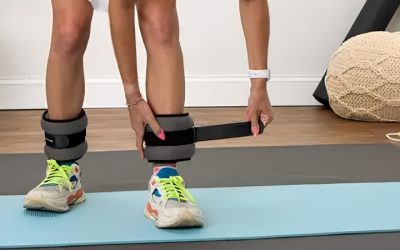
Because the metal bars lift out of the sewn channels, one purchase behaves like a small rack of fixed cuffs spanning roughly 2 to 10 lb per pair. Priced against buying separate 2, 4, 6 and 8 lb sets, the adjustable cuff usually wins outright, and it wins again on storage since you are keeping one item rather than four.
Where the math turns against it is at the very light end. If your entire use case is a one-pound cuff for walking, you are paying for adjustability you will never touch, and a plain fixed pair does the job for less.
Lowest Entry Price: BAGAIL Ankle and Wrist Weights
Sold individually from 0.5 lb through 5 lb, this is the cheapest way to own exactly one correct load. For someone with a specific, stable use — light rehab work, a fixed pilates routine — buying precisely what the routine calls for is genuinely efficient.
The limitation is the progression tax. Each time the current weight becomes easy, the fix is another purchase, and three or four purchases later you have spent more than one adjustable set while owning a drawer full of cuffs.
Best Trial Purchase: Amazon Basics Adjustable Ankle Weights
Roughly half of all home fitness gear is used for under a month, and there is no shame in hedging against that. A plain wrap cuff with a straightforward closure costs little enough that abandoning it is not a financial event, and it tells you whether ankle work suits your routine.
Judge it on that basis rather than as a lifetime item. Padding and closure quality are adequate rather than plush, and heavy weekly use will show on the hook-and-loop face within a year.
Best Long-Term Range: Adjustable Ankle Weights, 1–20 lb Pair
Stepping through 4, 5, 6, 8, 10, 12, 15 and 20 lb per pair, this ladder is priced as one item but functions as most of a progression plan. Measured as cost per pound of usable load, nothing else here comes close.
The catch is that you are prepaying for headroom. Plenty of people never train above 6 lb per ankle, and for them the upper half of the ladder is a stack of bars in a drawer. Be honest about your trajectory before buying range on speculation.
Frequently Asked Questions
How many loads do I really need?
Three is usually enough: a light setting for walking and warm-ups, a working setting for hip and glute exercises, and one step above it to progress into. Anything more than that tends to gather dust.
Are adjustable cuffs worth the premium over fixed?
If you expect to get stronger, yes — the premium is smaller than the price of the second and third fixed pair you would otherwise buy. If your load is fixed by a routine or by a clinician’s instructions, no.
How long should a decent pair last?
With three sessions a week and reasonable care, several years of use is realistic for a bar-and-channel cuff. Sealed cheap cuffs more often show closure slippage inside a year of that same schedule.
Does buying two lighter pairs beat one heavy pair?
Sometimes. Two light cuffs can be worn together for a heavier load and split between two people, which is flexible. But two sets means two closures to maintain and twice the storage, so the advantage is smaller than it looks.
Final Thoughts
Run the numbers over two years rather than over one checkout. For most households that points to a single adjustable cuff — the Sportneer pair if your ceiling is around 10 lb, the wider 1–20 lb ladder if you have real ambitions — with a cheap fixed BAGAIL or Amazon Basics cuff making sense only when the load requirement is genuinely fixed. Buying the range you will use, and no more, is where the savings actually live.
Write Your Review
No reviews yet. Be the first to share your experience!