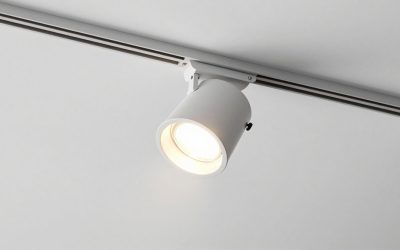
Most rooms fail on light before they fail on furniture. A single ceiling fixture throws one flat wash from one direction, which flattens texture, drops shadows in the wrong places, and leaves the parts of a room you actually use — the counter, the reading chair, the wall you hung art on — dimmer than the ceiling above them. Buyers usually discover this after everything else is chosen, when the sofa looks grey at night and the kitchen island feels like a workbench. Track lighting is the correction: several small, aimable sources on one circuit, positioned where the light needs to land rather than where the junction box happens to be.
The catch is that track systems are sold as hardware and lived with as atmosphere. Beam angle, color temperature, color rendering, and head count decide whether a room reads warm and layered or clinical and patchy — and none of that is obvious from a product photo. This guide walks through the specs that shape mood, then reviews the systems worth installing in 2026, from long 13-foot runs for open kitchens to flexible curved track for awkward ceilings and low-voltage accent kits for gallery walls.
Our top picks

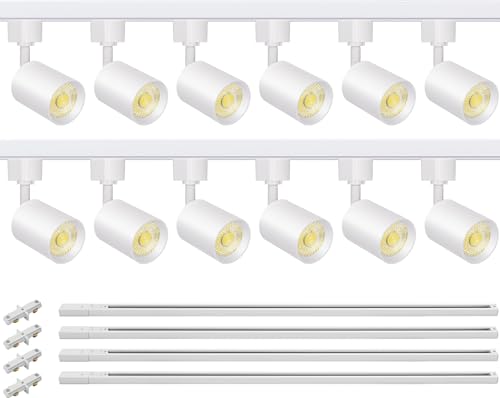 VANoopee 12-Light LED Track Lighting Kit with
12 track heads cover a long 13-foot run in one kit
CRI of 90+ renders colors accurately for display lighting
Backed by a 3-year warranty and 40,000-hour rated lifespan
Installation requires hardwiring rather than a simple plug-in
Full 12-head kit is heavier and bulkier than single fixtures


As an Amazon Associate we earn from qualifying purchases at no extra cost to you.
🛒 Best Price Today on Amazon
Prime members get fast, free shipping on everything above, plus member-only deals. New members get a 30-day free trial — cancel anytime.
How to Choose a/an Track Lighting Systems (2026)
- Beam angle first, brightness second: A 24° focused beam sculpts — it pools light on a countertop or painting and leaves the surrounding wall softer, which is what makes a room feel designed. Wider 40°+ beams wash evenly but flatten. Mix them if your track allows swapping heads.
- Color temperature and switchability: 3000K is the safe living-space warm white; 4000K suits task-heavy kitchens; 5000K+ belongs in garages and studios. Selectable 3CCT heads let you audition all three after installation instead of guessing from a listing.
- CRI 90 or better, non-negotiable: Below CRI 90, wood grain goes muddy, upholstery loses saturation, and skin tones turn sallow. High CRI is the single cheapest upgrade to how expensive a room looks.
- Track type and length: H-type is the most widely stocked standard in North America, so heads and connectors stay easy to source. Measure your run and add a head roughly every 24–30 inches for even coverage without visible scallops.
- Dimming compatibility: Confirm the heads are dimmable and pair them with a matched LED dimmer. Buzzing, flicker, and dropout at low levels almost always come from a mismatched driver-and-dimmer pairing, not the fixture itself.
The Best Track Lighting Systems (2026)s Reviewed
White H Type 8-Light System with Three 3.3 FT Rails
The most versatile pick here: three short rails let you break a run into segments or turn a corner, and the 3CCT heads mean you can settle on 3000K in a living room and 4000K over a prep zone using the same kit. At 800 lumens per head with CRI 90+ and a tight 24° beam, it lights objects rather than ceilings.
VANoopee 12-Light 13FT Kit (White, 3000K)
Built for long spans — galley kitchens, hallways, open-plan living edges — where twelve heads across 13 feet give you enough sources to light task areas and accent walls independently. The fixed 3000K is a deliberate choice, and the right one for spaces that need to feel warm after dark.
VANoopee 5-Color 12-Light 13FT Kit (Black)
The black finish disappears against dark ceilings and reads as intentional against white ones, which matters when twelve heads are visible from every seat in the room. Same 800-lumen, CRI 90+ engine as the white version with broader color options, making it the stronger choice for moodier, contrast-driven interiors.
Catalina Lighting 6-Light Flex Track, 96″ Brushed Nickel
Flex track is the answer to ceilings that refuse to cooperate — bay windows, angled walls, curved seating areas — because you shape the 96-inch run to follow the architecture. Integrated LEDs keep the heads compact, and brushed nickel sits comfortably with most contemporary hardware.
Tiella 800CBL5PN-LED Low-Voltage Accent Kit
A specialist tool: low-voltage surface track designed for genuine accent work, with a nickel finish and a smaller visual footprint than line-voltage systems. Use it over artwork, shelving, or a bar back where you want precise pools of light and minimal hardware in the sightline.
Frequently Asked Questions
How many heads do I actually need?
Plan one head per 24–30 inches of track for general coverage, then add heads where you have specific targets — artwork, a sink, a reading chair. Fewer heads spaced widely produce visible bright-and-dark scalloping on walls.
Can I install track lighting myself?
If you are replacing an existing ceiling fixture on the same circuit, many kits mount to the existing box with a floating canopy. Anything involving new wiring, a new circuit, or a dimmer swap in older wiring should go to a licensed electrician.
Why does my LED track flicker when dimmed?
Almost always a dimmer mismatch. Standard incandescent dimmers do not handle LED drivers well at low output; a CL-rated or manufacturer-specified LED dimmer usually resolves flicker and low-end dropout.
Is 3000K or 4000K better for a kitchen?
4000K gives crisper contrast for chopping and reading labels, but can feel cold in an open kitchen that flows into a living area. Selectable-CCT heads let you run 4000K over the work zone and 3000K everywhere else on the same track.
Final Thoughts
For most homes, the White H Type 8-Light System with three short rails is the best starting point — selectable color temperature and segmentable track make it forgiving of layout mistakes. Long open-plan spaces are better served by the VANoopee 12-Light 13FT kit in white or black, and if your ceiling has curves or angles to negotiate, the Catalina 6-Light Flex Track shapes to fit where rigid rails cannot.