
Our Top Picks


The Short Answer
The best table lamp for a living room is one that is the right height for the table and seating it sits beside, gives off soft, warm light from a shade that diffuses the bulb, and looks like it belongs with the other materials in the room. As a starting rule, the bottom of the shade should land roughly at seated eye level so you never stare into the bulb. Use a bulb that stays within the wattage the socket is marked for, aim for a warm color temperature in the range often described as 2700K, and put lamps in pairs or at different points around the room so light comes from several places rather than one overhead fixture.
This guide explains lamp types and materials, how to size and place them, bulb and dimming choices, setup and cord management, care, safety rules, and the mistakes that most often make a living room feel dim or awkward.
Table of Contents
- What a living room lamp needs to do
- Types of table lamps
- Shade materials and shapes
- Size and proportion
- Bulbs, brightness and color
- Placement and layout
- Setup, cords and switches
- Care and cleaning
- Safety rules
- Common mistakes
- Who should choose what
- Buying checklist
- Frequently asked questions
What a Living Room Lamp Needs to Do
A living room serves several purposes at once: conversation, television, reading, board games, and often a place to work on a laptop. A ceiling fixture alone cannot do all of that well, because it lights the room evenly from above and flattens everything. Table lamps add pools of light at a lower height, which is easier on the eyes in the evening and makes faces and furniture look warmer.
Lighting designers often talk about three layers. Ambient light fills the room, task light helps with specific activities, and accent light adds interest. Table lamps usually cover the ambient and task layers together, and with the right shade can also provide a decorative glow. Plan for at least two or three lamp positions in a typical living room so that you can switch off the ceiling light and still see comfortably.
Types of Table Lamps
Table lamps are defined largely by their bases. Each base material brings a different mood and different practical concerns.
Ceramic and porcelain bases are the classic choice. They come in glazed colors, matte earthy finishes, textured surfaces and traditional shapes such as gourds and urns. They are heavy and stable, and cleaning is easy, but they can chip and are not forgiving if dropped.
Glass bases include clear, tinted and mercury-style finishes. They reflect light and feel airy, which suits small rooms. Fingerprints and dust show readily.
Metal bases in brass-look, black, nickel and bronze finishes suit modern, industrial and traditional rooms. Slender metal lamps can be lighter and less stable, so check base width.
Wood bases add warmth and work with natural, farmhouse and mid-century looks. Turned wood, rattan and bamboo styles add texture.
Stone and concrete bases such as marble, alabaster and cast concrete are heavy, sculptural and stable. Alabaster and some stones can be translucent and glow when lit.
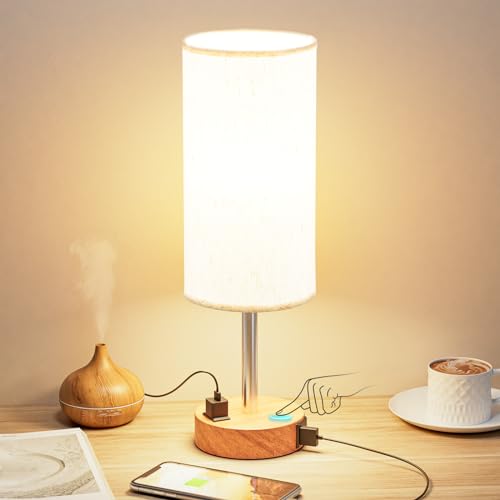
Touch, rechargeable and USB lamps have convenience features such as dimming by touch or built-in charging ports. Rechargeable cordless lamps are useful where an outlet is far away, but their light output and battery life vary by design.
| Base type | Look | Stability | Upkeep | Fits best with |
|---|---|---|---|---|
| Ceramic | Colorful, classic or organic | Heavy and stable | Wipe; chips possible | Traditional, transitional, coastal |
| Glass | Light, reflective | Moderate | Shows fingerprints | Small rooms, glam, modern |
| Metal | Sleek, structured | Varies with base width | Dust; some finishes tarnish | Modern, industrial, traditional |
| Wood | Warm, natural | Moderate to good | Dust; keep away from damp | Farmhouse, mid-century, rustic |
| Stone or concrete | Sculptural, heavy | Very stable | Wipe; can be porous | Minimal, modern, organic |
| Rattan or woven | Textured, casual | Light, tips more easily | Dust crevices | Boho, coastal |
Shade Materials and Shapes
The shade determines how the light looks. A thin white shade lets a lot of light through and looks bright. A dark or lined shade pushes light upward and downward and creates a moodier glow.
Linen and cotton shades are the most common. They diffuse light softly and come in many weights. Textured linen adds warmth, and off-white shades glow gently when lit.
Paper shades are light and inexpensive and give a soft, even glow. They are more fragile and can yellow with age.
Metal and perforated shades throw patterns of light and direct it more strongly. They can get hot near the bulb, so choose a bulb with a lower heat output.
Shape matters too. Drum shades suit modern rooms and spread light in all directions. Empire and tapered shades are traditional and give a good downward spread for reading. Square and rectangular shades echo contemporary furniture, and bell shades add a vintage look.
| Shade type | Light quality | Mood | Practical note |
|---|---|---|---|
| Light linen or cotton | Bright, diffused | Airy, relaxed | Shows shadows of bulb if too thin |
| Dark or lined fabric | Directed up and down | Dramatic, cozy | Less overall room light |
| Paper | Soft, even | Casual | Fragile, can yellow |
| Silk-look | Warm, refined | Formal | Marks easily |
| Metal or perforated | Focused, patterned | Industrial, modern | Can warm up, sharp edges possible |
Size and Proportion
Sizing is where most living room lamp purchases succeed or fail. The following guidelines are common starting points, not rules; adjust them to your furniture.
- Overall height: A typical table lamp stands about 24 to 30 inches tall. Pair it with a side table that is roughly the same height as the arm of the sofa, or slightly lower.
- Shade bottom at eye level: When you are seated, the bottom edge of the shade should be near eye level so the bulb is hidden. This usually means a lamp that rises about 24 to 28 inches above a typical side table, depending on the chair.
- Shade width: The shade is usually about as wide as the base is tall, or slightly narrower, and no wider than the table surface.
- Base proportion: A base that is roughly one third to one half the height of the lamp looks balanced.
- Table coverage: The lamp should take up no more than about a third to half of the table top so there is still room for a drink or a book.
Bulbs, Brightness and Color
Bulb choice changes how a living room feels more than almost any other detail. Choose by brightness, color temperature and heat.
Brightness is measured in lumens, not watts. Watts describe how much power a bulb draws. For a general living room lamp, many people use a bulb in a moderate lumen range, then add dimming, and add more lamps rather than a single very bright bulb. For reading beside a chair, a brighter bulb is often useful.
Color temperature. Warm white bulbs in the roughly 2700K range give a cozy yellowish light that flatters skin and wood. Cooler whites feel crisp but can feel clinical in a living room. Try to use the same color temperature in all lamps in the room so they look consistent.
Dimming. If you want a dimmable lamp, you need both a dimmable bulb and a compatible dimmer, switch or lamp. Mismatched combinations can flicker or buzz.
Heat and wattage limits. Every socket has a maximum wattage marked on the lamp, usually near the socket. Never exceed it. LED bulbs draw far less power than the incandescent bulbs those ratings were written for, and they run cooler, which also reduces stress on shades. If you are not sure, check the label near the socket or the lamp instructions.
| Bulb type | Heat output | Light quality | Notes |
|---|---|---|---|
| LED | Low | Wide range of color temperatures | Efficient; check dimmer compatibility |
| Halogen | High | Bright, crisp | Gets very hot; keep shade clearance |
| Incandescent | High | Warm, classic | Inefficient and hard to find in some places |
| CFL | Moderate | Varies, slow warm-up | Contains small amounts of mercury; recycle properly |
Placement and Layout
A single lamp in a corner can look like a mistake. Use lamps to build an even spread of light and to frame furniture.
Flanking a sofa. A matching pair on end tables is a traditional, balanced approach. In a more casual room, use two lamps that are related but not identical, for example the same height but different bases.
Beside an armchair. A lamp placed slightly behind and to the side of the chair throws light over the shoulder onto a book, without glare on the page.
On a console or sideboard. Lamps on a console behind a sofa or on an entry sideboard add light to dark corners and soften the wall.
Setup, Cords and Switches
A well-chosen lamp can look sloppy if the cord is visible and tangled.
- Assemble the lamp following the instructions, and make sure the harp, finial and shade are seated firmly.
- Choose a bulb within the marked wattage and screw it in gently, with the lamp unplugged.
- Check that the shade sits straight and that it clears the bulb by at least a finger or two.
- Plan the cord route. Run it along the back of the furniture toward the outlet rather than across a walkway.
- Use cord clips, a cord cover or a low-profile channel to keep it tidy. Do not run cords under rugs, where heat and wear can build up and damage may go unseen.
- If the lamp has an inline switch, place it where you can reach it. A smart plug, a touch base or a dimmer makes it easier to control lamps without bending behind furniture.
- Plug into a wall outlet or a quality power strip with surge protection, and avoid overloading outlets.
Care and Cleaning
- Unplug the lamp and let the bulb cool before cleaning.
- Dust shades with a lint roller or soft brush every few weeks. Pleated and fabric shades hold dust.
- Wipe ceramic, glass and metal bases with a damp cloth, then dry them. Avoid harsh cleaners on painted or brass-look finishes.
- Clean glass shades with glass cleaner applied to a cloth, not sprayed into the socket area.
- Replace bulbs that flicker or have yellowed shades near them. If a socket looks scorched or a cord is frayed, stop using the lamp.
Safety Rules
Respect the wattage rating. The maximum wattage marked at the socket exists because of the heat the socket and shade can safely handle. Using a higher-wattage bulb can overheat the socket, discolor the shade and, in severe cases, create a fire risk. LED bulbs generate less heat, but check that the bulb’s base and size are compatible.
Keep the shade clear of the bulb. Shade fabric and paper should never touch the bulb. Check the clearance whenever you change the shade or bulb.
Keep flammables away. Do not drape cloth, scarves or paper over a lit lamp or shade, and do not store things on top of the shade. Keep curtains from touching the lamp.
Inspect cords. Look for cracks, frayed insulation, bent plugs or warm spots. Do not staple or nail through a cord, and do not run it under a rug or across a doorway. Replace damaged cords or retire the lamp, and use a qualified repair person for rewiring.
Look for recognized safety marks. Many regions have approved testing marks for electrical products. Where available, check that the lamp’s packaging or listing shows one, and be cautious about unmarked, unusually cheap electrical products.
Prevent tip-overs. Choose a lamp with a stable base for homes with children, pets or heavy foot traffic. Place it away from table edges and consider museum putty for light bases, within its stated limits.
Water and electricity. Keep drinks away from the lamp base, and do not use an indoor lamp in a bathroom, near a sink or outdoors.
Common Mistakes
- Choosing a lamp that is too short, so the bulb glares at seated eye level.
- Buying a shade too small for the base.
- Using cold white bulbs in a room meant to feel cozy.
- Mixing different bulb colors in the same room.
- Relying on a single lamp in a large room.
- Exceeding the socket wattage rating.
- Putting a dimmable lamp on an incompatible dimmer.
- Running cords under rugs or across walkways.
- Ignoring the outlet location until after purchase.
Who Should Choose What
Small apartments do well with slim glass or metal bases and light shades, and with wall-mounted plug-in lamps to free up table space. Reading chairs need a lamp with a tapered shade and a bright, warm bulb positioned beside the shoulder. Family rooms with children and pets need heavy, stable bases such as ceramic or stone, and short, tidy cords. Home theater rooms benefit from dimmable lamps with dark shades for low, indirect light. Traditional rooms usually suit matched pairs, while modern rooms suit one standout lamp balanced by a quieter one.
When you are ready to compare options, you can browse table lamps for living rooms by height and base material, pick up replacement lamp shades to refresh a lamp you already own, choose warm white dimmable LED bulbs, and tidy things up with a cord cover or cable clips.
Buying Checklist
- Measure the side table height and surface area.
- Note the height of the seat and sofa arm to estimate eye level.
- Locate the nearest outlet and plan the cord path.
- Decide whether you want a pair or a single statement lamp.
- Pick a base material that matches the room and the stability you need.
- Choose a shade color and thickness for the light quality you want.
- Read the maximum wattage on the socket and choose a compliant bulb.
- Buy bulbs with the same color temperature for the whole room.
- Check dimmer or switch compatibility.
- Look for a recognized electrical safety mark on the listing.
- Confirm the return policy for fragile items.
Frequently Asked Questions
How tall should a living room table lamp be?
Many fall between about 24 and 30 inches, but the right height depends on the table and seat. Aim for the shade’s lower edge to sit near seated eye level.
Should living room lamps match?
They do not have to. A matched pair looks formal and balanced, while two related lamps with a shared color or height look relaxed and intentional.
How many lamps does a living room need?
Two or three is a common starting point for a typical room, placed around the seating area so you can turn off the ceiling light and still see well.
What color temperature is best for a living room?
Warm white bulbs in the 2700K range are common for a cozy feel. Use the same temperature across all lamps.
Can I put a higher-wattage bulb in a lamp if it is LED?
Check the label. LED bulbs are often described by an equivalent wattage, but the real power draw is lower. Stay within the socket’s stated limit for the actual power draw and make sure the bulb fits the shade.
How do I hide a lamp cord?
Run it behind furniture with cord clips or a paintable channel. Avoid routing it under rugs or across walking paths.
Are cordless table lamps good enough for a living room?
They are handy where outlets are scarce, but brightness and battery life differ by model, so check the listing details and recharge habits.
How do I choose a shade for an old lamp?
Measure the base height, the harp type and the existing fitter, then choose a shade about as wide as the base is tall.
Conclusion
Good living room lamps work as a team: a few of them, sized to the furniture, with shades that soften the bulb and bulbs that match each other in color. Keep within the wattage rating, manage the cords, and give each lamp a stable spot, and the room will feel warmer and easier to live in after dark.
Disclosure: As an Amazon Associate, we earn from qualifying purchases. If you click a link marked as sponsored and buy, we may receive a small commission at no extra cost to you.
More from Amazon
Programs that pair well with the guide above. Offers and eligibility are set by Amazon and may change.
Collect the home and kitchen items you want in one registry that guests can shop from.
Create a wedding registrySet up recurring deliveries of everyday items on eligible products. Terms and savings are set by Amazon.
Explore Subscribe & SaveFree shipping on eligible items, Prime Video and more. Eligible new members can start with a free trial.
Start a Prime free trialAudiobooks and podcasts to listen to on the go. Eligible new members can start with a free trial.
Try Audible freeAs an Amazon Associate we earn from qualifying purchases.









