Our Top Picks
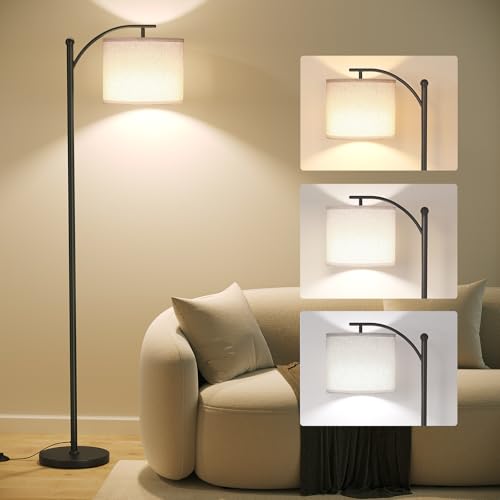
 Modern Floor Lamp Simple Design with White Shade60 Inches (Without Bulb)10.24 x 7.87 x 60 inches5.6 poundsCheck on Amazon


The Short Answer
For most living rooms, the best floor lamp is a stable, mid-height lamp with a shade, a warm dimmable light source and a switch you can reach easily. A classic stem lamp with a fabric shade gives soft ambient light. An arc lamp reaches over a sofa without a nearby outlet or table. A tree or multi-head lamp covers a larger corner. A reading lamp with an adjustable neck is the better choice beside a favorite chair. If you can only buy one, pick a lamp that takes a replaceable, bulb-based light source and has a dimmer, because that combination lets you adjust it to the room for years.
The rest of this guide explains the types, what brightness and color you need, how tall the lamp should be, where it belongs, and which safety details deserve attention before you plug it in.
In This Guide
- Types of floor lamps
- Comparing lamp types
- Brightness, bulbs and color temperature
- Height, shade size and base
- Placement and layering
- Features that matter
- Which type for which situation
- Safety and care
- Common mistakes
- Who should choose what
- Buying checklist
- FAQ
- Conclusion
Types of Floor Lamps
Stem or column lamps with a shade
This is the traditional design: a base, a straight pole and a drum, empire or cone shade. The shade diffuses light sideways and up and down, producing the soft glow most people associate with a cozy room. It suits almost every style, from traditional to modern, because shade shape and base finish do the styling. It is the safest first choice when you are not sure what you need.
Arc lamps
An arc lamp has a heavy base and a curved arm that sweeps the light source out over a seat or table. It lets you light a sofa or dining spot without running a cord or placing a lamp on a side table. The base must be heavy enough to counterbalance the arm, which means arc lamps are bulky to move. Check the reach so that the shade sits where you want it without hanging uncomfortably low over a head.
Torchiere and uplight lamps
Torchieres throw light upward to bounce off the ceiling, which spreads soft, even light across the room. They are good for rooms with few ceiling fixtures. Older halogen torchieres ran very hot and were associated with fire risk, so choose a model designed for modern low-heat bulbs and keep it away from curtains and ceilings that are very low.
Tree or multi-arm lamps
A tree lamp holds several heads on one pole, often with individually adjustable arms. It covers a corner with a single plug and allows you to aim a head at a reading spot and another at the ceiling. It is flexible but visually busy, and the heads can be fiddly to adjust.
Reading or task lamps with adjustable necks
A slim lamp with a swing arm, gooseneck or pivoting head puts light exactly where you need it. These are ideal beside an armchair, at a sewing or craft spot, or next to a bookshelf. They provide focused light, so on their own they leave the rest of the room dim.
Tripod, mid-century and sculptural lamps
These lamps are as much furniture as lighting. Splayed wooden legs, a paper or woven lantern shade, or a sculptural stem give a lamp presence in a corner. Look closely at the stability of splayed legs, particularly where pets or children roam.
Comparing Lamp Types
| Type | Light direction | Strength | Weakness | Best role |
|---|---|---|---|---|
| Stem with shade | Diffused, all around | Soft, versatile, easy to style | Not focused for reading | Ambient light beside a sofa |
| Arc | Downward from an overhead reach | Lights a seat without a side table | Heavy and bulky | Over a sofa or sectional end |
| Torchiere | Upward to the ceiling | Even room light | Needs a suitable ceiling and a cool-running bulb | General fill light |
| Tree or multi-arm | Several directions | Covers a corner, adjustable heads | Visually busy | Corners and mixed use |
| Adjustable reading | Focused beam | Excellent task light | Narrow spread | Armchair or bookshelf |
| Tripod or sculptural | Diffused through a shade | Adds decor value | Wide footprint | Style-led corners |
Most living rooms benefit from two or three light sources at different heights rather than one very bright lamp. A stem lamp plus a reading lamp covers many households.
Brightness, Bulbs and Color Temperature
The lamp is only as good as the light it produces. Three numbers matter: lumens for brightness, color temperature in kelvins for warmth, and the color rendering index, often abbreviated CRI, for how natural colors look.
Lumens measure light output. A single lamp used as one layer of ambient light often sits somewhere in the range of several hundred to around a thousand lumens, while a focused reading light is commonly in a similar range. These are rough guides, and the right amount depends on the size of the room, wall colors and personal preference. A dimmer removes the guesswork, since you can set a higher level for tasks and a lower one for the evening.
Color temperature describes how warm or cool the light appears. Lower values such as around 2700 K give warm, yellowish light that feels cozy in living areas. Values around 3000 K look slightly crisper, and 4000 K and higher appear cool and are more at home in kitchens and workspaces than lounges. Many people find the warm end most relaxing in the evening. Some bulbs let you switch between several settings, which is useful if the lamp doubles as a reading light.
CRI indicates how faithfully a bulb renders colors on a scale up to 100. A higher number generally makes skin tones, fabrics and art look more natural, and a CRI in the 80s or above is a reasonable target for living spaces. If the packaging does not list it, do not assume.
Bulb type matters for heat and energy use. LED bulbs run cool and efficiently, last a long time and are available in dimmable versions. If you plan to dim, make sure both the bulb and the dimmer are labeled as compatible, because mismatched pairs can flicker or buzz. Incandescent and halogen bulbs give a classic quality of light but use more energy and produce considerably more heat, which is a concern in enclosed shades.
Replaceable bulbs versus built-in light sources
Some modern lamps have an integrated LED strip or panel rather than a standard socket. The design can be slim and elegant, but when the light source eventually fails, the entire lamp might be difficult to repair. A standard socket lets you replace the bulb, change the color temperature and upgrade over time. Unless the slim profile is essential, a replaceable bulb is the more future-proof option.
Reading what the label says about wattage
Every lamp socket has a maximum wattage rating, usually printed on a label near the socket. Never use a bulb above that limit, even if it fits physically. With LED bulbs this is easy to respect because the actual wattage is far below the limit, but with older bulb types it is a genuine overheating and fire risk. Pay attention to the equivalent-wattage wording on LED packages, which describes brightness comparison and is not the electrical draw.
Height, Shade Size and Base
Most standard floor lamps stand somewhere between about 55 and 70 inches tall. For a lamp that lights a seat, the bottom of the shade should sit roughly at or just below eye level when you are seated, so that you do not see the bare bulb and the light falls on your lap or book rather than in your eyes. For reading, the light source is typically positioned slightly behind and above the shoulder.
The base should be wider than the pole is thick and heavy enough to resist tipping. Round and square bases both work; a weighted disc base is compact, while a tripod spreads the load. In a small room, a slim base with a modest footprint wins, but never sacrifice stability to save a few inches.
Placement and Layering
Living rooms usually need three layers of light: ambient for general illumination, task for reading and activity, and accent to highlight art or texture. Floor lamps can handle all three.
- Beside a sofa: place a stem or reading lamp at the arm end, a little behind the seated person’s shoulder.
- In a dark corner: an uplight or tree lamp makes a corner feel larger by washing the walls and ceiling.
- Behind a chair: a reading lamp placed behind and to one side avoids shadows on the page.
- Beside a console or bookshelf: a slim lamp adds height and balances furniture.
Keep walkways clear. A lamp in a path is a trip hazard and likely to get knocked. Leave a few inches of clearance between the shade and walls or curtains.
Think about the outlet. Floor lamps need a power source, and a cord crossing a walking route is hazardous. Position lamps near wall outlets or choose arc lamps that reach from an outlet to a seating area. If the cord must cross open floor, use a proper cord cover rather than leaving it loose, and avoid running cords under rugs where heat can build up and damage can go unnoticed.
Features That Matter
Switch style. A foot switch, inline cord switch, rotary socket switch or touch control each suits different habits. A foot switch is convenient for standing lamps behind a sofa. Touch controls are handy but can be oversensitive. Whichever you choose, make sure it is reachable without leaning awkwardly.
Dimming. An integrated dimmer, a rotary knob or a dimmable-ready socket gives you the most control. Confirm bulb compatibility.
Adjustability. Swiveling heads, bendable necks and tilting shades extend how many tasks the lamp can serve.
Which Type for Which Situation
| Situation | Suggested type | Why | Consider |
|---|---|---|---|
| Small living room or apartment | Slim stem or uplight | Small footprint, spreads light via walls and ceiling | Keep away from low ceilings and curtains |
| Large open-plan space | Arc or tree, plus a second lamp | Covers zones without ceiling fixtures | Heavy base, plan placement |
| Reading chair | Adjustable reading lamp | Focused, directional light | Warm bulb, comfortable switch |
| Behind a sofa | Arc or tall stem | Lights seats and conversation area | Outlet position and cord routing |
| Home with pets or small children | Wide, weighted base and shade | Resists tipping | Tidy cord, avoid dangling pulls |
| Rental with limited fixtures | Any plug-in lamp, ideally with dimmer | No installation, portable | Mix heights for layers |
Safety and Care
Lamps are simple, but a few precautions prevent most problems.
- Respect the wattage label. Do not exceed the maximum bulb wattage printed near the socket. Use LED bulbs where possible since they run cooler.
- Look for recognized safety certification. Lamps sold in your region should carry the certification mark required locally. If a product lacks any such marking, skip it.
- Keep the shade clear. Maintain space between the bulb and fabric or paper shade and keep the lamp away from curtains, bedding and other combustible items.
- Prevent tipping. Place lamps on a flat, level surface, not on a loose pile rug edge, and keep them where pets and children will not bump them. Heavy-based lamps are safer in busy homes.
- Manage the cord. Do not staple, pinch or run a cord under a rug or through a doorway. Replace a lamp with a cracked or frayed cord instead of taping it.
- Do not overload outlets. Avoid chaining power strips, and check that the load stays within the strip rating.
For cleaning, unplug the lamp and use a dry microfiber cloth or soft brush on the shade and a slightly damp cloth on the stem. Avoid soaking fabric shades. Dust can build up on bulbs and reduce light output, so wipe them when cool.
Common Mistakes
- Choosing by style alone. A beautiful lamp that gives the wrong light for your needs will be frustrating.
- Using one lamp as the only light. Layered lighting is more comfortable and flattering.
- Picking bulbs that are too cool. Cool white light can feel clinical in a lounge.
- Ignoring the outlet. A cord stretched across the room is both ugly and unsafe.
- Overlooking stability. Light, narrow bases tip easily.
- Placing a lamp too close to curtains or low ceilings. Heat and fire risk, especially with older bulb types.
Who Should Choose What
Readers are best served by an adjustable reading lamp with a warm, dimmable bulb. Small-space dwellers do well with a slim stem lamp or an uplight that borrows the ceiling as a reflector. Families with pets or young children should prioritize heavy bases and tidy cords. Style-focused buyers can lean toward tripod or sculptural lamps, as long as stability is checked. People with large rooms usually need two lamps rather than one big one.
Buying Checklist
- Measure the corner or space and note the height of the ceiling.
- Locate the nearest outlet and plan the cord route.
- Decide whether the lamp’s job is ambient, task or accent light.
- Choose a lamp with a standard, replaceable bulb socket.
- Confirm the maximum wattage rating and use an LED bulb well below it.
- Pick a warm color temperature for lounging areas.
- Choose a dimmer and verify bulb compatibility.
- Check the base weight and width for stability.
- Look for a recognized safety certification mark.
- Read the assembly steps and the return policy.
Frequently Asked Questions
How tall should a floor lamp be in a living room?
Most stand between about 55 and 70 inches. For seated reading, the bottom of the shade should be near eye level when seated, and ceilings that are low call for the shorter end of the range.
How many floor lamps does a living room need?
Many rooms work well with two or three light sources at different heights, combining overhead or lamp lighting for ambience with a focused lamp for reading. The correct number depends on room size and use.
What color temperature is best?
Warm light around 2700 K to 3000 K is the common choice for relaxing spaces. Slightly cooler light can help with reading or detailed hobbies, and adjustable bulbs let you switch.
Are LED bulbs good for floor lamps?
Yes. They run cooler, use less energy and last longer than older bulbs. Buy dimmable versions if you use a dimmer, and make sure the bulb base and shape fit the socket and shade.
Can I use any bulb in a floor lamp?
No. Check the socket type and the maximum wattage label, and make sure the bulb size fits within the shade. Never exceed the labeled wattage.
Where should I put a floor lamp next to a sofa?
Place it at the arm or just behind the shoulder of the seated person, so light falls over the shoulder onto the lap or book without glare in the eyes.
Are arc lamps stable?
Well-made arc lamps have heavy bases that counterbalance the arm, but they still deserve a clear spot away from foot traffic. Check the base weight and avoid placing them on soft or uneven surfaces.
How do I hide the cord?
Route it along the wall edge or behind furniture, and use a cord cover where it must cross a floor. Do not run it under rugs, and do not tape over damage.
Conclusion
A good living room floor lamp does three things well: it gives the right kind of light, it stays upright, and it fits the way you use the room. Start by deciding whether you need ambient, task or accent light, choose a type that serves that role, and favor a replaceable warm bulb with a dimmer. Check the outlet, the base stability and the wattage label before you commit. Then add a second lamp at a different height, and the room will feel more comfortable and more finished than one bright fixture ever could.
To start comparing options, browse living room floor lamps, arc floor lamps, adjustable reading floor lamps, and dimmable warm LED bulbs.
As an Amazon Associate we earn from qualifying purchases. This means we may earn a commission if you buy through links on this page, at no extra cost to you.
More from Amazon
Programs that pair well with the guide above. Offers and eligibility are set by Amazon and may change.
Collect the home and kitchen items you want in one registry that guests can shop from.
Create a wedding registrySet up recurring deliveries of everyday items on eligible products. Terms and savings are set by Amazon.
Explore Subscribe & SaveFree shipping on eligible items, Prime Video and more. Eligible new members can start with a free trial.
Start a Prime free trialAudiobooks and podcasts to listen to on the go. Eligible new members can start with a free trial.
Try Audible freeAs an Amazon Associate we earn from qualifying purchases.