Key takeaways
- Recline Range and Lock Positions: A chair that tilts only 110° barely qualifies as reclining. Look for at least 135° with multiple lock stops so you can shift posture without leaving your seat — essential during long video calls or late-night design reviews.
- Material and Light Interaction: Mesh backs circulate air and let ambient light filter through, keeping a room visually open. PU leather and velvet absorb light, which can add warmth to a spare room but makes a dim space feel heavier. Match the surface to your room’s existing palette.
- Weight Capacity and Build Quality: “Big and tall” ratings (400 lbs+) aren’t just about body size — they signal reinforced gas cylinders and wider steel bases that wobble less over years of daily use. A chair that squeaks by month six kills any sense of calm in a workspace.
- Armrest and Headrest Adjustability: 4D armrests and height-adjustable headrests let you fine-tune the chair to your desk height, which keeps your shoulders dropped and your screen at eye level — reducing the hunched posture that throws off even the best lighting setup.
- Seat Depth and Footrest Integration: Adjustable seat depth matters more than most people realize because it determines whether the cushion edge presses into your knees. A built-in footrest should extend smoothly without a clunky lever that ruins the clean lines of your desk area.
What's inside
If you work from home, the chair you sit in for eight-plus hours doesn’t just affect your spine — it affects the entire feel of your room. A bulky, matte-black leather throne can swallow natural light and make a small office cave-like, while a sleek mesh-back design lets afternoon sun pass through and keeps the space airy. Buyers usually fixate on lumbar specs and ignore how the chair reads visually under their desk lamp at 9 p.m. That mismatch between ergonomic promise and lived-in ambience is why most people end up returning their first pick.
This guide cuts through the noise. We evaluated six reclining office chairs on the factors that actually matter once the unboxing high fades: recline mechanics, material durability under real lighting, and whether the silhouette complements a modern home office rather than dominating it. Below you’ll find our curated selections plus a straightforward buyer’s guide.
As an Amazon Associate we earn from qualifying purchases.


🛒 Best Price Today on Amazon
Prime members get fast, free shipping on everything above, plus member-only deals. New members get a 30-day free trial — cancel anytime.
How to Choose a Reclining Office Chair (2026)
- Recline Range and Lock Positions: A chair that tilts only 110° barely qualifies as reclining. Look for at least 135° with multiple lock stops so you can shift posture without leaving your seat — essential during long video calls or late-night design reviews.
- Material and Light Interaction: Mesh backs circulate air and let ambient light filter through, keeping a room visually open. PU leather and velvet absorb light, which can add warmth to a spare room but makes a dim space feel heavier. Match the surface to your room’s existing palette.
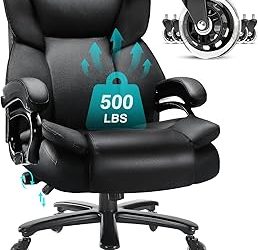
- Weight Capacity and Build Quality: “Big and tall” ratings (400 lbs+) aren’t just about body size — they signal reinforced gas cylinders and wider steel bases that wobble less over years of daily use. A chair that squeaks by month six kills any sense of calm in a workspace.
- Armrest and Headrest Adjustability: 4D armrests and height-adjustable headrests let you fine-tune the chair to your desk height, which keeps your shoulders dropped and your screen at eye level — reducing the hunched posture that throws off even the best lighting setup.
- Seat Depth and Footrest Integration: Adjustable seat depth matters more than most people realize because it determines whether the cushion edge presses into your knees. A built-in footrest should extend smoothly without a clunky lever that ruins the clean lines of your desk area.
The Best Reclining Office Chairs (2026) Reviewed
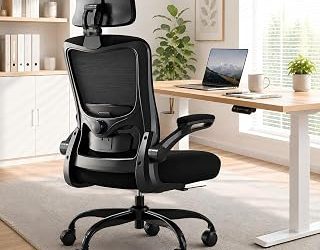
Executive Mesh Chair with Flip-Up Arms
The breathable mesh back is the standout here: it keeps you cool and visually lightens a cramped corner office. Flip-up armrests tuck completely out of the way, letting you slide the chair under a low-profile desk without scuffing the underside — a small detail that preserves the room’s clean sightlines.
FelixKing PU Leather Ergonomic Chair
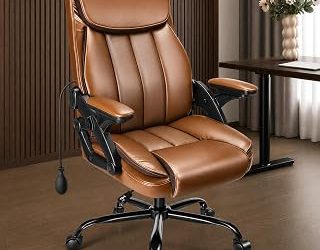
FelixKing wraps ergonomic bones in smooth PU leather that catches desk lamp light with a subtle sheen, giving a home office a more polished, conference-room feel without the conference-room price tag. The flip-up armrests and firm lumbar pad make it practical for eight-hour stretches, though the leather does run warmer than mesh alternatives.
Ergonomic Chair with Footrest and 3D Massage Lumbar
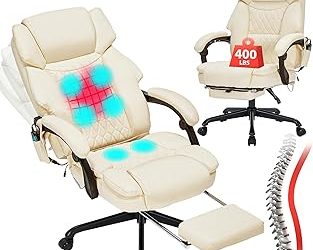
This is the option for people who want a full recline-and-recover station. The 3D massage lumbar and extendable footrest transform it from desk chair to decompression zone in seconds. Under warm-toned lighting, the black frame stays understated, letting the chair’s generous proportions speak without visual clutter.
High Mesh Back Chair with 135° Recline and Footrest
A thickened seat cushion and 4D armrests and headrest round out a chair built for longer sessions. The mesh back maintains airflow and visual transparency, which matters in rooms with a single window — nothing blocks the natural light from reaching the rest of the space. It reclines to a comfortable angle without looking like it’s collapsing.
Crystal Velvet Big and Tall Chair
Crystal velvet is a polarizing choice, but in the right room it’s stunning: it diffuses light softly, absorbs echo, and gives a home office the warmth of a reading nook. Flip armrests accommodate cross-legged or pet-friendly sitting, and the wide seat frame supports the full recline range without looking oversized against a statement wall.
Frequently Asked Questions
Do reclining office chairs damage hard floors?
Most come with nylon or polyurethane casters suitable for hard floors, but adding a thin desk mat beneath the chair distributes weight more evenly and prevents the slow scratching that accumulates over months — especially important if your chair has a heavy steel base.
How far back does a typical office chair recline?
Standard office chairs recline about 110°–120°. The chairs reviewed here reach 135° or more, which puts you closer to a relaxed lounge angle while still supporting your lower back under tension.
Are mesh chairs better than leather for long hours?
Mesh promotes airflow and reduces heat buildup, which helps during marathon work sessions. Leather and PU leather retain body heat but offer a more structured, formal aesthetic. Neither is universally superior — it depends on your climate and the look you want.
What weight capacity should I look for?
If you’re under 250 lbs, a standard 300 lb-rated chair is fine. For 250 lbs and above, or if you share the chair with others, aim for 400 lb-rated models with reinforced gas lifts and wider bases for long-term stability.
Final Thoughts
For most home offices, the Ergonomic Chair with Footrest and 3D Massage Lumbar offers the best balance of comfort, adjustability, and visual restraint. If your space needs a lighter footprint, the High Mesh Back Chair keeps things open and airy without sacrificing recline depth. And for anyone designing a room where warmth and texture are part of the brief, the Crystal Velvet Big and Tall Chair is a bold, genuinely different choice.