Key takeaways
- Recline Range & Lock Positions: A chair locked at 135° handles post-lunch fatigue well; models reaching 170° (like the M30) essentially become a horizontal lounger. Infinite-lock mechanisms let you dial in the exact angle rather than clicking through preset notches.
- Material & Visual Weight: Leather and PU leather chairs create a grounded, executive presence but radiate warmth in small rooms. Mesh models keep sightlines open and ventilate heat — a practical and aesthetic advantage in compact or warm-lit offices.
- Footrest Integration: Look for a footrest that extends and retracts cleanly. Flimsy pop-out rests feel tacked on; the best ones lock at an angle that supports your calves without forcing your lower back into a C-curve.
- Weight Capacity & Base Construction: A steel five-point base rated for 400+ lbs doesn’t just serve heavier users — it eliminates the subtle wobble that cheap nylon bases introduce when you recline past 130°, which is the angle where center-of-gravity shifts matter most.
- Ergonomic Adjustability: Headrest height-and-angle control plus 2D or 3D lumbar support are non-negotiable for sessions beyond two hours. Armrest adjustability (height, depth, pivot) determines whether your shoulders stay relaxed or creep toward your ears by mid-afternoon.
What's inside
Most people shopping for a reclining office chair fixate on lumbar specs and weight ratings while completely ignoring how a hulking silhouette reshapes the entire atmosphere of their workspace. A matte-black leather executive chair reads entirely differently in a sunlit room than a slim-profile mesh model — one absorbs light and anchors the space, the other lets it pass through and keeps the room airy. Choosing the right recliner isn’t just an ergonomic decision; it’s a design decision that affects how your office feels to inhabit from nine to five and beyond.
This guide cuts through the noise on the 2026 market, comparing six of the best reclining office chairs with built-in footrests across build quality, recline range, material presence, and real-world comfort. Whether your priority is near-flat napping capability or a chair that complements warm-toned interiors, the picks below cover the full spectrum.
As an Amazon Associate we earn from qualifying purchases.


🛒 Best Price Today on Amazon
Prime members get fast, free shipping on everything above, plus member-only deals. New members get a 30-day free trial — cancel anytime.
How to Choose a Reclining Office Chair With Footrest (2026)
- Recline Range & Lock Positions: A chair locked at 135° handles post-lunch fatigue well; models reaching 170° (like the M30) essentially become a horizontal lounger. Infinite-lock mechanisms let you dial in the exact angle rather than clicking through preset notches.
- Material & Visual Weight: Leather and PU leather chairs create a grounded, executive presence but radiate warmth in small rooms. Mesh models keep sightlines open and ventilate heat — a practical and aesthetic advantage in compact or warm-lit offices.
- Footrest Integration: Look for a footrest that extends and retracts cleanly. Flimsy pop-out rests feel tacked on; the best ones lock at an angle that supports your calves without forcing your lower back into a C-curve.
- Weight Capacity & Base Construction: A steel five-point base rated for 400+ lbs doesn’t just serve heavier users — it eliminates the subtle wobble that cheap nylon bases introduce when you recline past 130°, which is the angle where center-of-gravity shifts matter most.
- Ergonomic Adjustability: Headrest height-and-angle control plus 2D or 3D lumbar support are non-negotiable for sessions beyond two hours. Armrest adjustability (height, depth, pivot) determines whether your shoulders stay relaxed or creep toward your ears by mid-afternoon.
The Best Reclining Office Chair With Footrest (2026) Reviewed
M30 Reclining Office Chair
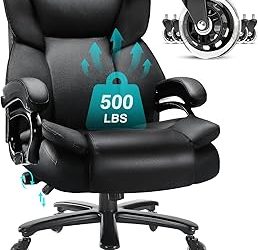
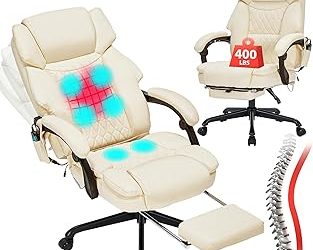
The M30’s 170-degree near-flat recline is the standout feature on this list — no other chair here lets you fully horizontal without feeling like you’re tipping off a cliff. Its 420 lb steel base provides the kind of planted confidence that lets you lean back with zero hesitation, while the PU leather surface catches ambient light with a subtle sheen that elevates a home office beyond typical gaming-chair territory.
CYKOV Ergonomic Reclining Chair
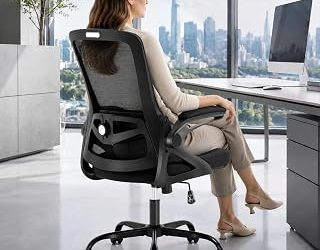
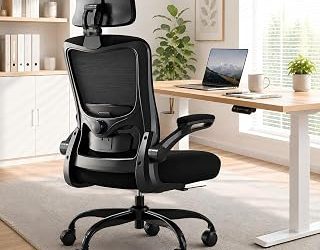
CYKOV’s dual-adjustment approach — a headrest that moves both vertically and through 60 degrees of tilt, paired with a lumbar system offering two inches of depth and height control — lets you sculpt the chair around your spine rather than hunching into a fixed contour. The breathable mesh reads clean and modern in any lighting, and the five-year warranty signals the kind of build confidence that cheap competitors avoid.
amseatec Big and Tall Reclining Chair
Designed for the big-and-tall crowd but genuinely comfortable at average dimensions, this model uses 20 spring packs instead of standard foam to distribute weight across a wider contact area. The black leather absorbs overhead light and gives the chair a substantial, anchoring presence — ideal for larger rooms where a lighter chair would feel lost. Infinite-lock reclining from 90° to 135° covers the daily-use sweet spot.
Ergonomic Mesh Reclining Chair (135°)
This mesh-forward design excels in rooms where natural light does the heavy lifting — the open weave lets light filter through rather than creating a solid dark mass behind your desk. The 3D armrests and large steel base keep the frame from flexing during recline transitions, and the 300 lb capacity handles most users comfortably. It’s the most visually lightweight option here.
Brown Leather Reclining Executive Chair
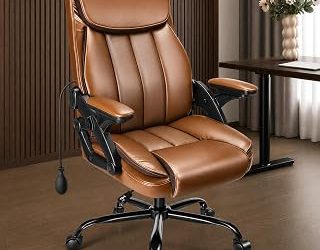
If your workspace leans warm — wood desks, amber-toned lamps, exposed brick — this brown leather option integrates with that palette rather than clashing against it. The 90-to-155-degree range hits a practical middle ground, and the thick cushioning gives it a padded, inviting silhouette that makes a home office feel less like a cubicle and more like a personal study.
Frequently Asked Questions
Can you sleep in a reclining office chair with a footrest?
Chairs reclining past 150° — particularly the M30 at 170° — support restful napping for 20–30 minute power sleeps. The footrest elevates your legs enough to reduce lower-back pressure, but for anything beyond a short rest, a dedicated recliner or bed will always outperform any office chair.
Do mesh chairs hold up as well as leather for reclining?
Modern mesh rated for 300+ lbs handles daily reclining cycles without the stretching or cracking that PU leather develops over two to three years. Mesh also stays cooler under sustained body contact, which matters when you’re reclined and your back is in continuous contact with the surface.
What recline angle is best for working at a computer?
Research consistently points to 100–115° as the optimal range for screen-based work — a slight backward tilt that opens the hip angle and reduces disc pressure without pushing your eyes above or below monitor level. All six chairs in this roundup cover that range comfortably.
Is a 300 lb weight capacity enough for a big-and-tall user?
300 lb handles most users, but if you’re over 250 lbs, choosing a chair rated at 350–420 lbs (like the M30 or CYKOV) provides a safety margin that also prevents premature wear on the gas cylinder and base casters.
Final Thoughts
The M30 earns the top recommendation for anyone who wants genuine near-flat recline in a well-built frame. The CYKOV stands out for its exceptional adjustability at a competitive price point. And for buyers who care as much about how their office looks as how it feels, the Brown Leather Executive Chair brings a warmth and material richness that the black-and-mesh crowd simply can’t match.