Key takeaways
- Color Temperature Control: Look for 3CCT or tunable light that lets you shift between warm white and daylight. Fixed-temperature lights lock you into a single mood — fine for a garage, terrible for a living room that needs to transition from bright morning tasks to soft evening relaxation.
- Motor Type and Noise: DC motors run significantly quieter than their AC counterparts, typically under 30 decibels. If the fan lives above your bed or reading chair, motor hum isn’t just an annoyance — it undermines the calm the lighting is trying to create.
- Mounting Style and Room Height: Low-profile or flush-mount fans are essential for rooms under eight feet where a downrod-mounted fan drops into your sightline. Taller spaces benefit from a downrod mount, which improves air circulation by positioning blades farther from the ceiling plane.
- Smart Integration and Controls: Remote controls are the baseline. WiFi-enabled fans that work with Alexa or a dedicated app let you set lighting scenes, schedule timers, and adjust speed without leaving the couch — a meaningful upgrade for rooms with layered lighting setups.
- Blade Material and Aesthetic Fit: Solid wood blades move air more quietly and look dramatically better under warm light than hollow ABS plastic. Match the fan’s finish to your room’s existing hardware — nickel with contemporary spaces, matte black with industrial or modern farmhouse interiors.
What's inside
Most buyers treat ceiling fans as an afterthought — a spinning box on the ceiling that either drowns conversation or barely stirs the air. What rarely gets discussed is how profoundly a fan’s integrated lighting shapes the room’s atmosphere. The wrong fixture washes a bedroom in harsh blue-white glare or casts inconsistent pools of light across your living space. Finding a fan that balances airflow, noise levels, light quality, and genuine value has become surprisingly difficult with hundreds of near-identical listings flooding the market.
As someone who designs lighting and ambience for residential spaces, I’ve evaluated this year’s ceiling fan market through a different lens — prioritizing color temperature flexibility, dimming performance, motor noise, and overall build quality at every price tier. This guide narrows the field to six standout models and explains exactly what separates a well-designed fan from a cheap spin with a lamp attached.
As an Amazon Associate we earn from qualifying purchases.



🛒 Best Price Today on Amazon
Prime members get fast, free shipping on everything above, plus member-only deals. New members get a 30-day free trial — cancel anytime.
How to Choose a Price Ceiling Fan (2026)
- Color Temperature Control: Look for 3CCT or tunable light that lets you shift between warm white and daylight. Fixed-temperature lights lock you into a single mood — fine for a garage, terrible for a living room that needs to transition from bright morning tasks to soft evening relaxation.
- Motor Type and Noise: DC motors run significantly quieter than their AC counterparts, typically under 30 decibels. If the fan lives above your bed or reading chair, motor hum isn’t just an annoyance — it undermines the calm the lighting is trying to create.
- Mounting Style and Room Height: Low-profile or flush-mount fans are essential for rooms under eight feet where a downrod-mounted fan drops into your sightline. Taller spaces benefit from a downrod mount, which improves air circulation by positioning blades farther from the ceiling plane.
- Smart Integration and Controls: Remote controls are the baseline. WiFi-enabled fans that work with Alexa or a dedicated app let you set lighting scenes, schedule timers, and adjust speed without leaving the couch — a meaningful upgrade for rooms with layered lighting setups.
- Blade Material and Aesthetic Fit: Solid wood blades move air more quietly and look dramatically better under warm light than hollow ABS plastic. Match the fan’s finish to your room’s existing hardware — nickel with contemporary spaces, matte black with industrial or modern farmhouse interiors.
The Best Price Ceiling Fan (2026)s Reviewed
52-Inch Modern DC Reversible Ceiling Fan
This all-rounder nails the fundamentals: a genuinely quiet DC motor, three CCT settings that produce noticeably different moods, and a remote that responds without delay. The 52-inch span covers standard bedrooms and mid-size living rooms without feeling overbearing, and the reversible function pushes warm air back down in winter — extending the fan’s usefulness well beyond summer months.
Passky 52-Inch Low Profile Black Ceiling Fan
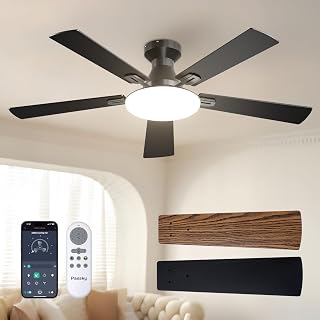
A smart pick for apartments and rooms where ceiling height is working against you. The flush-mount design sits nearly flat against the ceiling while still delivering three dimmable light settings. The black finish reads sophisticated rather than utilitarian, and the memory function means it returns to your preferred light and speed setting every time — a small detail that saves real frustration.
VONLUCE 52-Inch Wood Ceiling Fan, Nickel
This is the fan you choose when you want the fixture to earn its place as a design element. Three solid wood blades paired with a brushed nickel body bring genuine texture and warmth that stamped-metal alternatives simply cannot replicate. Six speeds give you granular control, and the full-spectrum lighting delivers rich, natural-appearing illumination that flatters skin tones and furniture alike.
52-Inch Smart Outdoor Ceiling Fan
Built for covered patios and semi-exposed spaces, this model bridges indoor comfort with outdoor durability. WiFi connectivity and full Alexa and Google integration make it the strongest smart-home pick in the group. Three walnut-finish blades provide solid airflow, and the dark walnut housing resists the visual wear that lighter finishes show quickly in outdoor settings.
TCL 52-Inch Black Caged Ceiling Fan
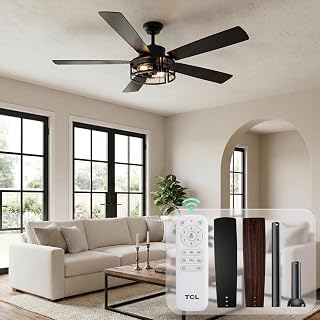
The caged light housing gives this model an industrial farmhouse character that works surprisingly well in modern open-concept rooms. Five dual-finish blades provide more surface area than most competitors at this price, and the six-speed DC motor keeps noise in check even at full tilt. It’s a statement piece that also functions as serious equipment.
Frequently Asked Questions
What room size does a 52-inch ceiling fan suit best?
A 52-inch fan is ideal for rooms between 225 and 400 square feet — standard bedrooms, medium living rooms, and covered patios. Going smaller in this range reduces airflow effectiveness; going larger can feel visually overpowering.
Are DC motors worth the price premium over AC motors?
In nearly every case, yes. DC motors use roughly half the energy, operate at near-silent noise levels, and typically offer more speed settings. The upfront cost difference pays back quickly through lower electricity bills and a noticeably quieter room environment.
Can I install these fans on a sloped or vaulted ceiling?
Most of the fans reviewed here support angled mounting up to 15 degrees with an included or available downrod adapter. Flush-mount models like the Passky are generally limited to flat ceilings only, so check the manufacturer specifications before purchasing.
How important is the CCT feature?
From an ambience standpoint, it’s the single most valuable lighting feature on a modern fan. CCT lets one fixture serve as your primary light source across different times of day — bright and energizing for mornings, warm and muted for evenings — without swapping bulbs or adding secondary fixtures.
Final Thoughts
For most buyers, the 52-Inch Modern DC Reversible offers the strongest balance of performance, lighting quality, and price. Design-conscious shoppers drawn to premium materials should look closely at the VONLUCE Wood Fan, which brings genuine craftsmanship to the ceiling plane. And if smart-home integration is non-negotiable, the 52-Inch Smart Outdoor model delivers the deepest connectivity with reliable outdoor durability.