Key takeaways
- Dust ceiling fans every two to four weeks in bedrooms and living rooms; clean kitchen fans more often.
- Use the lowest comfortable pole extension and keep both feet planted rather than reaching sideways.
- Wash microfiber heads separately from lint-producing laundry and skip fabric softener, which can reduce dust attraction.
- Check the fan after cleaning: a new wobble, rubbing sound, or uneven rotation may indicate a loose or misaligned component.
What's inside
A dusty ceiling fan does more than dull an otherwise polished room. As the blades turn, settled particles can scatter through the air, land on furniture, and soften the effect of carefully chosen lighting. From a lighting-and-ambience perspective, clean blades also matter because an even, unobstructed surface helps the fan distribute light and air without the visual distraction of gray edges and cobwebs.
This guide explains the best way to dust a ceiling fan safely, without a ladder wherever possible. You’ll learn which tools work for different ceiling heights, how to contain loose dust, when to wash the blades, and how to avoid damaging finishes, motor housings, and nearby light fixtures.
As an Amazon Associate we earn from qualifying purchases.



🛒 Best Price Today on Amazon
Prime members get fast, free shipping on everything above, plus member-only deals. New members get a 30-day free trial — cancel anytime.
Choose the Right Duster for Your Fan
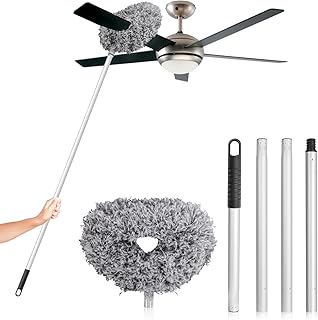
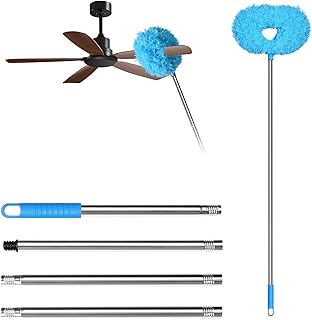
The most useful ceiling-fan duster has three qualities: a soft microfiber head, an adjustable handle, and enough flexibility to sit over or beneath the blade. Microfiber attracts dust rather than simply pushing it around, while an extension pole lets you work from the floor and maintain a stable stance.
For ordinary ceiling heights, compact models such as the DRQ Ceiling Fan Cleaner Duster and FONUNO Ceiling Fan Cleaner Duster are practical choices. Their adjustable handles suit fans that are reachable from the floor, and their removable microfiber heads are easier to clean between uses. The Storystore Ceiling Fan Cleaner Duster is another useful all-purpose option if you want one tool for fan blades, walls, doors, windows, and cobwebs.
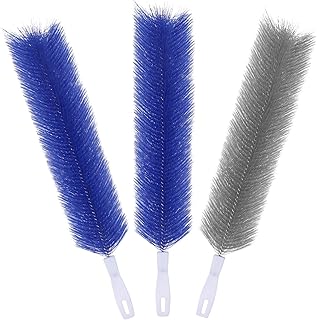
If your fan is mounted high above a staircase, open-plan room, or vaulted ceiling, prioritize reach and low weight. The Eyliden 68″ Adjustable Ceiling Fan Duster is designed for ladderless cleaning and uses a dual-sided microfiber head, which can help you clean both the upper and lower blade surfaces in fewer passes. A bendable tool, such as the 3 Pcs Fan Cleaning Brush Bendable Cobweb Duster set, is helpful around vents, curtain rails, and awkward corners as well as fans.
Prepare the Room Before Dusting
Switch the fan off at the wall control and wait until every blade has stopped. For an extra margin of safety, turn off the fan’s circuit at the breaker if you will be working near the motor housing, wiring, or an integrated light fixture. Never rely on a remote control alone when your hands or cleaning tool may contact the fan.
Move delicate objects, artwork, and small lamps out of the area below. If the room contains upholstered furniture, cover it with a washable sheet. Open a window only if outdoor air is clean; otherwise, ventilation can bring in more particles than it removes. A soft floor covering or drop cloth catches the small amount of dust that escapes the duster.
Before beginning, inspect the fan for loose blades, cracked plastic, wobbling, or a low-hanging light shade. Cleaning is not the time to tighten components while standing beneath a running appliance. Address mechanical issues separately according to the manufacturer’s instructions.
Use the Pillowcase Method for Heavily Dusty Blades
For a thick layer of dust, slide an old pillowcase over one blade at a time. Support the blade gently with one hand while enclosing it with the other, then pull the case toward the tip. The dust falls inside the fabric instead of drifting across the room. Empty the pillowcase outdoors or launder it before using it again.
This method is especially useful for dark blades, textured wood-look finishes, and rooms illuminated by directional spotlights, where a fine dusty line becomes conspicuous. Do not press down heavily; excessive force can flex the blade or stress its mounting point.
Dust in a Consistent Pattern
Start with the blade closest to you and work around the fan in one direction. Use slow strokes from the blade’s inner section toward its tip, keeping the microfiber head in full contact with the surface. Clean the upper face first, then the leading edge and underside. A head that cups the blade is convenient, but avoid twisting the blade or allowing the pole to strike the ceiling, shade, or wall.
Shake or vacuum the duster outdoors when its fibers become loaded. Reusing a saturated head can redistribute dust and leave a dull film. For fans with a light kit, use a separate dry microfiber cloth on the shade and motor housing. Keep moisture away from switches, sockets, seams, and electrical openings.
After all blades are clean, dust the canopy, downrod, light fixture, and pull chains from top to bottom. This prevents particles from falling onto areas you have already finished. If the fan has an LED diffuser or glass shade, follow its care instructions rather than assuming it can be wiped with a general-purpose cleaner.
Wash and Maintain the Fan Blades
Dry dusting is usually enough for routine upkeep, but kitchen fans and homes with smokers or wood-burning stoves may develop a sticky film. Remove blades only if the manufacturer permits it and you can label their positions. Wash them with a barely damp cloth and a small amount of mild soap, then dry both sides completely before reinstalling.
Do not saturate engineered wood, fabric-wrapped blades, or painted finishes. Test any cleaner on an inconspicuous area first, and avoid abrasive pads, solvent-based products, and furniture polish unless the fan’s instructions specifically approve them. A slippery residue can attract more dust and may alter the blade’s appearance under bright lighting.
Tips
- Dust ceiling fans every two to four weeks in bedrooms and living rooms; clean kitchen fans more often.
- Use the lowest comfortable pole extension and keep both feet planted rather than reaching sideways.
- Wash microfiber heads separately from lint-producing laundry and skip fabric softener, which can reduce dust attraction.
- Check the fan after cleaning: a new wobble, rubbing sound, or uneven rotation may indicate a loose or misaligned component.
Frequently Asked Questions
Should I dust a ceiling fan while it is running?
No. A rotating blade can catch the duster, scatter dust, or cause the tool to contact a light fixture. Turn the fan off and wait for it to stop completely before cleaning.
Is a ceiling-fan duster better than a regular feather duster?
Usually. A microfiber fan duster is shaped to cover a blade and generally traps more fine dust than loose feathers. An adjustable pole also makes it safer and more convenient for high ceilings.
Can I use water or spray cleaner on the blades?
Use a dry microfiber head for routine dusting. For grime, apply a small amount of mild cleaner to a cloth rather than spraying the fan directly. Never let liquid run toward the motor or electrical connections.
How do I clean a ceiling fan over a staircase?
Choose a lightweight, long-reach duster and work from a stable floor position. If the blades cannot be reached without leaning, climbing on furniture, or losing control of the tool, hire a professional or use a properly secured access system.
Conclusion
The best way to dust a ceiling fan is slow, dry, and controlled: stop the fan, protect the room, use a soft microfiber tool with suitable reach, and clean from the blade’s inner section outward. A purpose-built option such as the DRQ, FONUNO, Storystore, or Eyliden duster can make routine maintenance easier, while a bendable brush adds versatility around vents and other hard-to-reach surfaces. Done regularly, this simple task keeps the air cleaner and helps your room’s lighting and finishes look deliberately maintained.