Key takeaways
- Seat Depth: Look for a seat pan no deeper than 17 inches. If the front edge presses into the backs of your knees, the chair is oversized no matter what the label says.
- Lumbar Position: On petite frames, the built-in lumbar curve should sit at belt level, not mid-back. Adjustable-height lumbar pads let you dial this in rather than relying on a fixed sweet spot.
- Armrest Alignment: Armrests should let your elbows rest at roughly 90 degrees with shoulders relaxed. Flip-up or height-adjustable arms prevent the hunched-shoulder posture that short people accumulate by week two.
- Material and Room Light: High-gloss PU leather reflects overhead fixtures and can create distracting glare in a home office. Matte or textured finishes absorb light more evenly, keeping your visual field calm during long sessions.
- Weight Capacity and Build: A sturdy base with a 250- to 330-pound rating signals reinforced gas lifts and casters that won’t wobble—important for smaller users who shift position frequently to relieve pressure points.
What's inside
Finding a chair that actually fits a petite frame is less about “small” labels and more about proportions that match your body—seat depth, armrest height, and backrest curvature all need to recalibrate when you’re under 5’4″. Most office chairs are engineered around an average torso length, which means a shorter person ends up perched on the edge, lumbar support floating behind the wrong vertebra, and armrests that push shoulders into a shrug. The result is fatigue that no amount of ambient design can fix.
As someone who spends their career tuning the feel of a room—pairing warmth, texture, and posture with light—I can tell you that a poorly scaled chair undermines even the most thoughtfully lit workspace. This 2026 roundup evaluates six chairs built for shorter users, weighing ergonomic geometry, material behavior under desk lighting, and real-world comfort across a full workday. Below you’ll find a curated comparison, followed by a buying guide to help you match a chair to your exact proportions.
As an Amazon Associate we earn from qualifying purchases.




🛒 Best Price Today on Amazon
Prime members get fast, free shipping on everything above, plus member-only deals. New members get a 30-day free trial — cancel anytime.
How to Choose an Office Chair For Short Person (2026)
- Seat Depth: Look for a seat pan no deeper than 17 inches. If the front edge presses into the backs of your knees, the chair is oversized no matter what the label says.
- Lumbar Position: On petite frames, the built-in lumbar curve should sit at belt level, not mid-back. Adjustable-height lumbar pads let you dial this in rather than relying on a fixed sweet spot.
- Armrest Alignment: Armrests should let your elbows rest at roughly 90 degrees with shoulders relaxed. Flip-up or height-adjustable arms prevent the hunched-shoulder posture that short people accumulate by week two.
- Material and Room Light: High-gloss PU leather reflects overhead fixtures and can create distracting glare in a home office. Matte or textured finishes absorb light more evenly, keeping your visual field calm during long sessions.
- Weight Capacity and Build: A sturdy base with a 250- to 330-pound rating signals reinforced gas lifts and casters that won’t wobble—important for smaller users who shift position frequently to relieve pressure points.
The Best Office Chairs For Short Person (2026) Reviewed
PU Leather Ergonomic Desk Chair with Adjustable Armrests
This compact PU leather chair nails the fundamentals for shorter users: a shallow seat pan, 360-degree swivel with smooth casters, and armrests that actually lower to petite elbow height. The matte leather surface reads beautifully under warm desk lamps without throwing glare, and the ergonomic back contour holds the lumbar zone in the right place without aftermarket cushions. A solid entry-level pick.
Brown Executive Office Chair with Padded Arms
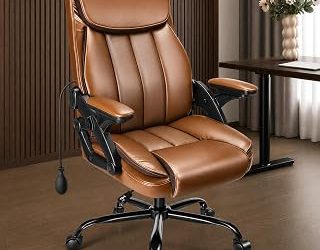
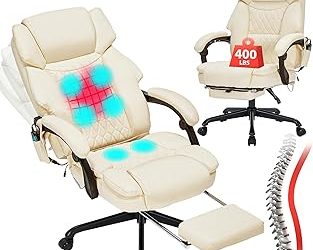
The warm brown PU leather gives this executive chair a richer, more residential presence than the typical black slab, which matters if your office shares space with curated furnishings. Lumbar support is integrated into the backrest rather than tacked on, and the padded armrests reduce forearm pressure during extended typing. Short users will appreciate the reduced seat depth compared to standard executive models.
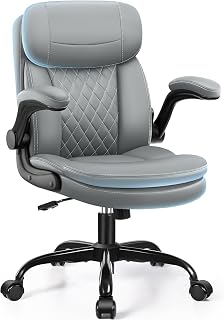
Upgraded Grey Chair with Double-Layer Cushion and Neckrest
Grey is a forgiving neutral that disappears under both cool LED panels and warm incandescent pendants, making this the most design-versatile option here. The double-layer seat cushion is a genuine upgrade—thicker foam distributes weight across a smaller seat area, which directly benefits lighter, shorter users. An included neckrest closes the gap that standard office chair backs leave on petite torsos.
Black Executive Chair with Flip-up Armrests
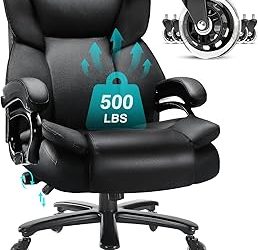
Flip-up armrests are a quiet luxury for shorter people: they let you scoot the chair fully under the desk for uncluttered sightlines, then swing the arms back up when you sit. The lumbar support is adjustable, and the black PU leather maintains a clean, low-profile look that recedes visually in a small room—useful when you want the desk lamp, not the chair, to anchor the space.
Ergonomic Task Chair with Mesh Back and Adjustable Lumbar
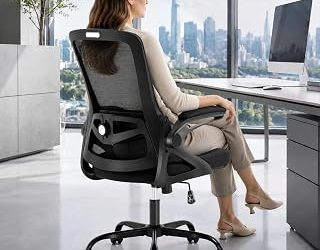
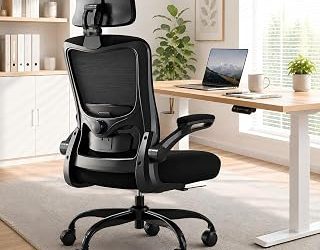
Mesh is the material pick if your workspace runs warm or sits near a window where sunlight hits directly. Air circulates through the backrest instead of pooling heat against your skin, and the adjustable lumbar slider lets you reposition support to match a shorter spine. Flip-up arms keep the silhouette narrow. For petite users who prioritize breathability and a light visual footprint, this is the pragmatic choice.
Frequently Asked Questions
What seat height is best for someone under 5’2″?
Target a seat height between 15 and 17 inches measured from the floor. This range lets your feet rest flat with thighs roughly parallel to the ground, which protects knee circulation over long workdays.
Can a standard office chair be modified to fit a shorter person?
Adding a lumbar pillow and a seat cushion can partially compensate, but you cannot fix a seat pan that is too deep or armrests that are fixed too high. A chair designed for shorter proportions eliminates the problem rather than masking it.
Does PU leather hold up in a home office environment?
Modern PU leather resists spills and wipes clean easily, making it practical for home use. It can feel slightly warm in summer, so pair it with breathable clothing or choose a mesh-back hybrid if temperature is a concern.
How often should I replace an office chair used daily?
A quality office chair used eight hours a day typically lasts five to seven years before foam compression and gas-lift degradation affect comfort. Check the warranty—most reputable models cover three to five years of residential use.
Final Thoughts
For the most complete petite-friendly package, the Upgraded Grey Chair with its double-layer cushion and neckrest stands out as the best overall. If you want warmth and elegance in your workspace, the Brown Executive Chair offers a rare combination of shorter-user geometry and rich material tone. And for those in warmer climates or sunlit rooms, the Ergonomic Mesh Task Chair delivers unmatched breathability. Each of these three options respects a shorter body while supporting the kind of deliberate, comfortable environment that makes long work hours sustainable.