Key takeaways
- Tooth count: Blades with 80 to 100 teeth generally favor smoother crosscuts in trim, panels, and finished furniture parts, while lower counts remove material faster.
- Tooth geometry: Alternate-top-bevel designs are commonly suited to clean wood crosscuts; other geometries may prioritize ripping, durability, or reduced chipping.
- Kerf: Thin-kerf blades waste less material and can feel easier on a saw, but confirm that the blade is compatible with your machine and cutting setup.
- Arbor and size: Verify the 12-inch diameter, arbor hole, and the saw’s maximum rated blade specifications before buying.
- Material: Select a blade designed for the wood products you use most, especially when moving between hardwood, plywood, veneered panels, and construction lumber.
What's inside
Choosing a 12-inch miter saw blade is less about finding the highest tooth count and more about matching the blade to the finish you want on the furniture in front of you. A blade that looks excellent on a product page can still disappoint if its kerf, tooth geometry, or intended material does not suit your saw and project.
This guide approaches the decision from a furniture-making and ambience perspective: clean edges, controlled tear-out, and surfaces that need minimal touch-up before stain or paint. We compare fine-finish and general-purpose options, explain the specifications that matter, and highlight where each blade fits best in a well-equipped home workshop.
As an Amazon Associate we earn from qualifying purchases.


🛒 Best Price Today on Amazon
Prime members get fast, free shipping on everything above, plus member-only deals. New members get a 30-day free trial — cancel anytime.
How to Choose a 12-Inch Miter Saw Blade (2026)
- Tooth count: Blades with 80 to 100 teeth generally favor smoother crosscuts in trim, panels, and finished furniture parts, while lower counts remove material faster.
- Tooth geometry: Alternate-top-bevel designs are commonly suited to clean wood crosscuts; other geometries may prioritize ripping, durability, or reduced chipping.
- Kerf: Thin-kerf blades waste less material and can feel easier on a saw, but confirm that the blade is compatible with your machine and cutting setup.
- Arbor and size: Verify the 12-inch diameter, arbor hole, and the saw’s maximum rated blade specifications before buying.
- Material: Select a blade designed for the wood products you use most, especially when moving between hardwood, plywood, veneered panels, and construction lumber.
The Best 12-Inch Miter Saw Blade (2026)s Reviewed
DEWALT DWA112100 100-Tooth Fine-Finish Blade
The DEWALT DWA112100 is a focused choice for crisp crosscuts where the edge will remain visible beneath clear finish or a softly colored stain. Its 100-tooth layout suits detail-oriented furniture work, including face frames, casing, and narrow trim, where a bright, controlled cut is more valuable than aggressive stock removal.
Diablo D1280X 80-Tooth Fine-Finish Blade
Diablo’s D1280X balances a smooth cut with a slightly more versatile tooth count than many 100-tooth options. It is a strong fit for a home workshop that moves between hardwood components, plywood panels, and general trim, delivering the sort of edge that helps preserve a calm, uninterrupted visual surface on finished pieces.
Makita B-67000 100T Max Efficiency Blade
The Makita B-67000 targets users who want a refined cut without turning every operation into a slow, delicate pass. Its 100-tooth carbide-tipped design is particularly appealing for visible furniture parts and precision trim, where small reductions in splintering can save time during sanding and edge preparation.
Freud LU86R012 48-Tooth Thin-Kerf Blade
The Freud LU86R012 takes a different route, using a 48-tooth general-purpose configuration and thin kerf for a more flexible day-to-day blade. It makes sense for makers who cut a mixture of stock sizes and want a practical balance of speed, efficiency, and finish rather than a blade dedicated solely to ultra-smooth crosscuts.
FOXBC 100-Tooth Ultimate Polished-Finish Blade
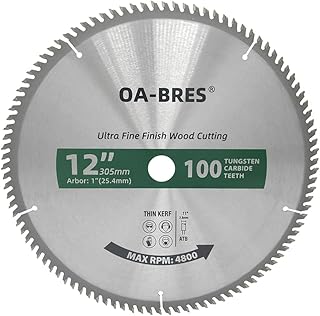
The FOXBC 100-tooth blade is aimed squarely at polished-looking wood cuts, making it an appealing option for decorative furniture work and carefully prepared trim. Its design is best considered when the visual character of the cut matters as much as the pace of the job, particularly on parts that will receive a transparent finish.
Frequently Asked Questions
Is a 100-tooth blade always better for furniture?
Not always. A 100-tooth blade can produce an especially smooth crosscut, but it may cut more slowly and is not automatically the best choice for every material or operation. A quality 80-tooth blade can offer an excellent balance for many furniture projects.
Can I use a 12-inch miter saw blade on a table saw?
Only if the blade is specifically compatible with both machines and your saw manufacturer permits that configuration. Check the arbor, guard clearance, maximum blade rating, kerf requirements, and the blade’s intended use before installing it.
What blade is best for plywood and veneered panels?
A fine-finish blade with an appropriate tooth design is usually the safer starting point because it can help reduce chipping on exposed edges. Use proper support, keep the material firmly controlled, and remember that blade condition also affects the final result.
How often should a miter saw blade be replaced?
Replace or professionally sharpen it when cuts become noticeably rough, burning increases, the saw requires unusual force, or tear-out appears despite good technique. The right interval depends on the wood species, abrasiveness of the material, and how frequently the blade is used.
Final Thoughts
For a furniture-focused workshop, the DEWALT DWA112100 and Makita B-67000 are compelling fine-finish choices, while the Diablo D1280X offers a useful middle ground between refinement and versatility. If you prefer one blade for a broader range of everyday work, the Freud LU86R012 provides a practical general-purpose alternative.