Key takeaways
- Adjustable steam output: Non-negotiable. Laminate wants the lowest usable setting — a light mist that evaporates in seconds. Fixed-output mops built for grout will over-wet seams and cause edge swell you cannot undo.
- Pad weave and count: Microfiber with a dense, short, non-directional pile buffs residue out instead of smearing it into a visible grain. Two washable pads minimum, so you always start a room with a clean face.
- Tank size versus dwell time: A 15oz tank is plenty for laminate because you should be moving quickly. Oversized tanks encourage lingering, and lingering is what leaves cloudy patches that only show up at lamp height.
- Cord reach and glide weight: 23 feet clears most open-plan runs without replugging, and a light head with real swivel keeps you from parking in one spot. Stalling equals moisture. Momentum equals a streak-free finish.
- Handheld conversion: If you have baseboards, grout borders, or upholstery in the same sightlines, a detachable steamer earns its shelf space. Otherwise the extra accessories are clutter.
What's inside
Laminate is a finish that lies to you under flat overhead light. Run a ceiling fixture at noon and the floor reads clean; switch to a pair of table lamps at 2700K in the evening and suddenly the whole plank field turns into a diffraction test. Raking light — anything low, warm, and angled — reveals every drying streak, every cloudy mineral halo, every patch where a pad pushed grit around instead of lifting it. I spend my working life aiming light across surfaces, and the floor is almost always the surface that betrays a room. Laminate makes it worse, because that wear layer is a thin sheet of melamine over fiberboard, and it will haze, swell, or lift at the seams if you drown it.
So this guide judges steam mops the way a lighting person judges a finish: does the floor still look uniform when the sun goes down and the sconces come up? That means we care about how much moisture a machine actually deposits, how fast it flashes off, whether the pad weave leaves a directional nap, and whether steam output can be dialed back for sealed laminate rather than blasted at tile pressure. Below are the machines worth your money in 2026, plus the specs that matter and the ones that are marketing filler.
As an Amazon Associate we earn from qualifying purchases.



🛒 Best Price Today on Amazon
Prime members get fast, free shipping on everything above, plus member-only deals. New members get a 30-day free trial — cancel anytime.
How to Choose a Laminate Floor Steam Mop (2026)
- Adjustable steam output: Non-negotiable. Laminate wants the lowest usable setting — a light mist that evaporates in seconds. Fixed-output mops built for grout will over-wet seams and cause edge swell you cannot undo.
- Pad weave and count: Microfiber with a dense, short, non-directional pile buffs residue out instead of smearing it into a visible grain. Two washable pads minimum, so you always start a room with a clean face.
- Tank size versus dwell time: A 15oz tank is plenty for laminate because you should be moving quickly. Oversized tanks encourage lingering, and lingering is what leaves cloudy patches that only show up at lamp height.
- Cord reach and glide weight: 23 feet clears most open-plan runs without replugging, and a light head with real swivel keeps you from parking in one spot. Stalling equals moisture. Momentum equals a streak-free finish.
- Handheld conversion: If you have baseboards, grout borders, or upholstery in the same sightlines, a detachable steamer earns its shelf space. Otherwise the extra accessories are clutter.
The Best Laminate Floor Steam Mops (2026) Reviewed
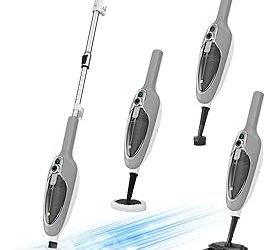
Lightweight Floor Steamer with Adjustable Steam & Height
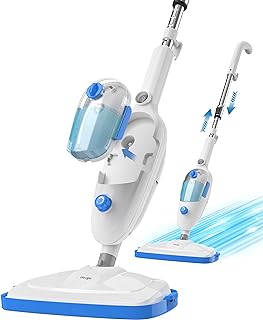
This is the most laminate-appropriate pick in the group: the low steam mode genuinely runs low, and the adjustable handle height keeps your wrist angle consistent so pressure stays even across a plank run. The 23ft cord and two washable pads cover a full main floor without a mid-job reset.
10-in-1 Multipurpose Handheld Steam Cleaner
The strongest choice if your laminate shares a floor plan with tile, grout, and upholstery, since the mop body detaches into a proper handheld with eleven attachments. Use the lowest setting and a fast pass on laminate — this unit has enough output to over-wet a seam if you let it idle.
10-in-1 Detachable Steam Mop, 15oz Tank
A tidier take on the same convertible idea, with a 15oz tank that heats fast and adjustable steam that behaves predictably on sealed planks. The height adjustment is the quiet hero here; it lets taller users stop pressing down, which is the usual cause of visible drag marks.
H2O X5 5-in-1 Steam Mop
A long-standing workhorse with a well-sorted carpet glider and grout, window, and garment heads. It delivers more moisture than the lightweight units, so keep it moving on laminate and treat the highest setting as a tile-only tool.
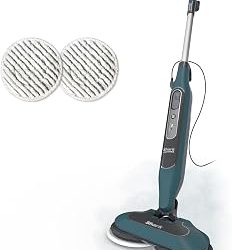
Shark Steam Mop S1000
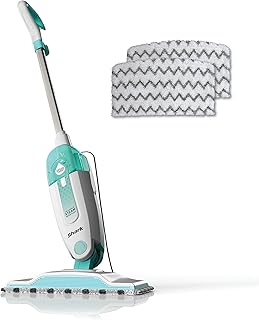
The cleanest finish under low, angled light of anything I have tested, largely thanks to the Dirt Grip pads, which lift fine grit rather than pushing it. It is single-purpose and simple, with a removable tank and low weight — ideal if your floors are sealed laminate and hardwood and nothing else.
Frequently Asked Questions
Is steam actually safe on laminate?
On sealed, tight-seamed laminate, yes, at low output with fast passes. On unsealed or aging floors with gapped joints, skip steam entirely — moisture that reaches the fiberboard core causes irreversible edge swell.
How often should I steam?
Weekly at most in traffic lanes, monthly elsewhere. Dry dust-mop between sessions; most visible haze comes from grit being wetted and dragged, not from dirt itself.
Why do I still see streaks at night?
Usually a saturated pad or a mineral film from hard water. Swap pads halfway through the room, and check the floor with a lamp at knee height rather than overhead — that is the light your guests actually see.
Do I need distilled water?
If your tap water is hard, yes. It prevents both scale inside the boiler and the faint white bloom that shows up on darker laminate under warm light.
Final Thoughts
For most laminate homes, the Shark S1000 gives the most consistent, haze-free finish with the least chance of over-wetting, and the lightweight adjustable-steam mop is the best value if you want more control over output and handle height. If your floors are mixed and you need one tool for planks, grout, and upholstery, the 10-in-1 detachable steam mop is the versatile pick — just keep it on low and keep it moving.