Key takeaways
- Height and profile: Fourteen inches gives you room for a genuine support core beneath the comfort layers. Twelve inches can work for lighter builds or split loads, but under sustained pressure the thinner stack compresses faster and recovers less.
- Coil versus foam architecture: Pocketed springs push back progressively — the deeper you press, the harder they resist — which suits heavier frames well. All-foam builds are quieter and motion-isolating, but the density spec matters enormously, since low-density foam surrenders quickly.
- Edge integrity: Sitting on the perimeter to dress is where most mattresses reveal their weaknesses. Reinforced border coils or a firm foam rail keep the usable sleep surface from shrinking inward over the first two years.
- Heat behavior: Greater body mass means deeper compression, and deeper compression traps warmth. Gel infusions, ventilated foam channels, and open coil layers all help move heat out rather than store it against you.
- Certifications and trial windows: CertiPUR-US foam and a fiberglass-free construction are the baseline for indoor air quality. A 365-night trial matters here more than for average sleepers, because sag under load shows up on a months-long timeline, not a weekend.
What's inside
I spend my working hours shaping how rooms feel after sunset — where the 2200K pools of light land, how a dimmer curve should ease a body toward stillness, which surfaces absorb glare and which throw it back at you. Every bedroom I light eventually reveals the same truth: no amount of warm layered lighting rescues a bed that gives out under its owner. For sleepers carrying more weight, the failure is physical and measurable. The perimeter softens, the middle dips into a shallow bowl, and by 3 a.m. the spine is holding a shape no ambience can talk it out of.
Firmness for heavier bodies is a load-bearing question, not a comfort preference. It comes down to coil gauge, foam density, edge reinforcement, and how honestly a brand describes its build. Below are six extra-firm mattresses — foam and hybrid, twelve and fourteen inches — chosen for structural credibility rather than marketing gloss, followed by the specifications worth checking before you commit.
As an Amazon Associate we earn from qualifying purchases.




🛒 Best Price Today on Amazon
Prime members get fast, free shipping on everything above, plus member-only deals. New members get a 30-day free trial — cancel anytime.
How to Choose a Firm Mattress For Heavy Person (2026)
- Height and profile: Fourteen inches gives you room for a genuine support core beneath the comfort layers. Twelve inches can work for lighter builds or split loads, but under sustained pressure the thinner stack compresses faster and recovers less.
- Coil versus foam architecture: Pocketed springs push back progressively — the deeper you press, the harder they resist — which suits heavier frames well. All-foam builds are quieter and motion-isolating, but the density spec matters enormously, since low-density foam surrenders quickly.
- Edge integrity: Sitting on the perimeter to dress is where most mattresses reveal their weaknesses. Reinforced border coils or a firm foam rail keep the usable sleep surface from shrinking inward over the first two years.
- Heat behavior: Greater body mass means deeper compression, and deeper compression traps warmth. Gel infusions, ventilated foam channels, and open coil layers all help move heat out rather than store it against you.
- Certifications and trial windows: CertiPUR-US foam and a fiberglass-free construction are the baseline for indoor air quality. A 365-night trial matters here more than for average sleepers, because sag under load shows up on a months-long timeline, not a weekend.
The Best Firm Mattress For Heavy Person (2026)s Reviewed
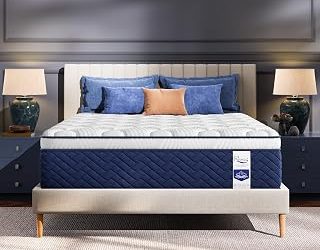
SLEEP100 14″ King Extra Firm Memory Foam
This is the all-foam answer for people who want silence and zero motion transfer — a gel-infused, ventilated 14-inch stack built around spinal alignment rather than plushness. It sleeps notably cooler than older-generation memory foam, though anyone who prefers the buoyant lift of springs should look to the hybrids instead.
BedStory Extra Firm King 14-Inch Hybrid
BedStory’s extra-firm hybrid targets the lumbar and hip region specifically, which is exactly where heavier sleepers experience the most punishing dip. The 365-night trial, fiberglass-free build, and CertiPUR-US certification make it an unusually low-risk purchase at this support level.
14-Inch Extra Firm Pressure Relief Hybrid
A well-balanced pick that pairs firm coil support with enough contouring at the shoulder and hip to avoid feeling like a plank. Cooling comfort layers and a full-year trial round it out, and the spinal-alignment focus shows in how flat the surface stays across the middle third.
12″ Extra Firm Queen Cooling Gel Hybrid
The strongest queen option here, engineered explicitly for heavier sleepers and couples who need the mattress to hold two distinct load zones without pooling toward the center. Breathable gel and a fiberglass-free construction make it a sensible choice for warm bedrooms.
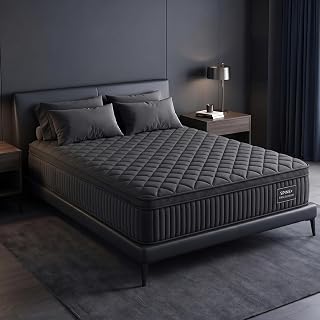
BedStory 14-Inch King Zoned Lumbar Hybrid
Zoned pocket springs firm up beneath the hips and lower back while easing slightly at the shoulders, producing better alignment than a uniformly rigid surface can manage. The 10-year warranty signals real confidence in its resistance to sagging.
Frequently Asked Questions
How firm should a mattress be for a heavier sleeper?
Aim for extra firm, roughly 7.5 to 9 on the standard ten-point scale. Softer surfaces let the hips settle below the shoulders, which is the mechanism behind most morning lower-back pain.
Does a hybrid outlast an all-foam mattress under heavy use?
Generally yes. Pocketed coils resist permanent compression better than foam, though a high-density foam core with substantial thickness can perform comparably for several years.
Will an extra-firm mattress feel uncomfortably hard at first?
Expect two to four weeks of adjustment as your body recalibrates. That adaptation period is precisely why a year-long trial window is worth prioritizing.
Does the foundation matter?
Considerably. Slats spaced more than three inches apart allow localized sagging regardless of mattress quality, so use a platform base or add a bunkie board.
Final Thoughts
If you want maximum structural confidence in a king, the BedStory Extra Firm 14-Inch Hybrid and the BedStory Zoned Lumbar Hybrid are the two I would put a client on without hesitation — one for its lumbar-and-hip targeting, the other for its zoned coil layout and decade-long warranty. Foam loyalists should take the SLEEP100 14-inch instead: dense, quiet, and cooler than its category reputation suggests. Get the support right first, then let the lighting do its work.