Key takeaways
- Weight Rating: Confirm the box is UL-listed for fan use specifically—not just light fixtures. Ceiling fans generate dynamic loads from rotation, so a box rated at 50 pounds for static loads may only be safe up to 35 pounds for a fan. Always exceed your fixture’s weight by a comfortable margin.
- New Work vs. Old Work: New construction boxes nail directly to joists before drywall goes up. Old-work (remodel) boxes use adjustable braces or clamping mechanisms to grip existing joists through a cutout. Picking the wrong type creates a frustrating install or a weak mount.
- Joist Spacing Compatibility: Standard ceiling framing is 16 inches on center, but older homes often vary between 16 and 24 inches. Look for an adjustable brace that spans that full range so you’re not stuck rerouting the fan’s position on the ceiling.
- Material and Environment: Steel boxes handle heat and mechanical stress better indoors. For covered porches or damp-rated outdoor fans, weatherproof PVC or galvanized construction prevents corrosion that can weaken the mount over time.
- Depth and Knockout Configuration: Deeper boxes give you more room to manage wire connections without cramming—critical when you’re working with 12-gauge wire or multiple conductors. Knockout size (typically ½ inch) should match your conduit or cable connector without adapters.
What's inside
As someone who designs lighting schemes for living spaces, I’ve learned that the ceiling fan conversation almost always starts in the wrong place. People obsess over blade pitch, motor noise, and finish colors—then bolt a 25-pound fixture onto a junction box rated for half that load. The result is a wobble that throws off the room’s entire visual balance, or worse, a fixture that comes down unexpectedly. The electrical box is the invisible foundation of every overhead fan installation, and choosing the wrong one can compromise both safety and the clean, intentional look you’re after.
This guide cuts through the noise. I’ve evaluated six popular ceiling fan electrical boxes for 2026, weighing load ratings, installation flexibility, material durability, and how each one performs in real-world remodel and new-construction scenarios. Whether you’re hanging a sculptural statement fan in a dining area or replacing a dated fixture in a rental, the picks below will help you match the right box to your ceiling type, joist spacing, and weight requirements.
As an Amazon Associate we earn from qualifying purchases.


🛒 Best Price Today on Amazon
Prime members get fast, free shipping on everything above, plus member-only deals. New members get a 30-day free trial — cancel anytime.
How to Choose an Electrical Box For Ceiling Fan (2026)
- Weight Rating: Confirm the box is UL-listed for fan use specifically—not just light fixtures. Ceiling fans generate dynamic loads from rotation, so a box rated at 50 pounds for static loads may only be safe up to 35 pounds for a fan. Always exceed your fixture’s weight by a comfortable margin.
- New Work vs. Old Work: New construction boxes nail directly to joists before drywall goes up. Old-work (remodel) boxes use adjustable braces or clamping mechanisms to grip existing joists through a cutout. Picking the wrong type creates a frustrating install or a weak mount.
- Joist Spacing Compatibility: Standard ceiling framing is 16 inches on center, but older homes often vary between 16 and 24 inches. Look for an adjustable brace that spans that full range so you’re not stuck rerouting the fan’s position on the ceiling.
- Material and Environment: Steel boxes handle heat and mechanical stress better indoors. For covered porches or damp-rated outdoor fans, weatherproof PVC or galvanized construction prevents corrosion that can weaken the mount over time.
- Depth and Knockout Configuration: Deeper boxes give you more room to manage wire connections without cramming—critical when you’re working with 12-gauge wire or multiple conductors. Knockout size (typically ½ inch) should match your conduit or cable connector without adapters.
The Best Electrical Box For Ceiling Fan (2026)s Reviewed
Southwire MSBFAN
This depth-adjustable steel box is a workhorse for new installations where load margin matters. Rated for 50-pound fans and 75-pound light fixtures, it gives you a generous safety buffer that lets you spec heavier decorative fans without second-guessing. The adjustable depth is a thoughtful touch—it accommodates varying drywall thicknesses so the box sits flush, which matters when a slim-profile fan canopy is part of the design.
RACO Retro-Brace 936
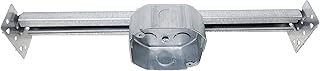
For remodel projects in homes with unpredictable joist spacing, the Retro-Brace 936 is the one I recommend most often. Its adjustable brace spans 16 to 24 inches, and the 35-to-70-pound rating covers the vast majority of residential ceiling fans. The included mounting bracket streamlines what is usually the most tedious part of a retrofit, and the ½-inch knockouts are positioned cleanly for straightforward wiring access.
Hubbell-Bell PRCF57550GY
If you’re mounting a fan on a covered patio or in a sunroom, this gray PVC box is purpose-built for the job. It’s cULus listed and weatherproof, with a 45-degree mount option that opens up angled ceiling installations—something most boxes simply don’t offer. The three included reducer bushings give you flexibility on connector sizing, which saves a trip to the hardware store mid-project.
RACO 8293 Round Pan
Sometimes the simplest solution is the best one. This ½-inch-deep 4-inch round pan is a no-frills steel box with five bottom knockouts, ideal for flush-mount fans or light kits where depth is tight. It’s not the flashiest pick, but its straightforward geometry makes it a reliable default for standard ceiling fan loads in new construction where you’re wiring directly to a joist.
4-Inch Round Shallow Box (2-Pack)
Sold as a pair, these shallow round boxes are a practical choice for rooms where you’re installing matching fans or replacing fixtures in adjacent spaces. The ½-inch depth and bottom knockouts handle typical residential fan wiring, and buying in a two-pack brings the per-unit cost down noticeably. They’re basic but well-suited for budget-conscious installs where weight ratings align with lighter fan models.
Frequently Asked Questions
Can I use a regular light fixture box for a ceiling fan?
No. Standard ceiling fan-rated boxes are engineered to handle the dynamic vibration and rotational torque that fans produce. A box listed only for static light fixture loads can loosen over time, creating a real safety hazard. Always verify the box carries a UL listing for fan support.
What load rating do I need for a ceiling fan?
Most residential ceiling fans weigh between 15 and 35 pounds, but you should choose a box rated for at least 50 pounds to account for dynamic forces. If you’re installing a large decorative fan with a light kit, aim for 70 pounds or higher to maintain a comfortable safety margin.
Do I need a special box for outdoor ceiling fans?
Yes. Outdoor or damp-rated installations require a box made from corrosion-resistant material like galvanized steel or weatherproof PVC. Exposing an indoor-rated steel box to moisture will degrade it over time, compromising the mount. Look for cULus or equivalent listings that specifically cover outdoor use.
How do I determine joist spacing before buying a box?
Use a stud finder to locate your ceiling joists and measure the center-to-center distance. If the spacing falls outside the standard 16 inches, an adjustable brace-style box like the RACO Retro-Brace 936 will accommodate the variation without repositioning the fan.
Final Thoughts
For most homeowners tackling a ceiling fan install in 2026, the RACO Retro-Brace 936 strikes the best balance of adjustable fit, solid load capacity, and remodel-friendly design. If weight headroom and clean installation are your priority, the Southwire MSBFAN is worth the investment. And for outdoor or angled-ceiling applications, the Hubbell-Bell PRCF57550GY is in a category of its own. Get the box right, and the rest of your ceiling fan project falls into place.