Key takeaways
- Downrod length relative to ceiling height: As a rule, mount the fan so the leading edge of the blade sits 8 to 9 feet above the floor. For a 14-foot ceiling, that means roughly a 48-inch downrod plus the motor housing. Measure twice—a rod that’s even 4 inches short can turn an air-mover into a decoration.
- CFM output versus room square footage: For spaces under 200 square feet, anything above 4,000 CFM feels like a gentle lake breeze. Open patios and warehouses above 400 square feet should target 8,000 CFM or higher. A 96-inch fan like the ZMISHIBO or the Smart Aluminum model exists precisely for those high-volume jobs.
- Motor type and noise: DC motors draw roughly half the electricity of AC equivalents and run nearly silent at low speeds—critical if the fan hangs above a bedroom or dining area. The trade-off is upfront cost, but the energy savings and hush are worth it for year-round use.
- Wet and damp ratings: A “damp-rated” label means the fan tolerates humidity on a covered porch; “wet-rated” means it can handle direct rain. Don’t blur the distinction—a damp-rated fan on an uncovered deck will corrode inside two seasons.
- Ceiling slope and canopy compatibility: Fans mounted on pitched ceilings need a sloped canopy or an angled downrod adapter. Confirm the included hardware supports your angle; cathedral ceilings steeper than 30 degrees often require an aftermarket ball-and-socket mount.
What's inside
Most buyers shopping for a ceiling fan with a long downrod hit the same wall: vaulted ceilings, sunken living rooms, or covered patios that demand a 36-inch or longer drop, yet nearly every fan they find ships with an 8-inch stub. The result is a fan crammed against a cathedral peak, shoving air sideways instead of down, or worse—sitting so close to the pitch that wobble becomes a safety issue. It’s a surprisingly common oversight in an industry that still defaults to standard 8-to-10-foot ceilings.
This guide spotlights ceiling fans that actually ship with generous downrod options—lengths suited for vaulted great rooms, double-height entryways, and tall outdoor structures. We pulled models spanning 52 to 96 inches in span, each paired with downrods long enough to position the blades at a useful height. If your ceiling rises above 9 feet, the picks below will finally move air the way it was meant to move.
As an Amazon Associate we earn from qualifying purchases.




🛒 Best Price Today on Amazon
Prime members get fast, free shipping on everything above, plus member-only deals. New members get a 30-day free trial — cancel anytime.
How to Choose a Ceiling Fan With Long Downrod (2026)
- Downrod length relative to ceiling height: As a rule, mount the fan so the leading edge of the blade sits 8 to 9 feet above the floor. For a 14-foot ceiling, that means roughly a 48-inch downrod plus the motor housing. Measure twice—a rod that’s even 4 inches short can turn an air-mover into a decoration.
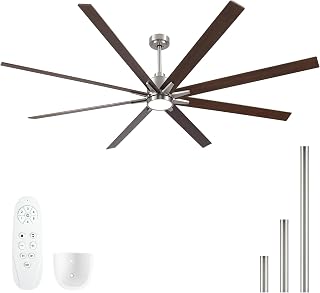
- CFM output versus room square footage: For spaces under 200 square feet, anything above 4,000 CFM feels like a gentle lake breeze. Open patios and warehouses above 400 square feet should target 8,000 CFM or higher. A 96-inch fan like the ZMISHIBO or the Smart Aluminum model exists precisely for those high-volume jobs.
- Motor type and noise: DC motors draw roughly half the electricity of AC equivalents and run nearly silent at low speeds—critical if the fan hangs above a bedroom or dining area. The trade-off is upfront cost, but the energy savings and hush are worth it for year-round use.
- Wet and damp ratings: A “damp-rated” label means the fan tolerates humidity on a covered porch; “wet-rated” means it can handle direct rain. Don’t blur the distinction—a damp-rated fan on an uncovered deck will corrode inside two seasons.
- Ceiling slope and canopy compatibility: Fans mounted on pitched ceilings need a sloped canopy or an angled downrod adapter. Confirm the included hardware supports your angle; cathedral ceilings steeper than 30 degrees often require an aftermarket ball-and-socket mount.
The Best Ceiling Fan With Long Downrod (2026)s Reviewed
60 Inch Outdoor Ceiling Fan with Light (Black Gold)
This 60-inch unit hits a sweet spot for patios and mid-size rooms, pushing 8,299 CFM through reversible ABS blades while keeping noise below a whisper. The included long downrods simplify installation on 10-to-12-foot ceilings, and the black-gold finish reads warmer than standard matte black under evening sconce light—a subtle win for ambience.
Rayqueen 84 Inch Brushed Nickel Ceiling Fan
At 84 inches, this fan moves serious air without the industrial look. Three downrod lengths (5.9, 11.8, and 23.6 inches) give you options, and the walnut blades add a mid-century warmth that pairs beautifully with brushed-nickel hardware. The 3-color-temperature LED dimmable light means you can dial from warm candlelight to crisp task lighting without a separate fixture.
Sevenine 52 Inch Downrod White Ceiling Fan
The Sevenine is a workhorse for bedrooms and covered outdoor spaces. ETL listing, 6-speed DC motor, and a 3-level timer make it genuinely practical, while the white finish disappears against a white ceiling—exactly what you want when the fan isn’t the design statement. The 3-color-temperature option keeps it flexible across seasons.
ZMISHIBO 96 Inch Industrial Ceiling Fan
Designed for warehouses, garages, and farmhouses, the ZMISHIBO pairs 8 aluminum blades with a damp-rated DC motor and ships with three downrods. It moves air on a massive scale, and the no-light design keeps the profile clean in spaces where overhead shop lights do the job. If your ceiling is tall and your expectations are industrial, this is the pick.
OPONL 52 Inch Modern Ceiling Fan with Light
Sleek and quiet, the OPONL brings a bedroom-friendly profile with 6 correlated color temperatures and a fully dimmable LED module. The reversible motor handles seasonal airflow direction, and the black modern housing works under both flat and modestly sloped ceilings. For the price, the build quality and noise floor punch above their weight.
Frequently Asked Questions
How long of a downrod do I need?
Measure from the ceiling mount to the desired blade height—ideally 8 to 9 feet above the floor. Subtract the motor housing length (typically 10 to 12 inches) from that distance to find the right downrod length. Most rooms with 12-foot ceilings need a 36-inch rod; 14-foot ceilings usually call for a 48-inch rod.
Can I use a long downrod on a sloped ceiling?
Yes, provided the fan includes a sloped-ceiling canopy or you add a ball-and-socket adapter. Most fans handle slopes up to 30 degrees out of the box. Steeper pitches require a compatible angled mount—check the manufacturer’s specifications before purchasing.
Are DC motors worth the premium over AC motors?
For any fan running several hours daily, DC motors pay for themselves within a year or two through lower electricity consumption and near-silent operation. AC motors are cheaper upfront but run louder and draw more power, especially at lower speeds.
Does blade span matter more than motor power?
Both matter, but for different reasons. Larger blades move more air at lower RPMs, which means less noise. A powerful motor in a small blade set can match the CFM of a larger fan, but it will be louder doing it. Match span to room size and let the motor do the rest.
Final Thoughts
For most households, the Rayqueen 84 Inch offers the best balance of airflow, finish options, and downrod flexibility. Spaces demanding maximum volume should look at the ZMISHIBO 96 Inch, while the Sevenine 52 Inch remains a quiet, reliable choice for bedrooms and covered porches. Every fan here ships with the long downrod lengths that high ceilings actually require—no aftermarket surprises needed.