Key takeaways
- Profile and rail clearance: Most guard rails sit five inches above the slats, so a 5- or 6-inch mattress keeps the protective lip intact. Anything thicker turns a safety rail into a decorative trim piece and pushes the sleeper toward your ceiling fixture.
- Thermal behavior up high: Warm air stacks. The upper bunk runs several degrees hotter than the lower one, and a recessed can or flush-mount fixture nearby adds to it. Gel-infused or open-cell foams matter far more on the top bunk than they do on the bottom.
- Certification, in writing: Look for CertiPUR-US foam and explicit fiberglass-free construction. This is non-negotiable in a kid’s room where the mattress cover will get unzipped, spilled on, and washed.
- Measure the frame, not the label: Twin bunks vary. Standard twins are 75×38 or 75×39, but RV and marine bunks are often 28 to 34 inches wide. A gap at the rail is a genuine hazard, not a cosmetic flaw.
- Support at the perimeter: Kids sit on the edge to pull on socks and to talk. A medium-firm core holds that edge; a plush one collapses and makes the bunk feel unstable.
What's inside
I light bedrooms for a living, which means I spend a lot of time thinking about the eighteen inches of air above a top bunk. That gap is where the ceiling fixture lives, where heat pools on a summer night, and where a child’s head goes when they sit up to read. Most people shop for a bunk mattress the way they shop for a regular one, then discover the top sleeper is now level with the guard rail, the pendant light is uncomfortably close, and the whole room feels compressed. A bunk bed is a vertical composition, and the mattress is the one element that quietly sets every other dimension in it.
This guide approaches bunk mattresses the way I’d approach a lighting plan: clearance first, then thermal behavior, then comfort. Below you’ll find current picks for standard twins, slim six-inch options, and narrow RV-width frames, plus the specification details that actually determine whether a bunk feels open and restful or cramped and warm. Everything here is built for slat frames and low-profile use, so nothing needs a box spring.
As an Amazon Associate we earn from qualifying purchases.


🛒 Best Price Today on Amazon
Prime members get fast, free shipping on everything above, plus member-only deals. New members get a 30-day free trial — cancel anytime.
How to Choose a Bunk Bed Mattress (2026)
- Profile and rail clearance: Most guard rails sit five inches above the slats, so a 5- or 6-inch mattress keeps the protective lip intact. Anything thicker turns a safety rail into a decorative trim piece and pushes the sleeper toward your ceiling fixture.
- Thermal behavior up high: Warm air stacks. The upper bunk runs several degrees hotter than the lower one, and a recessed can or flush-mount fixture nearby adds to it. Gel-infused or open-cell foams matter far more on the top bunk than they do on the bottom.
- Certification, in writing: Look for CertiPUR-US foam and explicit fiberglass-free construction. This is non-negotiable in a kid’s room where the mattress cover will get unzipped, spilled on, and washed.
- Measure the frame, not the label: Twin bunks vary. Standard twins are 75×38 or 75×39, but RV and marine bunks are often 28 to 34 inches wide. A gap at the rail is a genuine hazard, not a cosmetic flaw.
- Support at the perimeter: Kids sit on the edge to pull on socks and to talk. A medium-firm core holds that edge; a plush one collapses and makes the bunk feel unstable.
The Best Bunk Bed Mattresses (2026), Reviewed
Twin Mattress 5 Inch Cooling Gel Memory Foam
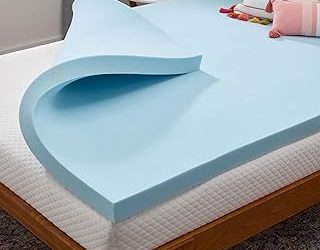
This is my default recommendation for a top bunk under a ceiling fixture: five inches preserves full rail height, and the gel-infused layer keeps surface temperature reasonable when warm air collects near the ceiling. The medium-firm feel supports a growing kid without the sink-in effect that makes thin foam feel like a pad.
MLILY 5 Inch Twin Mattress in a Box
MLILY’s green tea gel foam is genuinely effective at odor control, which matters in a small shared room where scent is part of the ambience whether you planned for it or not. Made in the USA, CertiPUR-US certified, and cut to a true 75×38, so it sits flush against the rails on most standard twin bunks.
Dopinmin 6 Inch Twin Gel Memory Foam
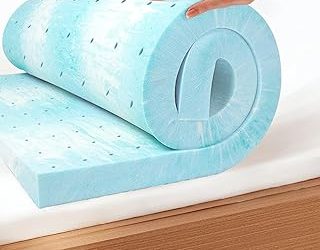
Six inches is the sweet spot for a lower bunk or a daybed, where rail clearance is less critical and you’d rather have the extra cushioning. The gel memory foam runs cool enough for a bottom bunk, and the medium-firm build handles older kids and lighter-weight adults comfortably.
Narrow Bunk Mattress, 6 Inch RV, 28×75
The specialist pick, and a rare one: a genuinely 28-inch-wide mattress for RV, cabin, and marine bunks where a standard twin simply will not fit. The Aquasoft foam and diamond-quilted breathable cover handle the poor airflow typical of enclosed sleeping berths.
Linenspa 5 Inch Gel Memory Foam Twin
The reliable budget baseline, and the one I spec when outfitting two or three bunks at once for a guest room or bunkhouse. Consistent five-inch profile, gel foam that resists heat buildup, and enough support to feel like a real mattress rather than a topper.
Frequently Asked Questions
How thick should a bunk bed mattress be?
Five to six inches for a top bunk. Check your guard rail height and keep at least five inches of rail above the mattress surface. Lower bunks and trundles can take six inches comfortably, and sometimes eight if the frame allows.
Do memory foam mattresses get too hot on a top bunk?
Traditional foam can. Gel-infused and open-cell foams handle it much better, and thin profiles hold less heat overall than thick ones. If you have recessed or surface-mount fixtures near the top bunk, switching those to LEDs also removes a real heat source.
Is fiberglass in mattresses something to worry about?
It’s used as a flame barrier in some budget mattresses and can escape if the cover is removed. Buy models that state fiberglass-free construction explicitly, as the picks above do, and you avoid the issue entirely.
Can these work on a trundle or daybed?
Yes, and they’re often the better choice. Low-profile foam lets a trundle slide fully under the bed frame and keeps a daybed’s proportions clean against the wall.
Final Thoughts
For most standard twin bunks, the MLILY 5 Inch and the cooling gel Twin Mattress 5 Inch give you correct rail clearance with real temperature control, which is exactly what a top bunk needs. Choose the Dopinmin 6 Inch for a lower bunk or daybed where the extra cushioning is worth the added height, and reach for the 28×75 Narrow Bunk Mattress if you’re working with an RV or cabin berth that standard sizing simply doesn’t serve.