Key takeaways
- Lumbar Architecture: Look beyond the word “lumbar” on a spec sheet. Adjustable depth and height matter more than a static pad. The best budget chairs let you dial the support curve to match the lordotic arch of your lower spine, which keeps fatigue from creeping in after hour three.
- Seat Pan Depth & Width: A generous seat pocket lets you distribute weight across the glutes and thighs rather than concentrating pressure on the tailbone. If you’re over 250 lbs or simply long-limbed, measure your thigh length and confirm the pan won’t jam behind your knees.
- Armrest Versatility: Fixed arms lock you into one typing angle. Four-dimensional or flip-up armrests let you tuck the chair fully under the desk, adjust height for different tasks, and even swing them out of the way when you need a clear sightline for creative work or board games with the family.
- Tilt Mechanism & Tension: A synchro-tilt recline with adjustable tension keeps the seat and backrest moving in proportion, maintaining contact with your lumbar zone as you lean back. Without it, you’re essentially a pivot point on a rigid lever—and your lower back knows it within an hour.
- Wheel & Base Material: Hard plastic casters gouge hardwood; polyurethane (PU) wheels glide silently and preserve the floor finish you just picked out. Match your chair’s casters to your flooring and you’ll protect the aesthetic while also gaining that whisper-quiet roll that matters when you’re focused.
What's inside
Picture this: you’ve just unboxed a sleek new desk lamp, lined up your LED strip behind the monitor, and dialed in the warm-to-cool spectrum on your accent light. The room glows exactly how you imagined it. Then you sink into your chair, and the whole composition collapses—lumbar pain, a seat that swallows you sideways, armrests fighting your elbows. Lighting and furniture aren’t separate problems; they’re one ecosystem. When the seat is right, you hold better posture, your eyes track the screen more naturally, and the ambience you worked so hard to curate actually gets enjoyed instead of endured.
That’s why this roundup matters. We zeroed in on the best office chairs you can buy for under $500 in 2026—models that balance ergonomic engineering, material quality, and weight capacity without demanding a second mortgage. Whether you’re furnishing a dedicated studio or carving a workspace out of a living-room corner, the chairs below share a common promise: they let the rest of your design choices shine by removing the most distracting variable—your own discomfort.
As an Amazon Associate we earn from qualifying purchases.




How to Choose an Office Chair Under $500 (2026)
- Lumbar Architecture: Look beyond the word “lumbar” on a spec sheet. Adjustable depth and height matter more than a static pad. The best budget chairs let you dial the support curve to match the lordotic arch of your lower spine, which keeps fatigue from creeping in after hour three.
- Seat Pan Depth & Width: A generous seat pocket lets you distribute weight across the glutes and thighs rather than concentrating pressure on the tailbone. If you’re over 250 lbs or simply long-limbed, measure your thigh length and confirm the pan won’t jam behind your knees.
- Armrest Versatility: Fixed arms lock you into one typing angle. Four-dimensional or flip-up armrests let you tuck the chair fully under the desk, adjust height for different tasks, and even swing them out of the way when you need a clear sightline for creative work or board games with the family.
- Tilt Mechanism & Tension: A synchro-tilt recline with adjustable tension keeps the seat and backrest moving in proportion, maintaining contact with your lumbar zone as you lean back. Without it, you’re essentially a pivot point on a rigid lever—and your lower back knows it within an hour.
- Wheel & Base Material: Hard plastic casters gouge hardwood; polyurethane (PU) wheels glide silently and preserve the floor finish you just picked out. Match your chair’s casters to your flooring and you’ll protect the aesthetic while also gaining that whisper-quiet roll that matters when you’re focused.
The Best Office Chairs Under $500 (2026), Reviewed
500 lbs Big and Tall Executive Chair (High Back, Pocket Spring)
This heavy-duty chair stands out for its pocket-spring cushion system—borrowed from mattress tech—to cradle heavier bodies without bottoming out. The adjustable lumbar pad and quiet rubber wheels round out a package built for long sessions at a standing-height-adjusted desk where you need rock-solid support when you sit.
Ergonomic Chair for Long Hours (330 lb Capacity)
Designed explicitly for people who spend eight-plus hours seated, this model pairs adjustable padded lumbar support with a breathable frame that doesn’t trap heat. Its 330 lb rating covers a wide range of users, and the padded lower-back module strikes a rare balance between firmness and comfort—ideal for anyone who rotates between deep-focus coding and casual browsing.
YFO Brown Leather Executive Task Chair
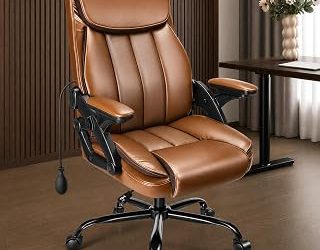
For studios and home offices where the chair has to earn its keep visually, the YFO brings a rich brown leather finish and rubber casters that won’t mar polished floors. Ergonomic lumbar support and adjustable height keep it from being a pretty face that compromises your posture—though the real win is how the warm leather tone complements wood desks and warm-white task lighting.
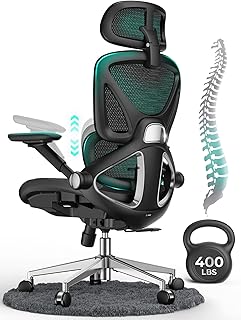
Ergonomic Mesh Chair (400 lbs, 4D Arms, 3-Level Tilt)
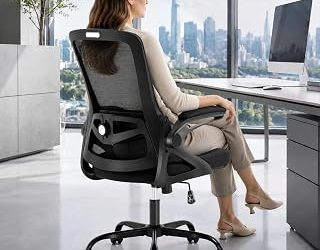
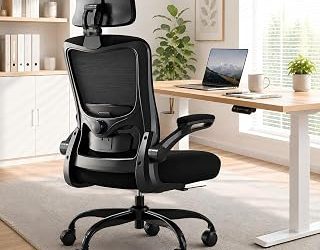
This mesh-back contender punches well above its price with 4D flip-up arms, a three-level tilt backrest, and a 3D headrest—features you’d normally find on chairs costing twice as much. The breathable mesh keeps airflow moving on hot afternoons, and the 400 lb capacity means it’s built with a reinforced base rather than just marketing copy.
500 lbs Executive Chair (Extra Wide Seat, Upgraded Wheels)
Extra-wide seating and thick armrest padding give this chair a lounge-chair feel without the recline. Its upgraded caster wheels roll smoothly on both carpet and hard flooring, and the adjustable lumbar support targets back pain directly—a practical choice for anyone managing chronic lower-back issues while putting in long hours.
Frequently Asked Questions
Can a chair under $500 really support 500 lbs long-term?
Yes, several models on this list use reinforced steel bases, heavy-gauge gas cylinders, and pocket-spring or high-density foam seats specifically engineered for sustained use at higher weight capacities. Always verify the individual weight rating and check user reviews for long-term durability feedback before purchasing.
How important are PU wheels vs. standard nylon casters?
PU (polyurethane) wheels are significantly quieter and gentler on hardwood, laminate, and tile. If your workspace has hard flooring, upgrading to PU casters—or choosing a chair that ships with them—protects your floors and eliminates the rolling rumble that nylon casters produce.
Do I really need adjustable lumbar support?
If you sit for more than four hours a day, yes. Static lumbar pads force you to adapt to the chair rather than the other way around. Adjustable depth and height let you position support exactly where your lower back needs it, reducing the likelihood of chronic strain.
What’s the difference between a high-back and mid-back office chair?
High-back chairs extend support to the shoulders and neck, making them better for tall users and longer sessions. Mid-back designs stop at the thoracic spine and work well for shorter users or tasks where you frequently lean forward. Choose based on your height and how upright you typically sit.
Final Thoughts
For the widest range of users, the Ergonomic Mesh Chair with 4D Arms offers the best feature-to-price ratio, delivering adjustability and airflow that rivals premium models. Users needing serious weight capacity should look closely at the 500 lbs Big and Tall Executive Chair with Pocket Springs, whose cushion design is genuinely differentiated. And if your workspace aesthetic matters as much as your posture, the YFO Brown Leather Chair earns its spot with a finish that elevates the entire room.