Key takeaways
- Recline Angle and Footrest Mechanism: A chair that only tilts 110° isn’t reclining — it’s leaning. Look for at least 135°–155° with a retractable footrest that doesn’t rattle. The recline should feel controlled, not like you’re falling backward into someone else’s lap.
- Weight Capacity and Frame Integrity: “Big and tall” is a marketing label unless the base is steel-reinforced and rated above 300 lbs. Verify the actual stated capacity, especially if massage or heating components add structural complexity to the seat pan.
- Lumbar Support System: Passive foam lumbar pads are table stakes. Pocket spring lumbar systems and adjustable lumbar pillows respond to your spine’s natural curvature throughout the day, which matters more than any single number on a spec sheet.
- Heating and Massage Features: Vibration massage at six contact points genuinely reduces lower-back fatigue during long sessions. Consistent heat — not hot spots — across the lumbar and seat region transforms a good chair into one you actually fight coworkers for.
- Material and Visual Weight: PU leather and faux leather read differently under warm task lighting versus cool overhead fluorescents. A white or green chair dramatically shifts the energy of a room; darker tones absorb light and ground a space. Choose based on your existing palette, not impulse.
What's inside
Most people shopping for an office chair recliner run into the same wall: chairs that promise lumbar salvation but feel like sitting on a folded umbrella, or recliners that look gorgeous in a showroom and collapse under real daily use. The gap between marketing language and actual comfort is enormous, and it widens when you factor in weight capacity, heating elements, massage motors, and how the whole thing fits under your desk lighting without looking like a spaceship crash-landed in your study.
This guide cuts through the noise. We evaluated six leading recliner-style office chairs across ergonomics, material quality, recline range, and how each one anchors a room visually. Whether you’re outfiting a moody corner office or a bright open-plan home workspace, you’ll find a serious recommendation below.
As an Amazon Associate we earn from qualifying purchases.


How to Choose Office Chair Recliners (2026)
- Recline Angle and Footrest Mechanism: A chair that only tilts 110° isn’t reclining — it’s leaning. Look for at least 135°–155° with a retractable footrest that doesn’t rattle. The recline should feel controlled, not like you’re falling backward into someone else’s lap.
- Weight Capacity and Frame Integrity: “Big and tall” is a marketing label unless the base is steel-reinforced and rated above 300 lbs. Verify the actual stated capacity, especially if massage or heating components add structural complexity to the seat pan.
- Lumbar Support System: Passive foam lumbar pads are table stakes. Pocket spring lumbar systems and adjustable lumbar pillows respond to your spine’s natural curvature throughout the day, which matters more than any single number on a spec sheet.
- Heating and Massage Features: Vibration massage at six contact points genuinely reduces lower-back fatigue during long sessions. Consistent heat — not hot spots — across the lumbar and seat region transforms a good chair into one you actually fight coworkers for.
- Material and Visual Weight: PU leather and faux leather read differently under warm task lighting versus cool overhead fluorescents. A white or green chair dramatically shifts the energy of a room; darker tones absorb light and ground a space. Choose based on your existing palette, not impulse.
The Best Office Chair Recliners (2026) Reviewed
Massage & Heated Office Chair with Foot Rest (Beige)
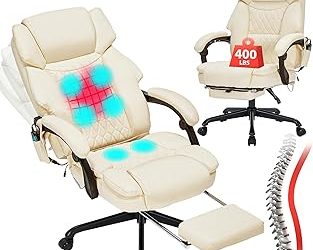
This is the chair that makes a room feel intentional. The beige leather catches warm afternoon light without glare, and the reclining backrest with adjustable arms positions you exactly where the eye-level ergonomics demand. The integrated heating and massage system is thoughtfully calibrated — warm enough to dissolve tension, never so intense it distracts from focused work. For a home office designed around calm, neutral tones, this one integrates seamlessly.
GYI 160 Reclining Office Chair (White)
A genuinely cross-legged seat in a reclining office chair is rare, and the GYI 160 executes it with a high-back silhouette that doesn’t feel bulky. The white faux leather becomes a visual anchor in minimalist or Scandinavian-inspired spaces, reflecting ambient light and keeping a small room feeling open. The heavy-duty base ensures stability at full recline — no wobble, no second-guessing. Best for people who shift posture constantly throughout the day.
COMHOMA Big and Tall Gaming Chair (Green)
The pocket spring lumbar support here is the real differentiator. Unlike flat foam, the springs distribute pressure dynamically as you move, which matters over eight-hour sessions. The green upholstery is a bold choice that demands a room with enough visual breathing room — pair it with matte black fixtures and neutral walls and it becomes a statement piece rather than an eyesore. The outward fixed armrests provide a wide, stable platform for varied arm positions.
Heated Recliner Office Chair with 6-Point Vibration
At 155° of recline with six vibration points and height-adjustable arms, this chair is engineered for people who treat their workspace like a command center. The PU leather reads sophisticated under warm-toned pendant lights and keeps the visual profile clean. The massage coverage extends meaningfully across the back rather than clustering in one zone. This is the pick for anyone who prioritizes full-body recovery between meetings.
500LBS Massage Office Chair (Black)
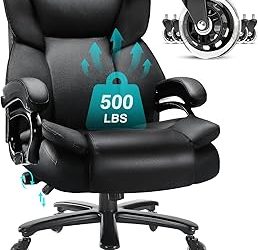
Built for serious capacity with a wider, thicker seat that doesn’t compromise posture. The six-point vibration and heat combination in a black PU leather shell gives this chair a grounded, authoritative presence in any office. Under darker ambient lighting, the chair practically disappears into the room’s architecture — ideal for moody, library-inspired workspaces where furniture should feel like it belongs rather than announces itself.
Frequently Asked Questions
Do office chair recliners work well for long workdays?
Absolutely — provided the recline mechanism is smooth and the lumbar support is adjustable. Chairs with pocket spring or multi-zone lumbar systems keep your spine supported across posture shifts. Heating and massage features add genuine fatigue reduction beyond what a static chair can offer.
What weight capacity should I look for in a reclining office chair?
Standard models support 250–300 lbs, while big and tall variants are rated between 400–500 lbs. Always verify the manufacturer’s stated capacity rather than assuming — a chair marketed as “heavy duty” isn’t necessarily rated higher than a standard executive model.
Can I use a reclining office chair in a small home office?
Yes, but consider the chair’s visual footprint and recline clearance. Lighter colors and slimmer profiles — like the white GYI 160 — keep a compact room from feeling crowded. You’ll need at least 18–24 inches of space behind the chair for full recline without hitting a wall or bookshelf.
Is PU leather durable enough for daily office use?
High-quality PU leather holds up well for three to five years of daily use and resists staining better than genuine leather. It also cleans easily with a damp cloth. The trade-off is breathability — on warmer days, a mesh-back chair will ventilate better, though you sacrifice the polished aesthetic.
Final Thoughts
For most buyers, the Massage & Heated Office Chair in Beige offers the best balance of comfort, visual warmth, and functional features. The GYI 160 in White is the strongest pick for posture-flexible users in compact spaces, and the COMHOMA Green brings unmatched lumbar engineering for anyone logging marathon sessions. Any of the five reviewed here will elevate your workspace — the right choice depends on how your room handles light, color, and the kind of work you do in it.