Key takeaways
- Lumbar Adjustability: A fixed lumbar curve fits almost nobody correctly. Look for height-adjustable or depth-adjustable lumbar pads that nest into the natural lordotic curve of your lower spine, keeping the pelvis slightly tilted forward rather than collapsed into a posterior tilt.
- Seat Depth and Width: The seat pan should support the full length of your thighs without pressing into the backs of your knees. A seat that’s too short leaves the legs unsupported; too long and it forces the lower back away from the lumbar rest, negating the one feature you paid for.
- Tilt and Recline Range: Chairs that lock between 90° and 120° let you shift postures throughout the day. Static upright seating compresses spinal discs unevenly — a gentle recline redistributes load and reduces intradiscal pressure, especially in the L4-L5 region.
- Weight Capacity and Base Strength: A robust steel base and reinforced gas cylinder matter more than most buyers realize. Chairs rated for 330 lbs or higher typically use thicker gauge metal and upgraded casters, which translate to stability and fewer squeaks over years of daily use.
- Armrest Design: Flip-up or height-adjustable arms let you position your forearms at roughly 90° to the desk surface, reducing compensatory tension in the trapezius muscles that radiates pain into the neck and upper back.
What's inside
Most people searching for an office chair are already in pain. The lower back throbs after two hours of screen time, the shoulders climb toward the ears by mid-afternoon, and the lumbar region feels like it’s bearing the weight of every unfiled email. The market doesn’t help: thousands of chairs claim “ergonomic support” while delivering little more than foam padding over a stamped-steel frame. Sorting genuine spinal relief from marketing copy is exhausting work when your back is the thing that’s tired.
This guide cuts through the noise. We evaluated six top-rated chairs across lumbar adjustability, seat depth, tilt range, weight capacity, and long-session comfort — the variables that actually determine whether a chair protects your spine or punishes it. Whether you’re furnishing a compact home office or outfitting a generous executive workspace, the picks below cover a range of body types, budgets, and design preferences. One note on perspective: as someone who designs workspace environments for a living, I evaluate seating the way I evaluate lighting — it has to serve the body’s rhythm over hours, not just look appealing in a photograph.
As an Amazon Associate we earn from qualifying purchases.


How to Choose an Office Chair For Back Problems (2026)
- Lumbar Adjustability: A fixed lumbar curve fits almost nobody correctly. Look for height-adjustable or depth-adjustable lumbar pads that nest into the natural lordotic curve of your lower spine, keeping the pelvis slightly tilted forward rather than collapsed into a posterior tilt.
- Seat Depth and Width: The seat pan should support the full length of your thighs without pressing into the backs of your knees. A seat that’s too short leaves the legs unsupported; too long and it forces the lower back away from the lumbar rest, negating the one feature you paid for.
- Tilt and Recline Range: Chairs that lock between 90° and 120° let you shift postures throughout the day. Static upright seating compresses spinal discs unevenly — a gentle recline redistributes load and reduces intradiscal pressure, especially in the L4-L5 region.
- Weight Capacity and Base Strength: A robust steel base and reinforced gas cylinder matter more than most buyers realize. Chairs rated for 330 lbs or higher typically use thicker gauge metal and upgraded casters, which translate to stability and fewer squeaks over years of daily use.
- Armrest Design: Flip-up or height-adjustable arms let you position your forearms at roughly 90° to the desk surface, reducing compensatory tension in the trapezius muscles that radiates pain into the neck and upper back.
The Best Office Chair For Back Problems (2026) Reviewed
Ergonomic Office Chair with Adjustable Padded Lumbar (330 lb Capacity)
Its standout feature is the padded lumbar pad that slides vertically to meet your spine where it actually curves — a detail many budget chairs fumble. The 330 lb weight rating and generous cushioning make it a strong choice for anyone spending six-plus hours seated, and the overall build feels sturdier than its price suggests.
High Back Mesh Chair with Headrest and Tilt Lock
Breathable mesh prevents the heat buildup that makes padded chairs unbearable by midday, while the 90–120° tilt lock range encourages periodic postural shifts. The flip-up arms are a practical touch for pulling close to a desk without contorting around fixed armrests.
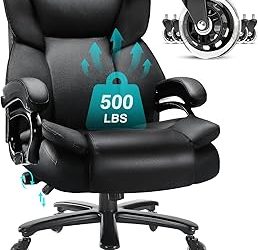
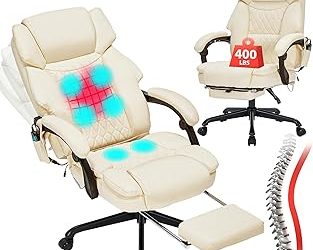
500 lb Big and Tall Executive Chair
Built for larger bodies that standard chairs punish, this model pairs an extra-wide seat with thick armrest pads and upgraded wheels that glide smoothly under heavy loads. The reinforced base inspires confidence, and the adjustable lumbar support holds its position even during active reclining.
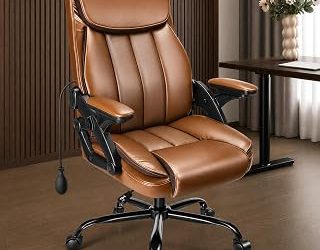
High Back Ergonomic Executive Desk Chair with Flip Arms
A workmanlike chair that gets the fundamentals right: built-in lumbar support that actually adjusts, a thick padded seat, and quiet-rolling casters that won’t scar hardwood floors. The metal base feels solid under repeated reclining, making it a dependable all-day option.
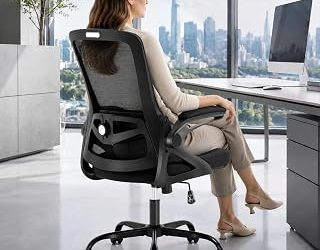
NEO CHAIR High Back Mesh Ergonomic Desk Chair
The breathable mesh back and adjustable lumbar zone deliver comfort that outperforms its footprint — ideal for tighter workspaces where a massive executive chair would overwhelm the room. Flip-up armrests keep the profile clean and allow natural movement when transitioning between tasks.
Frequently Asked Questions
How many hours a day should I sit in an office chair before switching positions?
Spinal health research suggests changing posture every 30 to 45 minutes. Even a well-designed chair compresses the same structures if held in one position indefinitely. Stand, stretch, or recline periodically — your disc hydration depends on movement.
Do mesh chairs provide better back support than padded chairs?
Mesh distributes pressure more evenly and regulates temperature, which indirectly improves comfort and reduces the urge to slouch. However, support quality depends on the frame and lumbar mechanism more than the surface material alone.
Is a headrest necessary for back pain relief?
A headrest primarily benefits the cervical spine and neck, not the lower back. If your pain originates in the lumbar region, prioritize lumbar adjustability and seat depth first. A headrest is a welcome bonus, not a solution.
Can a heavy-duty chair help if I weigh under 250 pounds?
Absolutely. Chairs engineered for heavier loads typically feature stronger bases, denser foam, and more durable gas cylinders — components that last longer and perform better for every user, regardless of body weight.
Final Thoughts
For most people dealing with daily back discomfort, the Ergonomic Office Chair with Adjustable Padded Lumbar offers the best balance of targeted support and value. Larger users should look to the 500 lb Big and Tall Executive Chair without hesitation. And for anyone working in a compact space who refuses to compromise on breathability and spinal alignment, the NEO CHAIR High Back Mesh delivers a surprisingly capable experience in a lighter footprint. Pain-free work starts with the chair beneath you — choose deliberately.