Key takeaways
- Coffee table to sofa edge: 35 to 45 cm (14 to 18 in), close enough to reach a cup, far enough to walk through.
- Main walkways: at least 90 cm (36 in) wide, with 75 cm (30 in) as an absolute minimum in small rooms.
- Sofa to TV: roughly 1.5 to 2.5 times the screen diagonal for comfortable viewing.
- Art and mirror centers: about 145 to 150 cm (57 to 60 in) from the floor, which is average eye level.
- Side table height: within 5 cm of the sofa arm, so a drink can be set down without stretching.
The fastest way to decorate a living room is to fix the big, visible decisions first: rug size, seating height, lighting layers, curtain placement and one clear focal wall. Small accessories come last, because they cannot rescue a room whose proportions are wrong. The ideas below follow that order, and each one is paired with a real, widely available product that shows the idea in practice.
Nothing here depends on a large budget or a full renovation. Most of the changes are about measurements, placement and restraint, which means they work in a rented apartment as well as in a family home. Use the quick-reference table first, then read the sections that match the room you are working with.
Quick Reference: Seven Ideas and the Products That Show Them
| Idea | Product example | Key number to remember | Best for |
|---|---|---|---|
| Ground the seating with a large rug | Ruggable washable rug (5×7, 6×9 and larger) | Front legs of every seat on the rug | Kids, pets, rentals |
| Add one character chair | IKEA STRANDMON wing chair | Seat height about 45 cm (17.75 in) | Reading corners, small rooms |
| Build flexible storage and display | IKEA KALLAX shelf unit (77×77 cm) | Depth about 39 cm, 13 kg per shelf | Apartments, collectors |
| Layer light at lower heights | Philips Hue Go portable lamp | Height 35 cm, up to 48 hours on a charge | Dark corners, flexible mood |
| Frame the window with fuller curtains | IKEA SANELA velvet curtains | 55 x 84 or 55 x 98 in per panel | Echoey rooms, winter warmth |
| Bounce light with one big mirror | Umbra Hub round wall mirror (37 in) | 94 cm across, about 25 lb | Narrow rooms, dim walls |
| Make the TV wall look like art | Samsung The Frame (matte display) | Screen sizes from 43 to 65 in | Rooms where the TV is the focal point |
Start With Proportions, Not Accessories
Most living rooms that feel unfinished have the right objects in the wrong sizes. A rug that is too small, curtains hung at the window frame, and a sofa floating without a lamp nearby are the three most common culprits. Before buying anything, measure the room and sketch where people actually sit.
A practical set of clearances keeps the room usable once the decorating is done:
- Coffee table to sofa edge: 35 to 45 cm (14 to 18 in), close enough to reach a cup, far enough to walk through.
- Main walkways: at least 90 cm (36 in) wide, with 75 cm (30 in) as an absolute minimum in small rooms.
- Sofa to TV: roughly 1.5 to 2.5 times the screen diagonal for comfortable viewing.
- Art and mirror centers: about 145 to 150 cm (57 to 60 in) from the floor, which is average eye level.
- Side table height: within 5 cm of the sofa arm, so a drink can be set down without stretching.
Decision matrix by situation
| Your situation | Start with | Then add | Skip for now |
|---|---|---|---|
| Small apartment, around 3 x 4 m | Wall-hung storage and one mirror | One compact accent chair | Large floor lamps and oversized art |
| Kids and pets | Washable rug | Cleanable covers, closed storage | Delicate fabrics at floor level |
| Renter, no drilling | Rug, curtains on tension or existing rods | Portable lamps, leaning mirror | Heavy wall-mounted pieces |
| Large open-plan room | Rug that defines the seating zone | Multiple lighting layers | Pushing all furniture to the walls |
| TV-centered family room | Art-style screen or framed surround | Closed and open storage mix | Competing focal walls |
Idea 1: Ground the Seating With a Properly Sized Rug
A rug is the cheapest way to make a room look planned. The rule that matters is that at least the front legs of the sofa and chairs sit on the rug, so the group reads as one zone. In a room of about 3.5 x 4.5 m, that usually means a 5×7 ft rug at minimum and a 6×9 ft rug when the seating is larger. In an open-plan space, an 8×10 ft or 9×12 ft size is often what makes the sitting area feel anchored.
Ruggable washable rugs
Ruggable sells washable rugs in sizes including 5×7, 6×9, 6.5×9.5, a 6 ft round, 9×12 and 10×14. Many designs use a two-piece system, a thin cover that sits on a separate pad, while other ranges are one-piece tufted, plush or performance-weave versions. The flatwoven two-piece covers have a low profile of under 7 mm, which helps doors and chair legs clear the surface.
- Specs: Cold, delicate machine wash for covers; the pad is not machine washable. Ruggable’s guide suggests a washer of about 3.1 cu. ft. or larger for a 5×7 and about 4.5 cu. ft. for a 6×9, so check your machine or use a laundromat for big sizes.
- Who it suits: Households with children, pets or frequent guests, and renters who want a rug they can remove and clean without calling a professional.
- Pros: Spills lift out in the wash; low profile suits door clearance; wide range of patterns and sizes.
- Cons: Large covers are heavy when wet; some sizes will not fit a standard home washer; you still need a flat floor so the pad does not ripple.
Pattern advice: choose a smaller-scale pattern or a muted vintage-style print when the sofa is already bold, and a plain textured flatweave when the room already has strong art or wallpaper.
Idea 2: Add One Chair With Character
A living room made only of a sofa and a coffee table reads as a showroom. One accent chair at an angle to the sofa adds a second conversation point and breaks up the straight lines. The chair does not need to match; it needs to share either a color, a leg finish or a similar visual weight with the sofa.
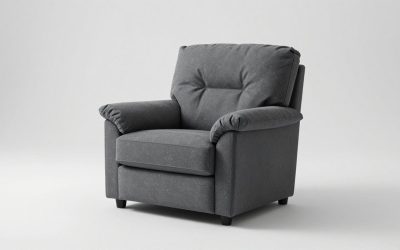
IKEA STRANDMON wing chair
The STRANDMON is a classic wing-back shape that has stayed in IKEA’s range for years. Metric dimensions from IKEA’s UK listing are about 82 cm wide, 96 cm deep and 101 cm high, with a seat height of 45 cm (17.75 in), seat width around 49 cm and seat depth around 54 cm. In the US it ships in one package weighing a little over 66 lb, so plan for two people to carry it up stairs.
- Specs: Wing-back frame, upholstered in several fabrics and in leather-look options, available alone or with an ottoman.
- Who it suits: Reading corners, bedrooms-turned-offices, and rooms where a high back creates a sense of enclosure. The footprint of roughly 0.8 x 1 m fits beside a window in most apartments.
- Pros: Standard seat height makes standing up easy; the wings give head support; a wide choice of covers lets it match many palettes.
- Cons: Taller people sometimes find the seat short and the front edge hitting behind the knees; the high back can feel heavy in very small rooms.
Placement tip: angle it about 30 to 45 degrees toward the sofa, leave 60 cm of clear floor between the chair and the coffee table, and place a lamp at shoulder height behind it.
Idea 3: Build Storage That Doubles as Display
Clutter ruins decorating faster than any color mistake. Storage that looks good open is the answer in a living room, because it lets books, baskets and a few objects become part of the design. Cube shelves are particularly useful because the grid gives you permission to leave some cubes half empty.
IKEA KALLAX shelf unit
The 77×77 cm KALLAX is a two-by-two unit with four cubes. IKEA lists it at roughly 77 cm wide, 39 cm deep and 77 cm tall, with a maximum load of 13 kg per shelf and 20 kg for the whole unit when wall-mounted. It is made from particleboard and fiberboard with a recycled paper honeycomb filling, and comes in white, black-brown and a white stained oak effect. The flat pack weighs about 16 kg.
- Specs: 77 x 77 x 39 cm, usable standing or hung on a wall; an optional underframe adds height and a floor gap for cleaning.
- Who it suits: Renters, people with vinyl or book collections, and anyone who wants modular storage that can be reconfigured when they move.
- Pros: The cube size fits standard baskets; stacks or sits side by side; the box is narrow enough for most doorways.
- Cons: Particleboard does not handle repeated moves well, and a full load of heavy books can bow a shelf over time; wall anchoring is wise in homes with children.
Styling rule: fill about two thirds of the cubes. Alternate an open cube with a basket, a book stack lying flat and a single object. Keep the heaviest or darkest items low.
Idea 4: Layer Light at Lower Heights
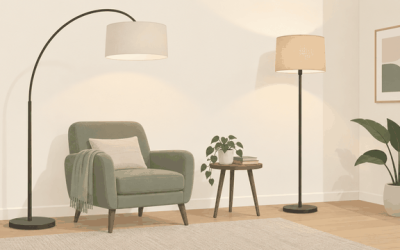
Ceiling light alone flattens a room. A living room usually needs three layers: general light, task light for reading, and accent light for mood. The mistake to avoid is putting every source high up. Lamps at 90 to 110 cm from the floor create pools of light that make the room feel warmer, and they reduce the dependence on the overhead fixture in the evening.
Bulb choice matters as much as the fixture. For living spaces, 2,700 K gives a warm, relaxed tone, while 3,000 K reads a little crisper and suits modern rooms. Mixing temperatures in the same sightline looks accidental, so keep them consistent. Dimmers or smart bulbs make it easy to shift from reading brightness to a low evening level.
Philips Hue Go portable lamp
The Hue Go is a small, rounded lamp that is a good answer when there is no socket close to a corner. It stands about 35 cm high with a 14.2 cm diameter. Philips rates it at around 370 lumens at 2,700 K and about 530 lumens at 4,000 K, with a color range from 2,000 to 6,500 K, and an IP54 rating. Battery life is stated as up to 48 hours, which reviewers note applies mostly to low-brightness scenes; at high brightness expect closer to six hours. It charges from a base in roughly three to four hours.
- Specs: Color-capable LED, Bluetooth control, bridge optional for wider smart-home use, Matter and major voice assistants supported.
- Who it suits: Renters, small rooms, and anyone who wants to move a light from shelf to floor to patio.
- Pros: No cord across the room; useful as a floor-level uplight behind a plant or chair; works as a nightlight.
- Cons: It is an accent light rather than a reading lamp; color accuracy is moderate; the battery needs regular recharging if you use it daily.
Idea 5: Hang Curtains Higher, Wider and Fuller
Curtains are the most forgiving way to add softness and color. Three proportions do most of the work. Mount the rod 10 to 15 cm above the window frame, or close to the ceiling if you want extra height. Extend the rod 15 to 25 cm beyond each side of the frame, so the open curtains do not cover glass. Choose panels with a combined width of 1.5 to 2 times the rod length, so they look full even when closed.
Length is the second decision. A curtain that just kisses the floor looks tailored. A slight puddle suits traditional rooms. A curtain that stops halfway down the window or hovers well above the floor is the single most common reason a room looks unfinished.
IKEA SANELA velvet curtains
SANELA is a pair of cotton velvet panels with heading tape, sold in several colors including off-white, light beige, dark brown, dark blue and pale pink. US sizes include 55 x 65 in, 55 x 84 in and 55 x 98 in per panel, and the length can be adjusted with iron-on hem tape. Fabric can shrink by up to about 4 percent, so allow for that when you measure.
- Specs: Heavy cotton velvet with heading tape for hooks or rings; the 84 in version is intended for hanging above the window.
- Who it suits: Echoey rooms, bare floors, drafty windows and anyone wanting a richer, more formal look.
- Pros: Velvet absorbs sound and blocks some light and draught; deep colors make walls feel deeper; generous fabric weight hangs well.
- Cons: Heavy fabric needs a sturdy rod and strong brackets; velvet shows lint and crush marks; dark shades can make a small room feel smaller.
Idea 6: Use One Large Mirror to Move Light
Mirrors do not just reflect your reflection; they reflect whatever is opposite. Hang one across from a window and it doubles the daylight in the room. Place it opposite a plant or a piece of art and it brings that object into a second part of the room. The key is size: a mirror should usually cover about two thirds of the width of the furniture beneath it, and a single large piece looks more intentional than a cluster of small ones.
Umbra Hub round wall mirror
The Hub is a round mirror with a rubber frame in a thin profile. The 37 in size measures about 94 cm across and roughly 3 cm deep, and one retailer lists the weight at around 25 lb. A 24 in size weighs about 11 lb, and a smaller 18 in version also exists. Availability of specific colors can vary, so check current stock.
- Specs: Round glass in a flexible frame, hangs on a wall hook or sits leaning on a console or floor.
- Who it suits: Narrow living rooms and entryways that open into the living area, and walls that feel dark between windows.
- Pros: The circle softens the strong rectangles of sofa, TV and shelves; the frame is lighter in appearance than a thick wood frame.
- Cons: At 25 lb it needs a wall anchor rather than a small nail; large round mirrors can be difficult to ship, and they show fingerprints.
Idea 7: Make the TV Wall Look Intentional
A black rectangle is the single biggest visual weight in most living rooms. Three ways to deal with it are hiding it behind doors, surrounding it with shelves and art so it reads as one piece of a gallery wall, or choosing a screen designed to look like a framed picture.
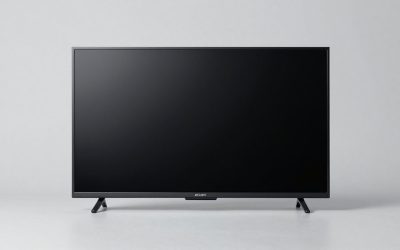
Samsung The Frame
The Frame is Samsung’s art-style TV. The 2025 model line comes in sizes from 43 to 65 inches, with a matte, anti-reflection display and an Art Mode that shows artwork when the TV is not in use. The Frame Pro extends sizes to 85 inches. Samsung’s Art Store holds several thousand pieces, with a few hundred available free each year, and you can upload your own images in a 16:9 format.
- Specs: 4K QLED panel, slim-fit wall mount, motion and brightness sensor for adjusting the picture to room light.
- Who it suits: Rooms where the TV hangs on the main wall and you want it to look like part of the decor.
- Pros: The matte finish reduces glare from windows; the picture frame trim comes in several finishes; ambient art keeps the room calm.
- Cons: It costs more than a conventional TV of the same size, and subscription features may be needed for the full art catalog; art viewed on a screen never has the texture of a real painting.
Color: Keep Three Tones and Repeat Them
A workable palette uses one dominant color for about sixty percent of the room, a secondary color for thirty percent and an accent for the last ten. Walls, large furniture and the rug usually share the dominant and secondary tones. Pillows, small art, vases and a single chair carry the accent. Repeating the accent in at least three places, such as a pillow, a book spine and a vase, makes it feel designed rather than random.
Material trade-offs for living room pieces
| Material | What it does well | What wears first | Good use |
|---|---|---|---|
| Cotton velvet | Rich color, absorbs sound | Crushed pile at contact points | Curtains, accent chairs |
| Flatwoven polyester rug | Washable, low profile | Corners if folded when wet | Family rooms |
| Particleboard with laminate | Light, inexpensive, stable | Edges after repeated moves | Storage cubes |
| Solid wood | Repairable, long life | Surface scratches, can be refinished | Coffee tables, side tables |
| Metal frames | Slim profile, strong | Finish chips at feet | Lamps, mirror frames |
| Glass | Light and reflective | Visible fingerprints | Tabletops, mirrors |
Layout Plans for Three Common Room Sizes
Small room, about 3 x 3.5 m
Keep the sofa on the longest wall and use a rug no larger than 5×7 ft so that a margin of floor remains visible on every side. Use wall-hung storage, one round mirror, and a portable lamp rather than a bulky floor lamp. Choose a sofa with visible legs, since seeing the floor under furniture makes the room read larger.
Medium room, about 4 x 5 m
A 6×9 ft rug works here. Place the sofa facing the focal wall, one accent chair at an angle, and a slim console or cube shelf along the side wall. Put curtains on a rod that extends beyond the window, and put a lamp on each side of the seating so that the light is balanced.
Large or open-plan room, 5 x 7 m and up
Create zones. A 9×12 ft rug defines the seating area, and furniture can float away from the walls with the sofa back acting as a divider. Use two or three light sources at different heights, and consider a second smaller group, such as a chair and side table by the window, to make the far end of the room feel used.
Common Mistakes That Make a Room Feel Off
- Art hung too high. The center should sit at eye level, about 145 to 150 cm from the floor, and about 15 to 25 cm above the sofa back.
- Everything pushed to the walls. Floating the sofa even 15 cm off the wall can make a room feel calmer, particularly with a rug underneath.
- Matching sets. A matching table, lamp and chair set looks flat. Mix two materials and two heights instead.
- Too many small accessories. Group objects in odd numbers and leave open surface around them.
- Ignoring the cable problem. A well-chosen lamp or TV loses its charm if the cords are on show. Use a cord cover or position furniture to hide them.
A Weekend Plan in Priority Order
- Measure the room and mark rug edges with painter’s tape on the floor to check sizing before ordering.
- Order the rug and curtains first, since they have the largest visual effect and the longest lead times.
- Move furniture to the new layout once the rug arrives, leaving the walkway clearances noted earlier.
- Add lighting: one lamp near each seat and one accent light for a dark corner.
- Hang the mirror or art last, using paper templates taped to the wall to confirm position.
- Remove a third of the accessories and see how the room feels before adding anything new.
Frequently Asked Questions
How much of the floor should the rug cover?
Enough that the front legs of the sofa and chairs sit on it, with 20 to 45 cm of rug showing beyond the furniture on the open sides. Floor visible around the rug edge keeps the room from feeling carpeted wall to wall.
How high should the curtain rod go?
Mount it 10 to 15 cm above the window frame, or higher if the ceiling allows. The extra height makes the window and the ceiling both look taller.
Can a rental living room still look styled?
Yes. A large rug, curtains hung on the existing rod or a tension rod, portable lamps, a leaning mirror and freestanding storage make up most of the visual impact and leave no marks on the walls.
What is the easiest single upgrade?
Replacing a too-small rug with a correctly sized one. It changes how every other piece in the room relates to its neighbors.
How many pillows are enough?
Two or three on a standard sofa, in two textures and one repeated color. More than that tends to get moved off the sofa every time someone sits down.
Final Thoughts
Good living room decorating comes from getting a handful of proportions right and then repeating a small palette. Start with the rug, set the seating, fix the lighting heights, dress the window, and only then choose the objects. The seven products described here are examples of how each idea works in practice, but the measurements and placement rules apply to any similar piece. Check current availability and specifications with the manufacturer before ordering, since colors, sizes and models can change.