Key takeaways
- Use a rigid, level shelf at least 24 inches wide and 18 inches deep for most full-size decks.
- Leave 2–3 inches behind the turntable for interconnects and power cables, and at least 4 inches above it if the dust cover opens vertically.
- Keep the deck at least 18–24 inches from the nearest loudspeaker when practical; greater distance is helpful with powerful bass systems.
- Avoid the same flexible cabinet shelf as a subwoofer, network equipment with cooling fans, or frequently used drawers.
- For a small 10 x 12 ft room, place the turntable on the side wall or rear wall rather than directly between speakers if that location receives strong bass energy.
- Operating height matters: approximately 28–32 inches suits seated listening, while 34–38 inches is more comfortable for many standing users.
The best high end turntables for serious listening are the Technics SL-1200G for controlled, versatile performance, the Rega Planar 10 for a highly focused minimalist system, the SME Model 15 for exceptional engineering and upgrade flexibility, and the Linn LP12 for buyers who want a long-term, configurable platform.
Choosing among them is less about finding one universally “best” deck and more about matching the turntable to your cartridge, phono stage, listening room, furniture, and tolerance for setup. A heavy platter can improve rotational stability but may demand a stronger support. A sophisticated tonearm can reveal more detail but may reduce cartridge choice. Isolation matters just as much as the turntable’s advertised specifications, especially when the deck is placed on a lightweight cabinet or near loudspeakers.
Best high end turntables by listening situation
| Listener or room | Best fit | Why it makes sense | Watch for |
|---|---|---|---|
| Small apartment or 10 x 12 ft room | Rega Planar 10 or Technics SL-1200GR2 | Compact footprint, strong speed control, and straightforward placement | Keep the deck away from corners and bass-heavy speaker positions |
| Large dedicated listening room | SME Model 15 or Linn LP12 | Excellent upgrade paths and compatibility with carefully selected cartridges | Budget for a rigid, level support and professional-quality setup |
| Children, pets, or frequent household traffic | Technics SL-1200G or SL-1200GR2 | Direct-drive construction, removable dust cover, and substantial controls | The tonearm and stylus still need protection from accidental contact |
| Renter who cannot alter walls or floors | Rega Planar 10 | Works well on a properly supported freestanding rack without wall mounting | Avoid hollow flat-pack furniture that resonates under footfall |
| Back pain or limited mobility | Technics SL-1200G | Convenient cueing, speed controls, and a practical hinged dust cover | Place it at a comfortable standing or seated operating height |
Four serious turntables compared
Technics SL-1200G: the versatile all-rounder
The Technics SL-1200G combines a coreless direct-drive motor with a substantial platter, adjustable feet, a removable dust cover, and a tonearm that accepts a wide variety of cartridges. Its direct-drive design avoids a conventional belt as a wear item and offers stable speed without waiting for a belt-driven motor to settle.
This is the strongest choice for a mixed-use listening room. It accommodates moving-magnet and moving-coil cartridges, and its standard removable headshell makes cartridge changes more convenient than on many fixed-headshell designs. The SL-1200GR2 offers much of the same practical appeal at a lower general market range, usually around $2,000–$3,000, while the SL-1200G is typically around $4,000–$5,500 depending on market and finish.
Its main furniture consideration is weight: the SL-1200G is roughly 44 lb before accessories. Use a cabinet rated for at least 75 lb on the supporting shelf, with no visible flex when you press gently on its corners. The deck is approximately 18 inches wide and 14 inches deep, but allow more space for cable bends, the tonearm, and dust-cover movement.
Rega Planar 10: the focused minimalist choice
The Rega Planar 10 uses a lightweight skeletal plinth, a ceramic-composite platter, a low-friction tonearm, and an external power supply. Its design philosophy is different from the Technics: instead of adding mass everywhere, it aims to reduce stored energy and keep the platter and tonearm mechanically quiet.
It is particularly appealing when the system already has a capable phono stage and the owner wants a compact, dedicated music source. Rega commonly pairs the Planar 10 with its Apheta moving-coil cartridge, but the tonearm can be used with other compatible cartridges when the mounting geometry, tracking force, and compliance are suitable. The deck itself is commonly priced around $5,000–$7,000, with cartridge packages costing more.
The lightweight plinth does not mean the furniture can be lightweight. A rigid shelf remains important because footfall and speaker energy can reach the tonearm through the support. The Planar 10 is about 18 inches wide and 14 inches deep; allow approximately 24 inches of clear width and at least 18 inches of usable depth so the power supply and interconnects are not cramped.
SME Model 15: the engineering-led upgrade platform
The SME Model 15 is aimed at listeners who want a precision-built, adjustable platform rather than a simple plug-and-play deck. Its suspended or isolated support architecture, substantial construction, and high-quality tonearm options make it suitable for carefully assembled systems using premium moving-coil cartridges.
Its strength is control: cartridge alignment, tracking force, arm height, and system matching can be optimized with considerable precision. That flexibility rewards an experienced owner or a dealer who will complete the setup. It also means the Model 15 is less forgiving of a casual furniture choice. Expect a complete package to occupy significant shelf space and often weigh more than 50 lb, depending on arm and accessories. A shelf should support at least twice the finished equipment weight without sagging.
Market pricing is commonly in the roughly $10,000–$15,000 range for the turntable and arm, before adding a cartridge and phono stage. This is a sensible choice for a dedicated room, not necessarily the best first step for a small living-room system.
Linn LP12: the long-term configurable classic
The Linn LP12 is a modular belt-drive turntable with a long history of upgrades involving the motor, power supply, bearing, sub-chassis, tonearm, and cartridge. Its appeal is the ability to begin with a suitable configuration and improve individual sections over time rather than replace the complete deck.
Because the LP12 can be specified in many forms, cartridge compatibility depends heavily on the selected tonearm. A medium- or high-compliance cartridge may suit one arm, while a low-compliance moving-coil cartridge may be better matched to another. Phono-stage loading is equally important: many moving-coil cartridges need a gain and resistance setting different from a moving-magnet design.
Prices vary widely, from several thousand dollars for a well-equipped entry configuration to well above $15,000 for advanced builds. The LP12 is best for buyers who enjoy careful system building and intend to keep the turntable for many years.
Platter materials and what they change
| Platter approach | Potential advantage | Trade-off | Furniture implication |
|---|---|---|---|
| Aluminium | Rigid, accurately machined, and relatively easy to drive | May need a mat or damping treatment to control ringing | Moderate shelf load; check whether the support transmits vibration |
| Glass | Stable, flat, and visually clean | Can be heavy and may reflect energy without suitable interface material | Use a shelf with a generous weight margin |
| Acrylic or composite | Useful damping and often suitable for direct record contact | Can be expensive to manufacture and sensitive to surface damage | Protect from scratches; avoid placing objects on the platter |
| Multi-layer or metal-damped | Combines mass, rigidity, and vibration control | Greater weight and more demanding support requirements | Choose a load-rated rack, not a decorative floating shelf |
Tonearm, cartridge, and phono-stage matching
Cartridge compatibility is determined by more than the mounting holes. The tonearm must suit the cartridge’s mass, compliance, tracking force, and recommended loading. A low-compliance moving-coil cartridge generally benefits from a compatible medium- or higher-effective-mass arm, while a high-compliance moving-magnet cartridge may prefer a lighter arm. The manufacturer’s specifications should be checked before buying.
Moving-magnet cartridges commonly require a phono stage with approximately 40 dB of gain and a 47 kOhm input. Moving-coil cartridges often need roughly 55–70 dB, along with adjustable resistance and sometimes adjustable capacitance. Some high-end turntables include no phono stage at all, which is usually preferable for system flexibility but adds another purchase. Budget approximately $300–$1,500 for a competent external phono stage, and considerably more for advanced adjustable models.
Placement rules that protect performance
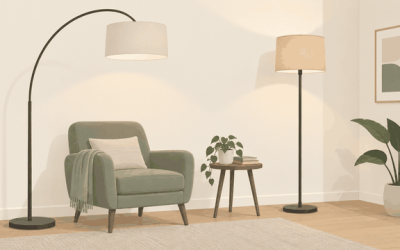
- Use a rigid, level shelf at least 24 inches wide and 18 inches deep for most full-size decks.
- Leave 2–3 inches behind the turntable for interconnects and power cables, and at least 4 inches above it if the dust cover opens vertically.
- Keep the deck at least 18–24 inches from the nearest loudspeaker when practical; greater distance is helpful with powerful bass systems.
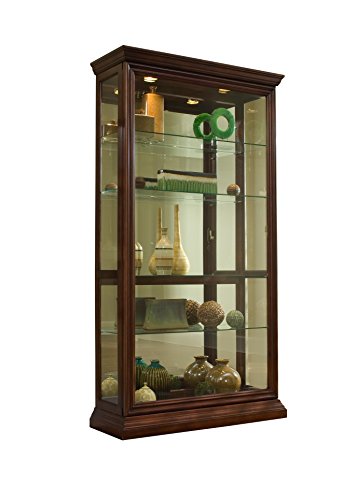
- Avoid the same flexible cabinet shelf as a subwoofer, network equipment with cooling fans, or frequently used drawers.
- For a small 10 x 12 ft room, place the turntable on the side wall or rear wall rather than directly between speakers if that location receives strong bass energy.
- Operating height matters: approximately 28–32 inches suits seated listening, while 34–38 inches is more comfortable for many standing users.
Setup and moving realities
High-end turntables are not ideal impulse purchases because setup can be more consequential than a small specification difference. Belt-drive models may require careful leveling, belt fitting, platter installation, and tonearm balancing. Suspended designs need their suspension checked after transport. Direct-drive models are generally easier to relocate, but their tonearms and cartridge cantilevers remain delicate.
Before delivery, measure every doorway, stair landing, and cabinet opening. A 30-inch doorway is usually adequate for the boxed unit, but stairs and turns are often the real problem. Plan for two people when moving equipment heavier than about 50 lb, and remove the platter and counterweight where the manufacturer recommends it. The stylus is the component most likely to suffer accidental damage, while belts, cartridge suspensions, dust-cover hinges, and cables are common long-term wear points.
For most buyers, the Technics SL-1200G is the safest high-end recommendation because it combines durable construction, broad cartridge compatibility, and practical operation. Choose the Rega Planar 10 for a compact, focused system; the SME Model 15 for precision and adjustability; and the Linn LP12 when the pleasure lies in building and upgrading a complete analog front end over time.