Key takeaways
- For maximum privacy: choose an opaque, lined panel at least 72 inches high, with three or four panels and minimal gaps between frames.
- For the smallest storage space: choose three lightweight panels with a folded depth under 6 inches, even if the screen provides less acoustic or impact resistance.
- For a rental: choose a freestanding design with protective feet and no required wall fixing. A 68–72-inch fabric or slatted screen is usually easier to move than a tall solid divider.
- For pets and children: prioritize stability, rounded edges and a low center of gravity over decorative height. Keep the screen away from climbing furniture.
- For back or mobility concerns: select a screen under 15 pounds, with smooth hinges and a handle or easy-grip frame. A shorter three-panel screen is safer to reposition than a heavy six-panel model.
- For a desk zone: match the screen to the desk’s visual line. A 60–72-inch screen hides most seated work activity, while an 80-inch screen creates stronger separation but can reduce light.
Best Folding Screens for Privacy and Flexible Room Dividers
The best folding screens match their height and panel width to the privacy you need, while staying stable when opened and compact enough to store when the room changes.
Quick picks by room and situation
| Situation | Best screen specification | Why it works |
|---|---|---|
| Small apartment or studio | 68–72 inches high, 3 panels, 16–20 inches per panel | Creates a visual boundary without overwhelming the floor plan; folds into roughly 18–24 inches of width. |
| Bedroom dressing area | 72–80 inches high, 3 or 4 panels, opaque fabric or wood | Hides a person standing or changing and blocks more side-angle views. |
| Work-from-home desk | 60–72 inches high, 3 panels, acoustic fabric or felt | Conceals desk clutter and softens sound without requiring a permanent wall. |
| Homes with children or pets | Under 72 inches high, wide feet or weighted base, tightly secured hinges | Reduces the risk of tipping and avoids a tall, top-heavy structure. |
| Frequent storage or moving | Lightweight 3-panel screen, 8–15 lb, folding depth under 6 inches | One person can carry it through a doorway and store it beside a wardrobe. |
| Large living room | 80–96 inches high, 4–6 panels, 18–24 inches per panel | Provides a longer visual barrier across an open area, but needs more floor clearance. |
How tall should a folding screen be?
Choose a 60–66-inch screen for a partial boundary, such as separating a reading chair from a living area. It can block distractions while leaving the room visually connected. A 68–72-inch screen is the most versatile height for dressing corners, desks and sleeping areas. It generally reaches eye level for a standing adult and offers useful privacy from across the room.

JOSTYLE Room Divider 4 Panel Folding Privacy Screen, Woven Bamboo, Wooden
Included for 'Best Folding Screens for Privacy and Flexible Room Dividers' because the listing specifies Woven Bamboo and Wooden, details this guide uses to compare options.
View on Amazon
Roundhill Furniture Black Japanese 4-Panel Screen Room Divider, Plum Blossom
Included for 'Best Folding Screens for Privacy and Flexible Room Dividers' because the listing specifies Plum Blossom, details this guide uses to compare options.
View on Amazon
Roundhill Furniture Giyano 4 Panel Screen Room Divider, White Screen with Gold Frame
Included for 'Best Folding Screens for Privacy and Flexible Room Dividers' because the listing specifies White Screen with Gold Frame, details this guide uses to compare options.
View on Amazon
JOSTYLE Rattan Room Divider, 4-Panel Folding Privacy Screen 6ft. Extra Wide
Included for 'Best Folding Screens for Privacy and Flexible Room Dividers' because the listing specifies 4-Panel Folding Privacy Screen 6ft. Extra Wide, details this guide uses to compare options.
View on AmazonFor near-full visual separation, look at 76–84 inches. These screens are useful beside a bed or in a room with high ceilings, but they are more vulnerable to tipping and harder to carry. Screens taller than 84 inches should have substantial hinges, a broad footprint or an anchoring option; height alone does not guarantee privacy if the panels are narrow or angled.
Allow at least 24 inches of clearance in front of a screen used beside a chair, and about 30–36 inches where people walk through regularly. A screen placed behind a desk can sit closer, but leave approximately 6–12 inches behind the desk for cables and chair movement. In a 10-by-12-foot room, a three-panel screen covering 54–66 inches usually defines a zone without making circulation feel blocked.
Panel count, folded footprint and useful coverage
Panel count changes both the shape and the storage requirement. A two-panel screen is easy to move but tends to form a shallow “V,” so it needs a stable angle and does not cover much width. Three panels are usually the best balance for apartments: they can stand in a deeper zigzag and fold into a manageable bundle.
Four or more panels provide longer coverage, but each additional hinge adds a possible wear point. A screen made from 20-inch panels might cover about 60 inches when arranged nearly straight, or about 45–55 inches when angled for stability. A six-panel version may span 9–12 feet, yet it can require a 3–4-foot-deep footprint when fully opened.
Check the folded dimensions before buying. A screen with three 20-inch panels may fold to approximately 20 inches wide and 4–7 inches deep, depending on the frame. A six-panel screen may fold to 20–24 inches wide but be 8–14 inches thick. Measure the gap beside a wardrobe, under a bed or inside a closet, and compare it with the folded size rather than the display width.
Materials compared: appearance, weight and durability
| Material or covering | Advantages | Trade-offs | Best use |
|---|---|---|---|
| Solid wood frame or slats | Rigid, repairable and visually substantial; often more stable | Heavier, more expensive and susceptible to dents or finish damage | Long-term room division and traditional interiors |
| Engineered wood or MDF | Consistent panels, smooth finishes and lower cost | Can swell if exposed to moisture; damaged hinge screws may be harder to repair | Decorative indoor use where weight is acceptable |
| Metal frame | Strong for its weight and often slim when folded | Can feel industrial; narrow frames may need wider feet for stability | Modern rooms and frequently moved dividers |
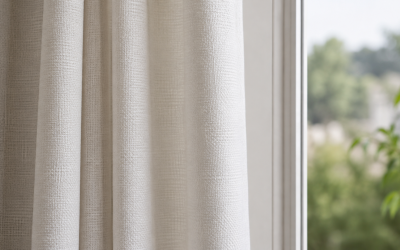
| Cotton or linen fabric | Soft appearance and light weight; allows some light through | Offers less privacy when backlit and may wrinkle or collect dust | Flexible zoning and decorative screening |
| Polyester fabric or felt | Resists wrinkles, is easy to clean and can absorb some reflected sound | May look less natural; acoustic improvement is limited without thick backing | Home offices and high-use spaces |
| Woven cane or rattan | Light, ventilated and attractive in warm interiors | Usually translucent and vulnerable to snagging or breakage | Separating areas without complete visual blocking |
For privacy, focus on opacity rather than color. A pale fabric can still work if it has a dense lining, while an unlined dark fabric may show silhouettes when daylight is behind it. If sound control matters, choose thick felt or a layered textile. A folding screen will not approach the performance of a sealed wall, and thin fabric mainly reduces visual distraction and high-frequency reflections.
Stability: the detail that matters most in daily use
A screen is most stable when its panels form a deep zigzag rather than a straight line. As a practical guide, a three-panel screen around 70 inches high should open with its center panel set back roughly 8–14 inches from the outer panels. Wider feet, heavier frames and lower centers of gravity improve safety more than simply adding another panel.
Look for hinges that allow controlled movement rather than loose, freely swinging joints. Continuous hinges distribute stress across the panel edge; small surface hinges are easier to replace but may loosen sooner. Rubber feet protect hard floors and prevent sliding. On carpet, broad feet are preferable to tiny glides that can catch in the pile.
If the screen will be near children, cats or an active walkway, avoid relying on a narrow base or a single decorative support. A weighted bottom rail, wide stabilizer feet or a discreet wall tether is a better choice. Never use a folding screen as a guardrail, climbing barrier or support for a person.
Assembly, moving and long-term wear
Many folding screens arrive assembled, but heavier wood or metal versions may require feet, stabilizer bars or hinge installation. Before tightening screws, place the panels on a blanket and support them evenly; twisting a large panel while it is unsupported can stress the hinges. Keep the instruction hardware if you may move the screen later.
Check the shipping or packed weight as well as the finished weight. A screen weighing 20–30 pounds may be stable but awkward on stairs, while an 8–15-pound fabric model is easier to relocate but more likely to shift in a draft. Confirm that the folded package can pass through the narrowest doorway, especially if the frame does not fold completely flat.
The parts most likely to wear are hinge screws, fabric attachment points, cane inserts and floor glides. Periodically tighten loose screws without over-tightening them, which can strip engineered wood. Vacuum fabric gently, wipe wood with a dry or slightly damp cloth, and keep natural cane away from prolonged dampness or direct heating vents.
Choosing the best folding screens for your layout
- For maximum privacy: choose an opaque, lined panel at least 72 inches high, with three or four panels and minimal gaps between frames.
- For the smallest storage space: choose three lightweight panels with a folded depth under 6 inches, even if the screen provides less acoustic or impact resistance.
- For a rental: choose a freestanding design with protective feet and no required wall fixing. A 68–72-inch fabric or slatted screen is usually easier to move than a tall solid divider.
- For pets and children: prioritize stability, rounded edges and a low center of gravity over decorative height. Keep the screen away from climbing furniture.
- For back or mobility concerns: select a screen under 15 pounds, with smooth hinges and a handle or easy-grip frame. A shorter three-panel screen is safer to reposition than a heavy six-panel model.
- For a desk zone: match the screen to the desk’s visual line. A 60–72-inch screen hides most seated work activity, while an 80-inch screen creates stronger separation but can reduce light.
What should a folding screen cost?
Basic fabric or lightweight slatted screens usually cost about $70–$180. Better-finished engineered-wood, metal-frame or lined-fabric options commonly fall around $180–$450. Large solid-wood, handcrafted, acoustic or highly detailed screens can cost $450–$900 or more. Compare the hinge construction, panel thickness, base design and folded measurements—not just the number of panels.
The best folding screens are not necessarily the tallest or widest. For most homes, a stable three-panel design around 68–72 inches high, with a folded depth below 7 inches and a weight you can safely move, offers the strongest combination of privacy, flexibility and practical storage.