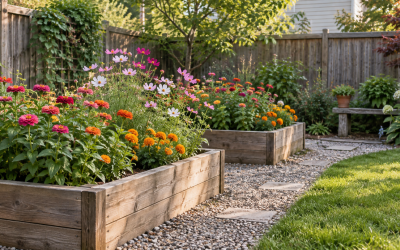
Featured image: AI-generated editorial illustration. It does not show a tested product or document a real-world example.
Key takeaways
- Direct-sown warm-season annuals are the beginner’s answer. Zinnias, cosmos, sunflowers and similar annuals are sown straight into the ground once soil has warmed, bloom within a couple of months, and produce more the more you cut them. Seed for a full bed costs very little…
A cutting garden is not a flower bed you occasionally raid. It is a bed designed to be harvested hard, which changes almost every decision about it — what you plant, how closely you space it, where you put it, and how it looks from the house. The plants that make a cutting garden productive are the ones that respond to being cut by producing more flowers, have stems long enough to arrange with, and last more than two days in a vase. A surprising number of beautiful garden flowers fail at least one of those three tests.
This guide covers the flower categories that genuinely work for a first cutting garden, how to lay the bed out for harvesting rather than for viewing, and how to time sowing and succession planting to your own USDA hardiness zone and local frost dates. Timing is where most cutting-garden advice goes wrong: a sowing schedule written for the mid-Atlantic will produce nothing useful in Minnesota and will miss the entire cool season in central Texas. Everything here is framed around your last spring frost, your first fall frost, and soil temperature, because those are the numbers that actually govern what happens.
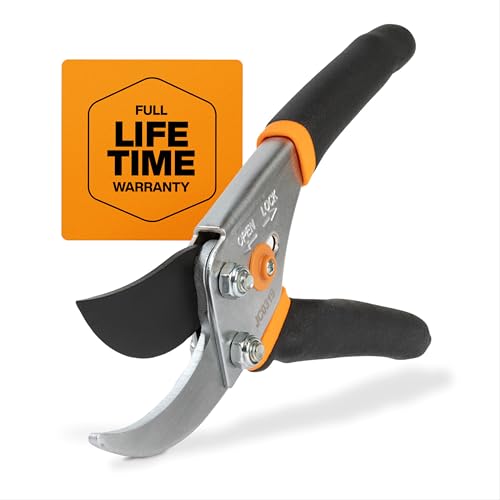
Fiskars Bypass Pruning Shears, 5/8" Cut Capacity Garden Clippers
Selected for "best beginner flowers for a cutting garden": this listing is a grooming product (Fiskars Bypass Pruning Shears, 5/8" Cut Capacity Garden Clippers), matching the product category this article compares.
View on Amazon
Fiskars 6" Steel Micro-Tip Pruning Scissors, Garden Snips for Small Plants
Selected for "best beginner flowers for a cutting garden": this listing is a general product (Fiskars 6" Steel Micro-Tip Pruning Scissors, Garden Snips for Small Plants), matching the product category this article compares.
View on Amazon
DECERK® 8.5" Professional Pruning Shears, Effortlessly Prunes 3/4" Branches
Selected for "best beginner flowers for a cutting garden": this listing is a general product (DECERK® 8.5" Professional Pruning Shears, Effortlessly Prunes 3/4" Branches), matching the product category this article compares.
View on Amazon
4PACK Pruning Shears, Stainless Steel Garden Shears, Sharp Handhled Gardening Scissors, Bypass & Straight Blade Garden Clippers for Plants, Flowers, Fruits Trees, Gardening Gifts for Women & Men
Selected for "best beginner flowers for a cutting garden": this listing is a grooming product (4PACK Pruning Shears, Stainless Steel Garden Shears, Sharp Handhled Gardening Sc), matching the product category this article compares.
View on AmazonQuick Verdict
Direct-sown warm-season annuals are the beginner’s answer. Zinnias, cosmos, sunflowers and similar annuals are sown straight into the ground once soil has warmed, bloom within a couple of months, and produce more the more you cut them. Seed for a full bed costs very little — mixed cut-flower blends like the SunHaven Cut Flower Seed Mix, 1 oz ($12.99) or a five-variety pack such as Gardeners Basics Flower Garden Seeds ($9.95) will fill a bed, and single-species packets run around $4.84 to $5.99.
The key trait is “cut-and-come-again.” Plants that branch and rebloom after cutting give you a season of harvests from one sowing. Plants that produce a single flower per stem and stop are a poor use of cutting-garden space unless you sow them in succession.
Succession sowing matters more than plant selection. Sowing the same annual every two to three weeks from after your last frost until about 12 weeks before your first fall frost is what turns a three-week flush into a five-month supply.
Put the cutting bed somewhere you do not mind looking at gaps. A harvested cutting garden looks picked-over by design. Behind a garage, along a fence, or in a dedicated raised bed works better than the front border.
| Flower Category | Sowing Method | When to Sow | Cut-and-Come-Again | Typical Vase Life |
|---|---|---|---|---|
| Zinnia | Direct sow | Soil above 60-70°F, after last frost | Yes, strongly | 5-10 days |
| Cosmos | Direct sow | After last frost | Yes | 4-7 days |
| Sunflower (branching types) | Direct sow | After last frost, succession | Branching types yes | 5-10 days |
| Sunflower (single-stem types) | Direct sow | Succession every 2 weeks | No, one cut per plant | 5-10 days |
| Snapdragon | Transplant, cool-season | Before last frost in most zones | Yes | 5-8 days |
| Sweet pea | Direct sow, cool-season | Very early spring; fall in mild zones | Yes, must keep picking | 3-5 days |
| Celosia | Direct sow or transplant | After last frost, warm soil | Yes | 7-14 days |
| Marigold | Direct sow | After last frost | Yes | 7-14 days |
| Bachelor’s button | Direct sow, cool-season | Early spring or fall in mild zones | Yes | 5-7 days |
| Dahlia (tubers) | Plant tubers | After last frost, soil above 60°F | Yes, strongly | 3-5 days |
| Spring bulbs (tulip, narcissus) | Plant bulbs | Fall, before ground freezes | No | 5-10 days |
How to Do It
Work out your two dates first
Everything in a cutting garden is scheduled from the average last spring frost and the average first fall frost for your location. Your county extension office publishes both. Your USDA hardiness zone is a separate piece of information — it tells you what survives winter, which matters for dahlia tubers, perennials and bulbs, but it does not tell you when to sow. A Zone 9 gardener may have a last frost in February and a first frost in December, giving nearly ten months of growing; a Zone 4 gardener may have barely four months between the two. Sowing schedules on seed packets are written to be applied to your dates.
Separate cool-season from warm-season crops
This distinction does more for cutting-garden productivity than any other single idea. Cool-season flowers — snapdragons, sweet peas, bachelor’s buttons and similar — tolerate light frost, prefer cool soil, and go in before or around the last spring frost in most zones. In mild-winter zones, roughly 8 and warmer, many of them are actually fall-sown for spring bloom. Warm-season flowers — zinnias, cosmos, celosia, sunflowers, marigolds — need warm soil, typically 60°F or above and often closer to 70°F, and will sulk or rot if sown too early. Sowing a warm-season annual two weeks “early” to get a head start almost always produces a later harvest, not an earlier one.
Sow in succession, not all at once
Sow a block of your main annuals, then sow another block two to three weeks later, and keep going until roughly 10 to 12 weeks before your first expected fall frost — that last window is the approximate time most annuals need to reach cutting size. Single-stem sunflower types, which produce exactly one flower and then stop, absolutely require this approach. Branching types and zinnias benefit from it but will carry you further on their own.
Space closer than the packet says, and plan for harvest access
A cutting garden is grown for stems, not for individual plant beauty. Tighter spacing encourages plants to grow taller and straighter as they reach for light, which produces better stems. Plant in rows or blocks about three to four feet wide with a clear path on both sides, so you can reach the center without stepping into the bed. This is the opposite of ornamental border design and it is the main reason a cutting garden should be its own bed rather than integrated into a display border. Raised beds suit the format well — galvanized kits run from about $19.99 for a small 4×2 to roughly $64 to $80 for an 8×4.
Pinch young plants to force branching
When a seedling of a branching annual reaches roughly 8 to 12 inches with several sets of leaves, cutting out the top few inches above a leaf node forces it to send out multiple side shoots instead of one central stem. It feels destructive and it roughly doubles the stem count. Not everything should be pinched — single-stem sunflower types and most spring bulbs should not — but for zinnias, cosmos, celosia, snapdragons and dahlias it is the highest-return five minutes in the whole season.
Harvest in the cool of the day and condition the stems
Cut early in the morning or in the evening, never in midday heat, and carry a bucket of clean water into the garden so stems go straight into water rather than lying cut in the sun. Strip any leaves that would sit below the waterline, since submerged foliage rots and shortens vase life significantly. Let the stems rest in deep water in a cool dark place for a few hours before arranging. These three habits often add several days of vase life on their own.
Keep cutting even when you do not need flowers
Cut-and-come-again annuals flower in order to set seed. Once they succeed, they slow down or stop. Harvesting or deadheading consistently keeps them producing. A cutting garden that goes unharvested for two weeks in midsummer will take considerably longer to get back into full production than one picked every few days. Sweet peas are the extreme case here — miss a week of picking and they will start shutting down for the season.
Planning for Your Region and Avoiding Problem Species
Regional conditions change which of these categories carries the season. In hot, humid southern zones, cool-season flowers do their best work in fall, winter and very early spring, while high summer is difficult for many annuals and the reliable performers are the heat-tolerant ones like zinnia and celosia. In cool coastal climates, sweet peas and snapdragons can run far longer than they do inland. In short-season northern zones, starting warm-season annuals indoors four to six weeks before the last frost is often the difference between a full harvest and a brief one. None of this is captured by hardiness zone alone, which is why your extension service’s regional planting guide is more useful than any national schedule.
Be deliberate about seed mixes. Inexpensive generic wildflower blends are marketed as instant cutting gardens and are a poor fit for the job — most contain species with short stems that do not cut well, and some contain species that are invasive in parts of the US. Dame’s rocket shows up in mixes sold in the Midwest and Northeast, where it is a listed invasive that spreads into woodlands. Oxeye daisy is a noxious weed in several western states. Bachelor’s button, while a legitimate cutting flower, is regarded as weedy or invasive in some western regions and is worth checking against your state’s list before planting a large block of it. A cut-flower-specific mix with a printed species list, such as the SunHaven Cut Flower Seed Mix ($12.99), or single-species packets like California Giants Zinnia Seeds ($4.84) and a sunflower packet ($5.99), let you know exactly what you are putting in the ground.
For perennials and dahlias, hardiness zone becomes directly relevant. Dahlia tubers survive winter in the ground only in milder zones — in colder regions they are lifted after the first frost blackens the foliage and stored somewhere cool and dry over winter. Spring bulbs need to go in during fall, before the ground freezes, and many need a sustained cold period to bloom, which is why gardeners in the warmest zones often pre-chill them or treat them as annuals. Check the specific requirements on the package rather than assuming, since these vary considerably by type.
Finally, on expectations: a first-year cutting garden built on direct-sown annuals will produce a genuinely useful volume of flowers within roughly 60 to 90 days of sowing, depending on the species and your weather. The limiting factor is almost never the plants. It is whether the bed is somewhere you will actually walk to with a bucket every few days.
Related guides: backyard landscaping ideas on a budget, flower garden ideas for beginners, raised flower bed layout ideas, best at home gel nail kits, french tip variations for 2026
FAQ
How large does a cutting garden need to be?
A bed roughly 4 by 10 feet, densely planted with a few cut-and-come-again annuals and sown in succession, will supply regular arrangements for one household through the growing season. Start smaller than you think you want — a cutting garden requires consistent harvesting, and an oversized bed becomes a chore rather than a pleasure.
When exactly should I sow?
Use your local frost dates rather than a month. Cool-season flowers go in around or slightly before your average last spring frost, or in fall in mild-winter zones. Warm-season annuals go in after the last frost, once soil temperature is reliably above about 60°F — a cheap soil thermometer removes the guesswork. Stop sowing roughly 10 to 12 weeks before your average first fall frost.
Which flowers give the most stems for the least effort?
Zinnias are the usual answer for warm-season beds: direct-sown, fast, heat-tolerant, and strongly cut-and-come-again. Cosmos and branching sunflowers are close behind. For cool-season beds, snapdragons and bachelor’s buttons both rebloom well after cutting. All four are widely available as inexpensive single-species seed packets.
Why do my cut flowers wilt within a day?
Most often because they were cut in midday heat, or because they sat out of water after cutting, or because foliage below the waterline is rotting in the vase. Cutting early or late in the day, carrying water into the garden, stripping lower leaves and changing vase water every couple of days addresses nearly all of it. Some flowers are simply short-lived in a vase regardless of technique.
Can I grow a cutting garden in containers or raised beds?
Yes, and raised beds in particular suit the format because the defined edges make row planting and harvest access straightforward. Containers work for smaller annuals but dry out quickly in summer heat and limit root room for tall plants, so expect shorter stems. Galvanized raised bed kits start around $19.99 for a compact size and run to roughly $64 to $80 for a large 8-by-4-foot bed.