Key takeaways
- Back and stomach sleepers usually want less — 2 to 3 inches of responsive foam, like the Sleepyhead 2 Inch Cooling Gel topper for a dorm or guest setup, so the lumbar curve stays supported instead of sinking.
- Side sleepers need room for the shoulder and hip to drop so the spine stays straight. Three inches is the practical minimum; the JSELF 3 Inch Gel Memory Foam with its wave-textured surface targets exactly those pressure points.
- Heavier bodies or a very firm mattress may need the full SHOUREN 5 Inch Memory Foam to get meaningful contouring instead of bottoming out.
What's inside
I design lighting for living spaces, which means I spend my working life on a single question: how does a room feel at the moment someone stops performing and starts resting? Dimmers, shielded sources, warm color temperature at night, a clean fade from bright to dark. And then I watch clients undo all of it by lying down on a surface that fights their spine until 3 a.m. Ambience is a system, and the mattress is the last component in it — the one your body actually touches for eight hours.
A topper is the cheapest, most reversible adjustment in that system. It won’t rebuild a failing mattress, but it can change how pressure distributes across your hips, shoulders, and lumbar curve, which is often the difference between waking up stiff and waking up neutral. Below, I’ll walk through how to read thickness and density specs, how to match a topper to your sleep position, why heat quietly makes back pain worse, and how to keep the thing from sliding around. The picks that follow are the models I’d point a client toward for each of those situations.
🛒 Best Price Today on Amazon
Prime members get fast, free shipping on everything above, plus member-only deals. New members get a 30-day free trial — cancel anytime.
Our Recommended Picks
As an Amazon Associate we earn from qualifying purchases.


Diagnose the Mattress Before You Cover It
Lighting has a rule: you can’t gel your way out of a badly placed fixture. Same principle here. If your mattress sags visibly in the middle, or you can feel coils through the surface, a topper only softens the symptom — the dip is still pulling your lumbar spine into a hammock. Lay a straightedge across the bed and look for a gap of more than an inch. If you find one, replace rather than layer. Toppers earn their keep on mattresses that are structurally sound but too firm, too thin, or simply worn flat on one side.
Thickness Is a Sleeping-Position Decision
Two inches adjusts the feel of a surface. Three inches changes how deeply your shoulder and hip sink. Four or five inches effectively becomes the sleeping surface. Match it to how you actually lie down:
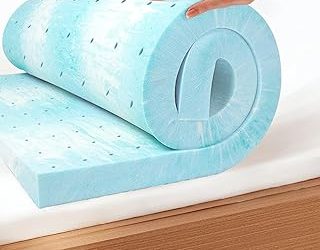
- Back and stomach sleepers usually want less — 2 to 3 inches of responsive foam, like the Sleepyhead 2 Inch Cooling Gel topper for a dorm or guest setup, so the lumbar curve stays supported instead of sinking.
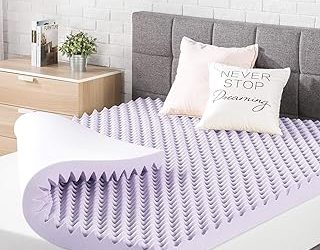
- Side sleepers need room for the shoulder and hip to drop so the spine stays straight. Three inches is the practical minimum; the JSELF 3 Inch Gel Memory Foam with its wave-textured surface targets exactly those pressure points.
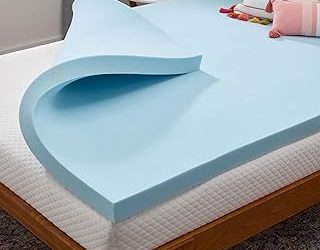
- Heavier bodies or a very firm mattress may need the full SHOUREN 5 Inch Memory Foam to get meaningful contouring instead of bottoming out.
Support and Plushness Are Different Specifications
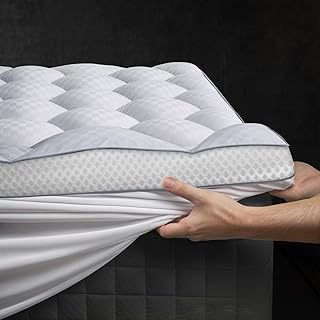
This is where marketing language gets murky. “Soft” and “supportive” are not opposites, and a good topper delivers both through construction rather than a single foam. Dual-layer builds put a plush comfort layer over a denser base — the JSELF topper is a clear example. Reinforced-zone designs like the 3 Inch Ultra-Fluffy Memory Foam Topper pair a pillow-top feel with firmer support underneath so you don’t lose the lumbar line. If you want pressure relief without foam’s sink, high-fill fiber is the alternative: the 1000GSM Down Alternative Pillow Top cushions the surface while keeping the mattress underneath doing the structural work. Look for CertiPUR-US or Oeko-Tex certification on any foam you’ll be breathing next to nightly.
Heat Is a Back Problem in Disguise
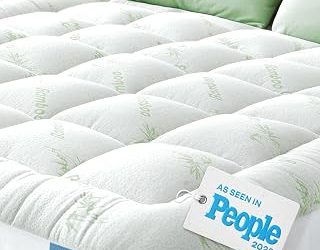
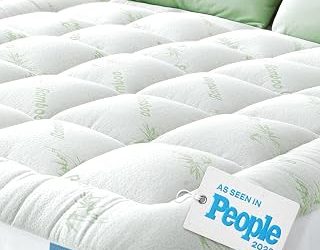
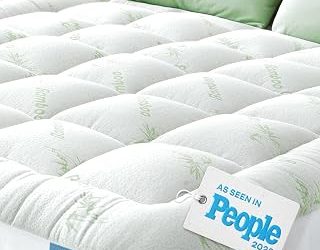
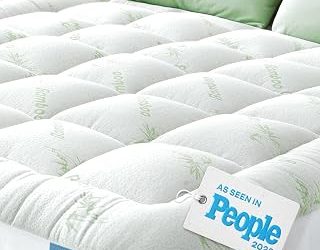
The same way a 4000K bulb keeps a room feeling like an office at midnight, a hot sleeping surface keeps your nervous system from settling. Overheating fragments sleep, and fragmented sleep reliably amplifies pain perception. Traditional memory foam traps heat; the fixes are gel infusion, open-cell structure, breathable side panels, and natural-fiber covers. The BEDLORE Viscose Bamboo topper leans on fiber breathability, while the Ultra-Fluffy model uses air-mesh sides to move heat out of the core. If you already sleep hot, treat cooling as a requirement, not a bonus.
Fit Determines Whether You Keep Using It
The most common reason toppers get abandoned is drift. A topper that migrates six inches overnight creates an edge under your ribs and undoes the support you paid for. Check the deep-pocket range against your actual mattress height — the Ultra-Fluffy fits 6 to 21 inches, BEDLORE covers 6 to 18 — and prefer anchored skirts, non-slip backing, or the four-way straps on the SHOUREN. Then confirm your fitted sheets still reach. Buying one deeper sheet set is cheaper than returning the topper.
Tips
- Unbox foam and let it off-gas in a ventilated room for 48 hours before sleeping on it; the smell fades, and the foam reaches full loft.
- Give your body two weeks to adapt. New pressure distribution can feel wrong for several nights before it feels right.
- Rotate the topper head-to-foot monthly so you’re not always compressing the same zone.
- Pair the upgrade with warm, low-level lighting after sunset. A better surface plus a darker room outperforms either alone.
Frequently Asked Questions
Will a topper actually help my back pain?
It can meaningfully help if your pain comes from a surface that’s too firm or unevenly worn. It won’t address disc issues, structural problems, or muscular conditions — see a clinician for persistent or radiating pain.
Firmer or softer for a bad back?
Neither extreme. You want a surface that keeps your spine in the same neutral alignment it holds when you stand. That usually means medium-firm with targeted cushioning at the shoulder and hip.
How long do toppers last?
Quality foam holds up three to five years; fiber-fill pillow tops compress sooner but are often machine washable. Replace when you can feel a permanent body impression.
Can I use one on an adjustable base?
Yes, provided the topper is flexible foam or fiber and secured with straps or a fitted skirt so it bends with the base instead of buckling.
Conclusion
Think of your bed the way I think of a room at dusk: a set of layers you tune until nothing in it demands attention. Confirm your mattress isn’t sagging, choose thickness by sleeping position, insist on real cooling if you run warm, and make sure the topper stays put. Get those four right and the surface disappears — which is the whole point.