Key takeaways
- Full spectrum: best all-around choice for most houseplants.
- Added red LEDs: support flowering, fruiting, and seed starting.
- Adjustable spectrum modes: let one light serve different plant stages.
A north-facing apartment, a dim winter, a plant obsession that has outgrown the windowsill: any of these is reason enough to bring artificial sunlight indoors. Grow lights let houseplants thrive in rooms that never see direct sun, extending the growing season and rescuing leggy, light-starved greenery. They have also become a genuine decor element, with wood-grain stands and sculptural halos that look intentional rather than clinical.
This buyer’s guide explains what grow lights actually do for indoor plants and how to choose the right one in 2026, from spectrum and intensity to placement and timers. Whether you are nursing seedlings or keeping a fiddle-leaf fig happy through January, here is how to light your plants well.
Our top picks


As an Amazon Associate we earn from qualifying purchases at no extra cost to you.
⚡ Save on Your Next PC — Amazon Prime
Prime members get fast free shipping on the systems above, plus early access to Prime Day & Black Friday PC deals. New members get a 30-day free trial.
Watch: The Benefits of Grow Lights for Indoor Plants: A Buyer’s Guide — Video Review
Why Indoor Plants Benefit from Grow Lights
Plants convert light into energy through photosynthesis, and most homes simply do not supply enough of it, especially in winter or away from windows. A grow light delivers the intensity and spectrum plants need to keep producing chlorophyll, preventing the stretched, pale growth that signals a starving plant. The payoff is fuller foliage, steadier growth, and the ability to keep tropical plants and herbs thriving year-round regardless of your window situation.
Understanding Full Spectrum and Light Color
The term to look for is full spectrum, meaning the light covers the range plants use, roughly mimicking daylight. Full-spectrum models like the Aokrean Grow Light and the bseah Grow Light supply balanced light for general foliage growth. Some lights, like the GooingTop with white and red LEDs, emphasize the red wavelengths that support flowering and fruiting, which matters if you grow herbs or blooming plants rather than leafy greenery.
- Full spectrum: best all-around choice for most houseplants.
- Added red LEDs: support flowering, fruiting, and seed starting.
- Adjustable spectrum modes: let one light serve different plant stages.
Match Intensity and Size to Your Plants
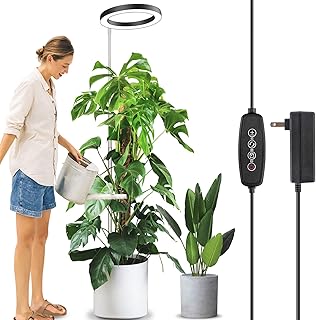
A tiny succulent and a five-foot fiddle-leaf fig have very different light needs. Small potted plants do well under a compact halo light like the Kullsinss 3.5-inch Grow Light, while tall plants need a taller, brighter fixture such as the LORDEM 10-inch 160-LED Grow Light with a 65-inch adjustable pole. Dimmable brightness, offered on models like the bseah light with ten levels, lets you tune intensity as plants grow or as you add more demanding species.
Prioritize Timers and Adjustability
Consistency is everything in plant lighting, and an auto timer removes the guesswork. Lights like the Aokrean and LORDEM include 3-, 9-, and 12-hour timer options that cycle automatically, so your plants get a reliable daily dose even when you travel. Height-adjustable poles and flexible gooseneck arms, found on the GooingTop clamp light, let you aim the light precisely as plants change shape and reach toward the source.
Tips
- Run grow lights 8 to 12 hours daily for most foliage plants, matching a natural daylight cycle.
- Keep the light a few inches above small plants and raise it as they grow to avoid leaf burn.
- Use a light with a timer so plants get consistent exposure without you remembering to switch it.
- Choose a wood-grain or stylish stand if the light will sit in a visible living area.
Frequently Asked Questions
How many hours a day should I run a grow light?
Most houseplants thrive on 8 to 12 hours of grow-light exposure daily, mimicking a natural day. Using a model with a built-in timer, like the Aokrean or LORDEM, automates this and ensures consistency.
What does full spectrum actually mean?
Full spectrum means the light covers the range of wavelengths plants use for photosynthesis, roughly approximating daylight. It is the safest all-purpose choice, while added red LEDs help flowering and fruiting plants specifically.
Can grow lights replace a sunny window entirely?
Yes, a properly sized full-spectrum light can fully sustain plants in a windowless or dim room. Match the light’s intensity and size to your plants, using a taller fixture like the LORDEM for large specimens.
Will a grow light burn my plants?
Only if placed too close. Keep the fixture a few inches above small plants and raise it as they grow. Dimmable models let you reduce intensity for sensitive plants, preventing leaf scorch.
Conclusion
Grow lights unlock indoor gardening anywhere, keeping plants full and healthy regardless of your natural light. Choose full spectrum for general foliage, size the intensity to your plants, and favor a timer and adjustable height for consistent, hands-off care. With the right light, even a dim apartment becomes a thriving indoor garden year-round.