
Key takeaways
- Target Audience: Adult
- Recommended Uses For Product: Endurance, Exercise and Fitness, Speed
- Item Length: 280 Centimeters
Jumping rope loads the calf and Achilles tendon roughly two to three times body weight on every landing, and you land somewhere between 120 and 180 times per minute. That is a lot of repetitions for a tissue that adapts slowly. People who come to rope work from cycling or lifting often have the cardiovascular capacity for a 15-minute session and none of the tendon conditioning, which is exactly how a promising new habit turns into six weeks of heel pain. The rope you choose does not fix that, but it does influence how fast you accumulate those landings.
This roundup looks at six ropes through a joint-load lens: which ones encourage a slower, more controlled cadence, which ones tempt you into speed work before your tendons are ready, and which ones are appropriate if you already have a history of shin splints or plantar fascia irritation. If you are over 200 pounds, returning from a lower-leg injury, or have not done impact training in a year, the weighted options here are safer starting points than the fast cables, for reasons that have nothing to do with build quality.
Our top picks
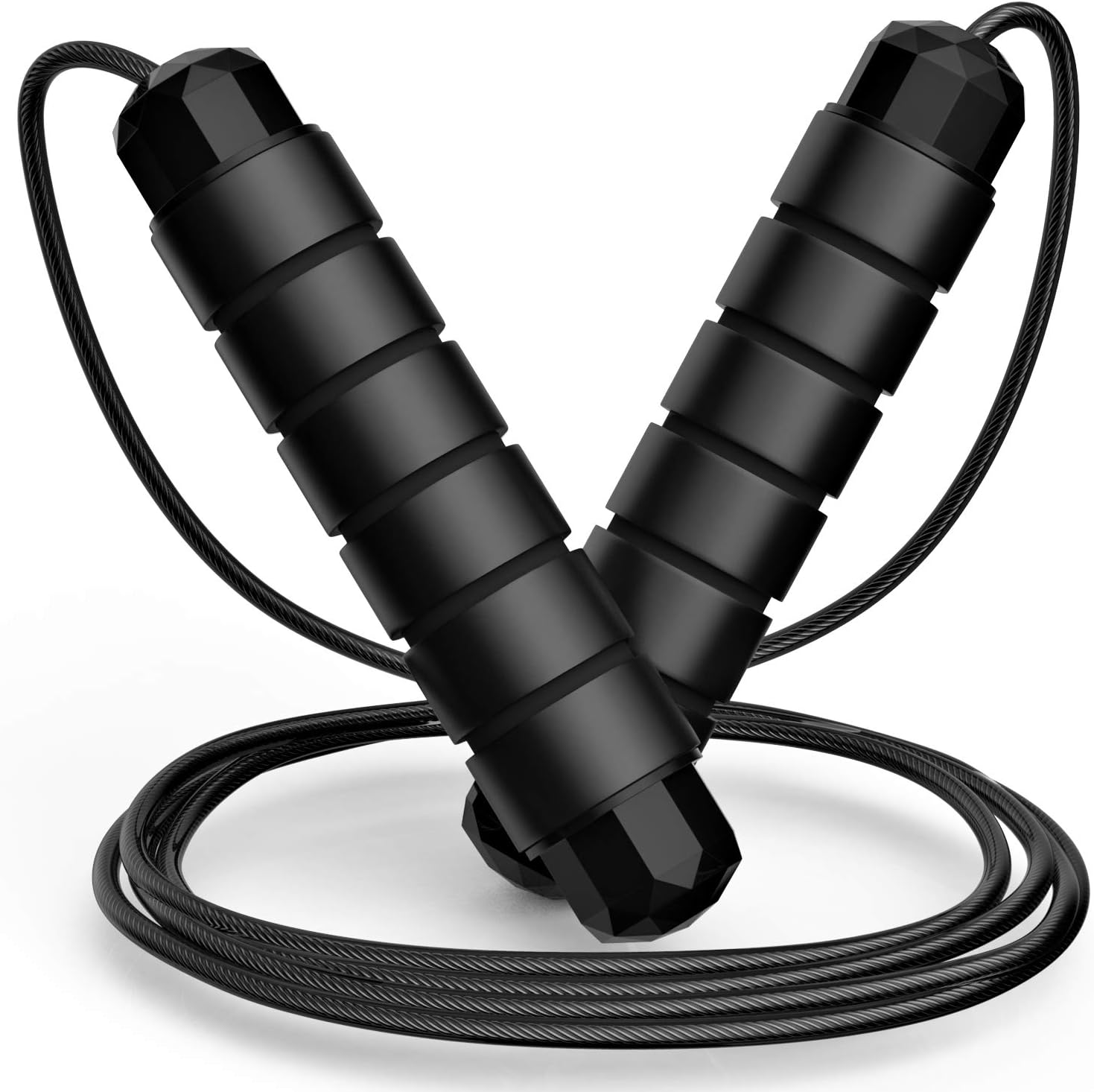 Jump Rope
- Target Audience: Adult
- Recommended Uses For Product: Endurance, Exercise and Fitness, Speed
- Item Length: 280 Centimeters
Ball bearings support fast, tangle-free rotation
Foam handles stay comfortable even during longer sessions
Adjustable 280 centimeter length suits most adult heights
Steel-core rope is less forgiving than soft training ropes
Suited more to smooth flooring than rough outdoor surfaces


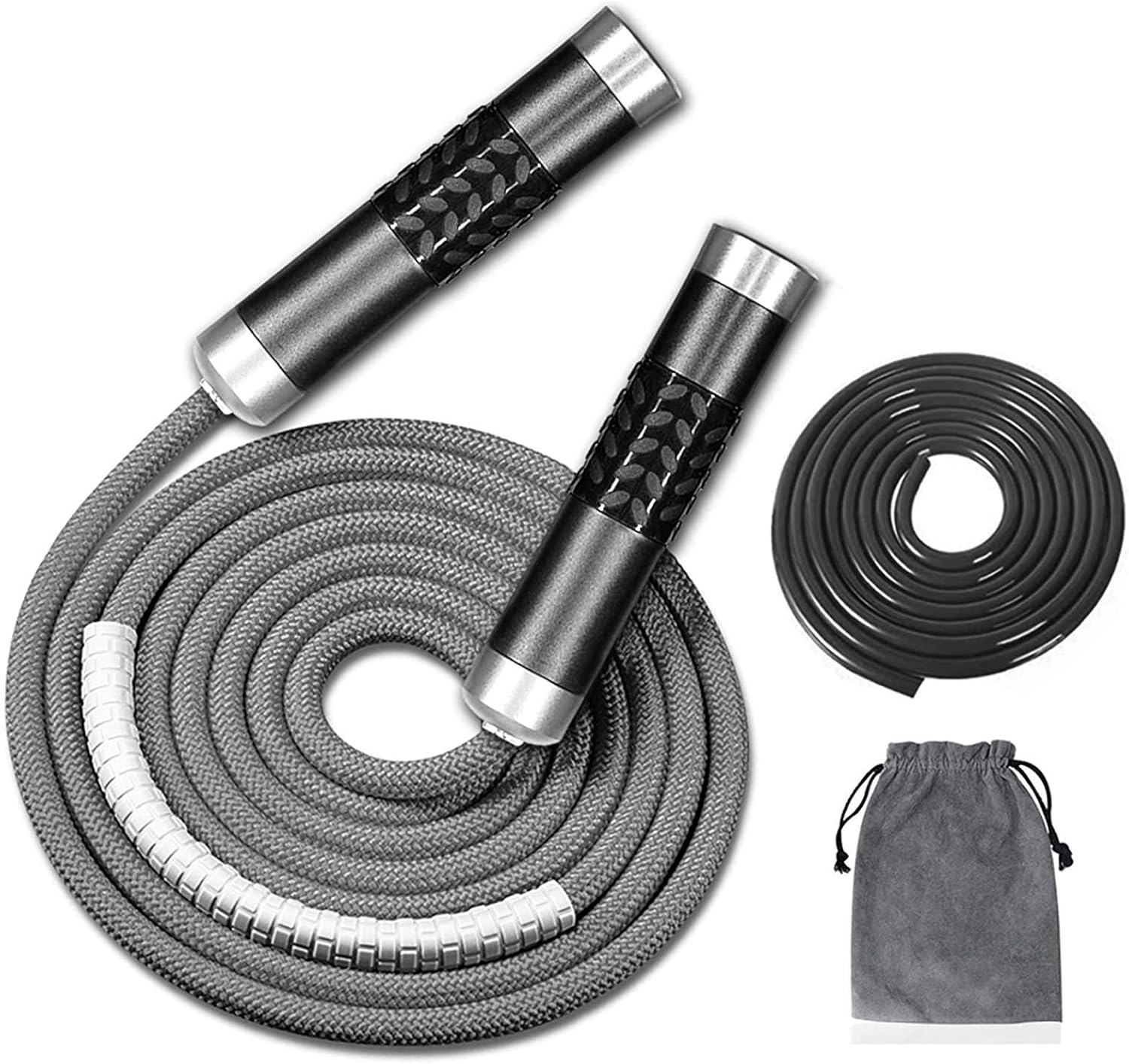 Redify Weighted Jump Rope for Workout Fitness
- Target Audience: Adult
- Item Length: 120 Inches
- Handle Diameter: 1 inches
Double ball bearings keep rotation smooth and tangle-free
Combination cotton and PVC rope lets you switch jumping surfaces
Adjustable length fits users of different heights
At about 1 pound, heavier than standard speed ropes
Silicone grip handle needs the cotton rope swapped by hand
 BOOMIBOO Jump Rope
- Target Audience: Adult, Kid
- Recommended Uses For Product: Exercise and Fitness
- Item Length: 9.2 Feet
Ball bearings help the rope spin fast without tangling
Foam handles stay non-slip even with sweaty hands
9.2-foot rope adjusts to fit both kids and adults
Steel-core design is less forgiving if it hits your legs
Foam handle covering may wear faster than hard plastic grips
As an Amazon Associate we earn from qualifying purchases at no extra cost to you.
Quick Comparison
| Product | Best For | Standout Feature | Watch Out For |
|---|---|---|---|
| Tangle-Free Rapid Speed Rope | Conditioned jumpers | Ball bearings enable very high rotation rates | High cadence stacks landings quickly on new tendons |
| SPORTBIT Adjustable Rope | Rehab-paced progression | Length tuning to control arc and tempo | Untrimmed cable can trip you mid-set |
| Honor Athletics Pro Boxing Rope 3.0 | Athletes with a training base | Durable 5.3mm cord for long boxing rounds | Encourages long rounds before you are ready for them |
| KUTIZE Adjustable Weighted Rope | Shifting load to upper body | 1 lb handles raise effort at lower foot speed | Grip fatigue can end sets before cardio does |
| Pre-Sized 1 lb Weighted Rope | Correct arm mechanics | Fixed length prevents creeping arc errors | No way to shorten if the size runs long |
| 1 lb Heavy Weighted Rope | Lower-impact conditioning | Slower cadence means fewer landings per minute | Heavier cord adds shoulder strain over time |
How to Choose
- Landings per minute: This is the real dosage number. A weighted rope at 110 rotations per minute delivers roughly 40 percent fewer impacts than a speed cable at 180 over the same duration.
- Current tendon status: If your calves are sore from stairs, you are not ready for daily rope work. Start at three sessions a week, five minutes each, and add two minutes per week.
- Footwear: Cushioned running shoes reduce peak load but blunt proprioception. Cross-trainers with a firm midsole are the usual compromise; barefoot is for experienced jumpers only.
- Body weight: Impact scales directly. Heavier jumpers should favor weighted ropes, shorter intervals, and a forgiving surface rather than pushing cadence.
- Arc control: A rope sized so the handles reach your armpits when you stand on the midpoint keeps the arc predictable, which means fewer stumble-landings where the load spikes.
Top Picks Reviewed
Best for Trained Jumpers: Tangle-Free Rapid Speed Rope
The bearing system removes cable twist, so the rope tracks true even at high rotation. If you already have a conditioning base and want to work on foot speed and double-unders, this is the mechanism that supports it.
The honest limitation is that it makes overtraining easy. The rope will happily spin faster than your Achilles can tolerate in month one. Treat the speed as something to earn.
Best for Gradual Progression: SPORTBIT Adjustable Rope
Adjustability is a load-management tool. Running the rope slightly long produces a wider, slower arc and a lower jump height, which is precisely what you want during the first month back from any lower-leg issue.
Leave too much cable coiled at the handles, though, and it becomes a trip hazard during fatigued sets. Trim it once you settle on a length.
Best for Round-Based Work: Honor Athletics Pro Boxing Rope 3.0
Boxers use three-minute rounds because it maps to competition, and this cord is built for that volume. The 5.3mm diameter gives clear feedback about the rope’s position, which helps you keep the arc consistent when you are tired.
The structure of round work is the risk. Three unbroken minutes is roughly 400 landings, and that is a large first dose for anyone new to impact.
Best Load Redistribution: KUTIZE Weighted Rope
Adding a pound to each handle moves a meaningful share of the workout into the shoulders, forearms, and grip. Your heart rate climbs at a lower foot cadence, which is the whole point if your ankles are the limiting factor.
Expect grip to fail first in early sessions. That is not a design flaw, but it does mean your sets end before you reach a cardio ceiling for the first few weeks.
Best Fixed Geometry: Pre-Sized 1 lb Weighted Rope
A fixed length cannot drift. Adjustable ropes tend to creep as the clamp loosens, and a rope that slowly gets longer changes your arc without you noticing. The M/L/XL sizing removes that variable entirely.
If you land between sizes, you are stuck. Measure carefully, and size down rather than up if your ceiling is low.
Lowest Impact Per Minute: 1 lb Heavy Weighted Rope
The cord mass sets a natural tempo somewhere around 100 to 120 rotations per minute. Over a ten-minute session that is several hundred fewer landings than a speed cable, at a comparable heart rate. For anyone managing joint load, that trade is the best one on this list.
The shoulders absorb what the ankles do not. Long sessions with a heavy cord produce a specific deltoid and trap fatigue that catches lifters off guard.
Frequently Asked Questions
Is jumping rope bad for your knees?
For healthy knees, a properly executed low hop loads the calf and ankle far more than the knee. Problems appear when jumpers land with locked legs or on their heels, which sends the shock straight up the chain.
How do I avoid shin splints when starting?
Cap early sessions at five minutes, break them into 30-second intervals, and train on a slightly forgiving surface. Shin pain almost always traces back to volume added too quickly, not to technique.
Should I jump barefoot?
Only if you have an established base and healthy feet. Barefoot jumping improves foot mechanics but removes the cushioning that keeps early sessions tolerable.
Does a weighted rope reduce joint stress?
Indirectly, yes. It does not soften the landing, but it lowers your rotation rate so you accumulate fewer total impacts for the same training effect.
Final Thoughts
Rope work is excellent conditioning and a genuinely poor choice for someone who ignores tissue adaptation. Pick a rope that matches your current tolerance rather than your ambition, count sessions in minutes rather than in songs, and treat the jump from a weighted cord to a speed cable as a milestone rather than a shopping decision. Done that way, this is cardio you can keep doing for decades.

Write Your Review
No reviews yet. Be the first to share your experience!