Key takeaways
- Spraying directly at the fixture. Liquid travels up into the socket, corrodes the contacts, and can trip the breaker. Spray the cloth only.
- Cleaning hot glass. Thermal shock is the number one cause of cracked pendant shades. Wait 5 minutes minimum, longer for thick hand-blown glass.
- Standing on a chair or the counter. Use a rated step stool. You need both hands free, one to hold the shade.
- Using paper towels. They shed lint that clings to static-charged glass, and their wood fibers can leave faint scratches over time.
- Twisting the shade to reach the back. Move yourself, not the fixture. Step around the island instead.
- Overwetting seeded glass. Water pools in the bubbles and leaves rings. Use a barely damp cloth on textured shades.
Glass pendants over a kitchen island collect a stubborn mix of cooking grease, airborne dust, and hard-water haze from steam. Most people either ignore them until the glass turns yellow, or they unscrew the shade, drop it in the sink, and chip the rim. Neither is necessary. With the right cloth, the right cleaner, and about 20 minutes, you can restore a clear or seeded-glass shade while it stays hanging. Done badly, though, you risk three things: spraying liquid into the socket, cracking a hot shade with cold water, or twisting a suspension cord until the internal wires fray. This guide avoids all three.
What You Need
| Item | Why | Optional? |
|---|---|---|
| Two microfiber cloths (one damp, one dry) | Lint-free, traps grease without scratching glass | No |
| Spray bottle with 1:1 distilled white vinegar and water | Cuts hard-water film and light grease without residue | No |
| Dish soap (a few drops in 16 oz warm water) | Breaks down heavy kitchen grease the vinegar cannot | Only for kitchen pendants |
| Sturdy step stool or 2-step ladder (rated 250 lb or more) | Pendants over islands hang 30 to 36 inches above a 36-inch counter, so the shade bottom is about 66 to 72 inches up | No |
| Soft-bristle paintbrush or makeup brush | Lifts dust from seeded glass texture and canopy seams | Yes |
| Extendable microfiber duster | Reaches the cord, canopy, and ceiling junction without a ladder | Yes |
| Rubbing alcohol (70%) | Removes fingerprints and streaks on clear glass for a final polish | Yes |
| Painter’s tape and a small plastic bag | Covers the socket and bulb base so no liquid gets in | Yes, but recommended |
Total cost if you own nothing on this list is roughly $15 to $30. Avoid ammonia-based glass cleaners on any shade with a metallic finish or painted interior, and skip abrasive pads entirely; a single scouring pass leaves permanent micro-scratches on hand-blown glass.
Our top picks

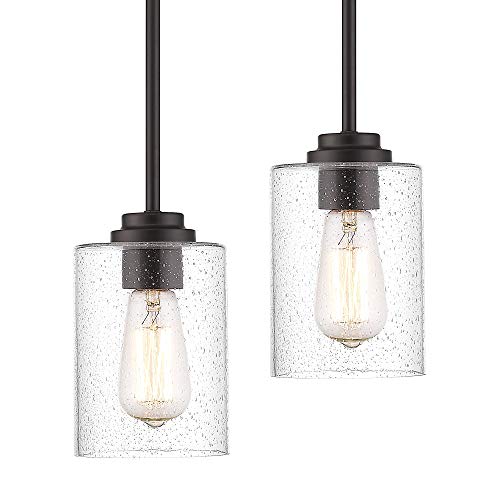
As an Amazon Associate we earn from qualifying purchases at no extra cost to you.
Step-by-Step
Step 1: Kill the power and let the glass cool (5 minutes)
Switch the light off at the wall, and if the pendants are on a dimmer, flip the breaker as well so nobody turns them on mid-clean. Wait at least 5 minutes. A shade that has been running a 60-watt incandescent or a 9-watt LED still holds heat, and vinegar water hitting warm glass can craze the surface. Test with the back of your hand before touching it with a wet cloth.
Step 2: Stabilize the pendant (2 minutes)
Most pendants hang from a cord, rod, or chain. A cord-hung shade like a 9-inch bell pendant on a long adjustable cord will swing the moment you touch it. Cup the top of the shade near the socket cup with your non-dominant hand and hold it steady throughout. Never grab the cord itself and never rotate the shade; twisting a cord-hung fixture more than a quarter turn can strain the strain-relief grommet and the internal wires.
Step 3: Protect the socket and bulb (2 minutes)
If the bulb is exposed at the bottom of an open shade, wrap a small plastic bag around it and tape it loosely at the base. For enclosed shades where the bulb sits inside, you only need to keep spray from drifting upward: always spray the cloth, never the fixture.
Step 4: Dry-dust first (3 minutes)
Run a dry microfiber cloth or soft brush over the shade, inside and out, before any liquid touches it. Wetting a dusty shade turns the dust into a gray paste that smears. On seeded or ribbed glass, use the paintbrush to flick dust out of the texture. Dust the canopy at the ceiling and the full length of the cord with the extendable duster.
Step 5: Clean the exterior (5 minutes)
Mist the damp cloth with the vinegar solution until it is moist, not dripping. Wipe the outside of the shade in overlapping vertical strokes from top to bottom, supporting the shade with your other hand. For kitchen pendants with visible grease film, use the dish-soap cloth first, then follow with the vinegar cloth to remove soap residue. Rinse and wring the cloth every two passes so you are not redistributing grime.
Step 6: Clean the interior (5 minutes)
Reach up inside the shade with a fresh damp cloth wrapped around two fingers. Work from the rim toward the socket cup, stopping about 1 inch short of the socket. Bell and cone shades with a 9-inch opening give you plenty of room; on smaller 5- to 6-inch openings, wrap the cloth around a wooden spoon handle instead of forcing your hand in.
Step 7: Dry and polish (3 minutes)
Immediately buff both surfaces with the dry microfiber cloth. Water spots form within a minute or two on warm glass, so do not let it air-dry. For a streak-free finish on clear glass, put a few drops of rubbing alcohol on the dry cloth and give the exterior one final pass. Remove the bag from the bulb, wait 10 minutes for any dampness to evaporate, then restore power.
Mistakes to Avoid
- Spraying directly at the fixture. Liquid travels up into the socket, corrodes the contacts, and can trip the breaker. Spray the cloth only.
- Cleaning hot glass. Thermal shock is the number one cause of cracked pendant shades. Wait 5 minutes minimum, longer for thick hand-blown glass.
- Standing on a chair or the counter. Use a rated step stool. You need both hands free, one to hold the shade.
- Using paper towels. They shed lint that clings to static-charged glass, and their wood fibers can leave faint scratches over time.
- Twisting the shade to reach the back. Move yourself, not the fixture. Step around the island instead.
- Overwetting seeded glass. Water pools in the bubbles and leaves rings. Use a barely damp cloth on textured shades.
How Often
Pendants over a kitchen island or range benefit from a quick dry-dust every 2 weeks and a full damp clean every 4 to 6 weeks, since cooking aerosols settle fast. Dining room and foyer pendants, which see far less grease, need a dry-dust monthly and a wet clean every 3 to 4 months. Bedroom pendants can go 6 months between wet cleans. If you cook with a lot of high-heat searing or frying, cut those intervals in half. A pendant hanging 95 inches from ceiling to bottom on a long cord will also gather dust along the entire cord length, so include it in every dusting pass.
When to Call a Pro or Replace
Call an electrician if you notice any of the following while cleaning: a brown or black scorch mark inside the socket cup, a cord that feels stiff or cracked where it enters the shade, a shade that wobbles because the socket collar has loosened, or flickering after power is restored. These are wiring or socket issues, not cleaning issues.
Consider replacing the shade or the whole pendant if the glass has a crack longer than 1 inch, a chip on the rim, or permanent etching from years of hard water that no amount of vinegar lifts. Replacement glass pendants are affordable: a hand-blown gold-and-clear bell pendant such as the INK+IVY Auburn runs around $77, and a two-pack of farmhouse-style island pendants like the Beionxii set comes in at about $66, so in 2026 a full swap of two island lights costs less than a service call. If your current fixture is a hardwired pendant with a ceiling canopy, replacement requires turning off the breaker and connecting three wires; if you are not comfortable with that, an electrician typically charges $75 to $150 per fixture for the swap.
FAQ
Can I use a commercial glass cleaner on pendant shades?
Yes, on plain clear glass with no coating. Avoid ammonia-based products on frosted, mirrored, smoked, or painted-interior glass, which can dull the finish. The 1:1 vinegar solution is safe on nearly every glass type and costs pennies.
How do I clean the inside of a pendant if the bulb is in the way?
With the power off and the bulb cool, unscrew the bulb, set it on a towel, clean the interior, dry it completely, and screw the bulb back in. This takes 2 extra minutes and is safer than working around the bulb.
What about pendants over a stairwell or 12-foot ceiling?
If the bottom of the shade is more than about 8 feet above the floor, an extendable microfiber duster handles dry dusting, but wet cleaning requires a proper ladder with a helper. At that height, taking the shade down once a year is genuinely safer than cleaning in place.
Why does my glass look cloudy right after cleaning?
Two common causes: soap residue that was not rinsed, or cleaning while the glass was still warm so the water evaporated before you could buff it. Repeat the vinegar pass with a fresh cloth and dry immediately. If the haze remains, it is likely mineral etching from years of steam, which is permanent.