Quick answer: Our top pick is Breville Sous Chef 16 Cup Food Processor (BFP810), with Cuisinart 14-Cup Food Processor (DFP-14BCNY) as a strong alternative.
Buying a food processor usually goes wrong at the bowl. Too small, and a double batch of dough or a family-size slaw means working in rounds. Too large, and a cup of nuts rattles around under the blade without chopping evenly. Bowl size, the blade and disc set, and the motor rating are the three decisions that matter, and they interact: a big bowl with a thin disc set still will not shred the way you expect.
This guide walks the size ladder with five models at 16, 14, 13, 12 and 4 cups, so you can match capacity to the cooking you actually do. For each one, we stick to what the listing states — bowl size, listed wattage, and the blades and discs named — because those are the figures you can compare fairly across brands.
As an Amazon Associate, we earn from qualifying purchases.
Quick answer
Most households should start at 12 to 14 cups: that range covers family meals, dough and batch prep without dominating the counter. Go to 16 cups for frequent double batches, and treat a 4-cup mini as a second machine for small jobs. Compare the included discs and blades next, then the listed wattage.
The Breville sits at the top of the size ladder in this guide: a 16-cup bowl, the largest here, paired with a listed motor rating of 1450 watts. That combination is aimed at cooks who process in volume — double batches of pastry, big shredding jobs for the freezer, or dough for several loaves at once.
This main is the Brushed Stainless Steel finish, model BFP810BSS1BNA1. Breville sells other colours of the BFP810 as separate listings, so the finish you choose is its own product page. Beyond the bowl size and motor rating, the captured listing facts for this model are limited, so treat its blade and disc inventory as not stated here and confirm the accessory list on the listing before ordering.
Choose the Breville if capacity is your deciding factor and you have the counter and cupboard room a 16-cup machine needs. If you rarely fill even a 12-cup bowl, a smaller model further down this guide will suit your cooking better.
The Cuisinart is the classic mid-large format: a 14-cup bowl and a 720-watt motor, in stainless steel. Its listing title spells out the workload it is sold for — mincing, dicing, shredding, pureeing and kneading dough — which makes it the most direct answer in this guide for cooks who want one machine to cover both prep and dough.
Fourteen cups is the size many recipes assume for a full-size processor, so it handles a family batch of coleslaw, a large block of grated cheese or a double pie crust without splitting the job. This is model DFP-14BCNY. The white version of the same machine is a separate listing with its own ASIN, so do not merge the two when comparing pages.
Pick the Cuisinart if your cooking centres on the listed functions and you want the standard full-size bowl. Cooks who mostly chop small amounts will find it more machine than they need, and the mini at the end of this guide exists for exactly that routine.
The KitchenAid 13-cup model makes storage its headline: every accessory stores in the included storage caddy, and the caddy nests inside the work bowl, so the machine’s shelf footprint is just the machine itself. For small kitchens, that detail can matter as much as capacity.
The listed accessory set is complete for everyday work: a multi-purpose blade, a dough blade, an adjustable slicing disc and a reversible shredding disc, with stainless steel blades. The listing also describes the parts as dishwasher safe. At 9.7 pounds, it is manageable to lift in and out of a cupboard. This main is the Contour Silver finish, item model number KFP1318CU; other colours are separate listings.
Choose the KitchenAid if you want the full blade and disc set without a separate box of parts living in a drawer. Its 13-cup bowl sits one step below the Cuisinart, which only matters if you regularly process at the very top of a 14-cup capacity.
Hamilton Beach Stack & Snap 12-Cup Food Processor (70725A)
Hamilton Beach Stack & Snap 12-Cup Food Processor (70725A)
The Stack & Snap design removes the fiddly part of assembly: the parts stack and snap together with no twist-locking, which the listing presents as the answer to bowls that refuse to seat properly. The 12-cup bowl is sealed around the centre post, and the brand copy states that liquids do not leak from it — useful for soups and sauces within the bowl’s liquid limits.
Power is a 2-speed, 450-watt motor as listed. The Big Mouth feed chute takes larger pieces with less pre-cutting, and the box includes a chopping and mixing blade plus a reversible slicing and shredding disc. The listing notes the food zones are BPA free. This is the black finish, model 70725A.
Pick this one if easy assembly and a sealed bowl rank above raw capacity. It gives up two cups to the Cuisinart and four to the Breville, so regular dough work for a crowd will mean batches. For weeknight prep, though, it covers the standard jobs with the least setup friction here.
Hamilton Beach Stack & Snap 4-Cup Mini Food Processor (70510)
Hamilton Beach Stack & Snap 4-Cup Mini Food Processor (70510)
The mini is a different tool from the four machines above, not a smaller version of them. Its 4-cup bowl and 250-watt motor are sized for the jobs a big processor does badly: a single onion, a cup of nuts, breadcrumbs, a small batch of pesto or baby food. The listing title covers slicing, shredding and pureeing at this small scale.
It uses the same Stack & Snap assembly idea as its 12-cup sibling, in black, model 70510. Counter space is the obvious win, since it stores where a full-size bowl cannot, and there is far less to wash after a two-minute job.
Choose the mini as a household’s second processor, or as the only one for a single cook who rarely preps in volume. It will not knead a family dough batch or shred a whole cabbage in one go, and buying it as a substitute for a full-size machine is the most common mistake in this category.
How to choose
Bowl size first. The listed bowl size is the dry-ingredient capacity. Liquid capacity is lower on every model and was not stated in the listings captured for this guide, so size up if soups and sauces are a big part of your cooking. Four cups suits small daily jobs, 12 to 14 cups is the family range, and 16 cups is for batch cooking.
Inventory the blades and discs. A multi-purpose blade plus slicing and shredding discs covers most kitchens. A dough blade matters if you bake; an adjustable slicing disc matters if consistent thickness is your thing. Buy for the set included in the box, not for accessories sold separately.
Read wattage as a listing figure. Each maker states motor power its own way, and the figures here, from 250 to 1450 watts, are the listed ratings, not measured output. Treat them as a rough class indicator, not a guarantee of speed on hard jobs.
Check the feed chute and the storage. A wide chute cuts pre-chopping time on onions and potatoes. Then decide where the discs will live: the KitchenAid in-bowl caddy is the neatest answer here, while other models assume a drawer.
Who should skip
Skip the 16-cup Breville if your cupboards are shallow or you cook for one or two people; it will spend its life in the way. Skip the 4-cup mini as your only processor if you bake bread, host often or prep for a family. Skip a food processor entirely if your cooking is mostly smooth purees and soups, where a blender covers that ground, or if you only ever chop an onion or two, where a knife or the mini is the honest tool.
FAQ
What size food processor do most homes need?
A 12 to 14 cup bowl covers most family cooking: full batches of slaw, grating, pastry and dough. Smaller households that cook in volume less often can step down, and a 4-cup mini handles the small daily jobs a big bowl does poorly.
Does higher wattage mean a better food processor?
Not directly. The wattage figures in this guide are the ratings as each maker lists them, and brands state them differently, so they are not measured, like-for-like output. Match the machine to the jobs listed for it — dough, shredding, pureeing — rather than choosing on the wattage number alone.
Can a food processor knead dough?
Some are listed for it. The Cuisinart listing title includes kneading dough, and the KitchenAid includes a dough blade in its set. Dough capacity is smaller than the headline bowl size, so work in batches that suit the bowl rather than filling it.
Is the bowl size the same as the liquid capacity?
No. The listed bowl size is the dry-ingredient capacity. Liquid capacity is lower on every processor here and was not stated in the captured listings, which is why the sealed-bowl design of the Hamilton Beach 12-cup is worth noting if soups and sauces are routine.
Final verdict
For most kitchens, the Cuisinart 14-cup is the centre of this guide: the standard bowl size and a listing that names dough among its jobs. The KitchenAid 13-cup is the pick when accessory storage matters, the Breville 16-cup when batch volume rules, and the Hamilton Beach 12-cup when easy assembly and a sealed bowl come first. Add the 4-cup mini for the small jobs, whichever full-size machine you choose.
H
Home Beautiful Design Editorial Team
We compare specs, materials and verified owner reviews before a product earns a spot. Rankings are never paid.
Affiliate disclosure. As an Amazon Associate we earn from qualifying purchases at no extra cost to you. Prices accurate as of the date shown.
Discover the best reed diffuser for living rooms, bedrooms, and bathrooms. Compare five elegant, long-lasting reed diffusers for inviting home fragrance.

 Breville Sous Chef 16 Cup Food Processor (BFP810)
 Cuisinart 14-Cup Food Processor (DFP-14BCNY)
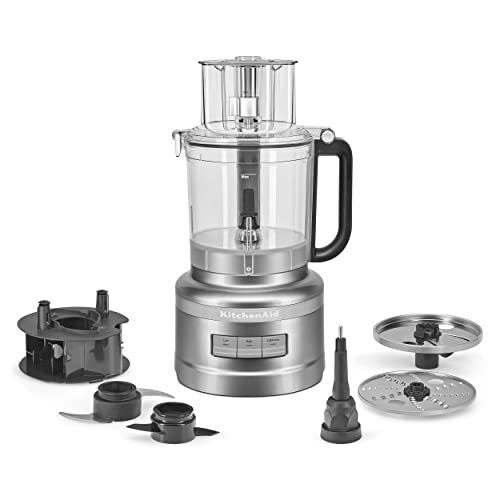 KitchenAid 13-Cup Food Processor (KFP1318), Contour Silver
 Hamilton Beach Stack & Snap 12-Cup Food Processor (70725A)
 Hamilton Beach Stack & Snap 4-Cup Mini Food Processor (70510)