Quick answer: Our top pick is Breville Juice Fountain Plus JE98XL (centrifugal), with Hamilton Beach Big Mouth Juicer Machine (centrifugal) as a strong alternative.
The first decision in buying a juicer is not the brand; it is the extraction method. Centrifugal juicers shred produce against a spinning mesh basket at high speed, while masticating juicers, often called slow or cold press juicers, crush and press produce through an auger at low speed. The two methods feel different in daily use: one is fast and loud, the other slower and quieter, and they handle leafy greens, pulp and cleanup in different ways.
This guide compares the two formats side by side, then looks at five machines that represent them: two centrifugal models from Breville and Hamilton Beach, and three masticating models from Omega and Hurom running at 80 RPM, an adjustable vertical design, and 43 RPM. If you know what you juice most — whole apples and carrots, or leafy greens and soft fruit — the right format usually picks itself.
As an Amazon Associate, we earn from qualifying purchases.
Quick answer
Choose a centrifugal juicer such as the Breville Juice Fountain Plus or the Hamilton Beach Big Mouth if you want juice in under a minute with minimal chopping. Choose a masticating juicer such as the Omega J8006HDC, Hurom H-AA or Omega VSJ843QS if you juice leafy greens often, prefer drier pulp and do not mind a slower, quieter process at 43 to 80 RPM.
The Juice Fountain Plus is the full-featured centrifugal pick. Its 850-watt motor runs through a dual-speed electronic control: Breville’s brand copy assigns the low speed to softer fruits and leafy vegetables and the high speed to denser fruits and harder vegetables, which gives this centrifugal machine more range with greens than a single-speed spinner. The 3-inch extra-wide feed chute fits whole fruit, cutting prep time on apples and similar produce.
Juice collects in a 35.2 fl oz (1.1 qt) jug with a froth separator, and pulp goes to a 2.6 qt container, so you can juice a family-sized batch before stopping to empty anything. The cutting disc is titanium-reinforced with a stainless-steel micro-mesh filter, again per the brand’s listing copy. Cleanup is helped by dishwasher-safe parts and an included cleaning brush for the mesh, which is the part of any centrifugal juicer that needs the most attention. The machine is finished in silver and covered by a 1-year limited warranty. For households that want speed first but still juice greens regularly, this is the centrifugal model that compromises least.
Hamilton Beach Big Mouth Juicer Machine (centrifugal)
Runner-Up
Hamilton Beach Big Mouth Juicer Machine (centrifugal)
The Hamilton Beach takes the simplest route to centrifugal juicing: an 800-watt motor and a 3-inch Big Mouth feed chute sized for whole fruits and vegetables, so apples and large carrots go in with little or no cutting. That wide chute is the whole point of the design — the faster produce goes in, the more a centrifugal machine’s speed advantage shows.
The listing describes the machine as BPA free, finished in stainless steel, and easy to clean. There are no dual-speed controls or nutrition-system extras here; it is a straightforward extractor for households that juice classic produce — apples, carrots, oranges, celery — and want the process over quickly. If your juicing is mostly a weekend batch of carrot and apple juice, this format covers it without paying for features aimed at other jobs. Buyers who juice leafy greens every day should look at the masticating models below instead, because pressing handles leaves more thoroughly than spinning does.
The J8006HDC is a horizontal masticating juicer that presses produce in three stages at 80 RPM with a 200-watt motor. The slow auger squeezes rather than shreds, which is the mechanism behind the drier pulp and quieter running that draw people to this format. Because the produce is pressed steadily, leafy greens and softer items are handled more completely than a spinning basket manages.
Omega sells this model as an all-in-one nutrition system: the listing title covers nut butters, baby food, pasta and sorbets alongside juicing, using the same auger and attachments. Treat that list as the maker’s description of the format’s range; the juicing itself is the core job. The machine is finished in chrome. For a household that wants one appliance that juices greens well and takes on small food-prep tasks between juicing sessions, this is the most versatile masticating pick here, and its horizontal layout suits counters with cabinet clearance to spare rather than tight vertical space.
The H-AA is a vertical slow juicer, which means the auger stands upright and juice and pulp separate by gravity as much as by pressure — a layout that takes less counter width than a horizontal machine. Two features define this model in its listing: a coarse strainer, aimed at juice with more body, and an adjustable lever that lets you control how much pulp stays in the juice. If your household argues about pulp, that lever is a genuinely useful peacekeeper.
Hurom’s listing for this model does not state a motor speed or wattage in the copy captured for this guide, so compare it on format and features rather than numbers. The machine is finished in black. Vertical masticating juicers like this one suit daily juicers who work in smaller batches, juice a mix of greens and fruit, and want the machine to live on the counter without dominating it. The pulp lever and coarse strainer also make it the pick for people who prefer thicker, smoothie-adjacent juice over a completely clear glass.
The VSJ843QS is the slowest machine in this guide: a vertical masticating juicer running at 43 RPM with a 150-watt motor. Its 3-stage auger presses produce gradually, and pulp is ejected automatically, so you can keep feeding the chute without stopping to clear the machine. A no-drip tap at the juice outlet lets you close off the spout between glasses, which keeps the counter cleaner when you are juicing for more than one person.
The format is described as compact, and the vertical layout supports that, using counter width economically while standing taller than a horizontal model. It is finished in silver. Of the three masticating picks, this is the one aimed at committed slow-juice households: the lowest speed, automatic pulp handling and the drip-free tap all serve a daily routine rather than occasional use. If you juice greens and soft fruit most days and value a quiet, steady process over raw speed, the VSJ843QS is the natural endpoint of the masticating side of this comparison.
How to choose between centrifugal and masticating
Decide by produce first. Hard fruit and vegetables — apples, carrots, beets — are easy for both formats. Leafy greens are the dividing line: a centrifugal machine needs a low-speed setting, like the Breville’s, to do them justice, while masticating augers press leaves thoroughly by design. If greens are a daily ingredient, start on the masticating side.
Then weigh speed against yield and pulp. Centrifugal juicers finish a glass in well under a minute but leave wetter pulp; masticating machines run for minutes at 43 to 80 RPM and press pulp drier. Noise follows the same split: spinning baskets are loud, slow augers are quiet enough for early mornings. Cleanup differs too — centrifugal mesh filters need brushing (the Breville includes a brush and has dishwasher-safe parts), while masticating machines have fewer, heavier parts to rinse.
Finally, consider format and extras. Wide 3-inch chutes cut prep time. Vertical masticating models save counter width; horizontal ones, like the Omega J8006HDC, add food-prep jobs such as nut butters and sorbets per the maker’s listing. A note on marketing: brands position slow juicing as gentler on nutrients and enzymes. That is maker positioning, not a measured result, so let produce, noise and cleanup make the decision.
Who should skip each type
Skip centrifugal if you juice leafy greens daily, want the driest possible pulp, or juice early in a quiet house; a spinning basket will frustrate you on all three counts. Skip masticating if you want a glass of juice in seconds, dislike a slower feed-and-press routine, or juice mostly hard produce in big weekend batches where pressing takes noticeably longer. And skip both if your blender already covers your needs with whole-fruit smoothies, because a juicer removes pulp that a blender keeps, and the two drinks are not the same thing.
FAQ
Which juicer type is better for leafy greens?
Masticating, in most cases. A slow auger presses leaves steadily and extracts more from them than a spinning basket does. The exception on the centrifugal side is a dual-speed machine such as the Breville Juice Fountain Plus, whose low speed is assigned by the brand to softer fruits and leafy vegetables. Occasional greens are fine in either type; daily greens point to a press.
Which type is faster?
Centrifugal, by a wide margin. An 800 to 850-watt spinning extractor with a 3-inch chute turns whole produce into juice in seconds per glass. Masticating machines in this guide run at 80 RPM and 43 RPM, so a batch takes minutes. The trade is deliberate: speed now, or a slower press with drier pulp.
Which type is easier to clean?
It depends on the parts. Centrifugal machines centre on a fine mesh filter that needs brushing; the Breville includes a cleaning brush and its parts are dishwasher safe. Masticating machines have an auger, strainer and housing to rinse, with no fine mesh to scrub. The Hurom H-AA is sold on an easy-clean design, and the Omega VSJ843QS adds a no-drip tap that reduces counter mess.
Does slow juicing preserve more nutrients?
Brands market cold press juicing that way, and the claim appears across masticating listings. It is maker positioning rather than a measured, like-for-like result you can verify from a listing, so treat it as background rather than a deciding fact. Juice made fresh and drunk soon after making matters more than the extraction method on this point.
Final verdict
If speed and whole-fruit convenience lead your list, the Breville Juice Fountain Plus is the strongest centrifugal pick, and the Hamilton Beach Big Mouth covers the same fast format in a simpler machine. If greens, dry pulp and quiet running matter more, choose among the Omega J8006HDC for its nutrition-system range, the Hurom H-AA for pulp control, and the Omega VSJ843QS for the slowest, most automated press.
H
Home Beautiful Design Editorial Team
We compare specs, materials and verified owner reviews before a product earns a spot. Rankings are never paid.
Affiliate disclosure. As an Amazon Associate we earn from qualifying purchases at no extra cost to you. Prices accurate as of the date shown.
Discover the best reed diffuser for living rooms, bedrooms, and bathrooms. Compare five elegant, long-lasting reed diffusers for inviting home fragrance.

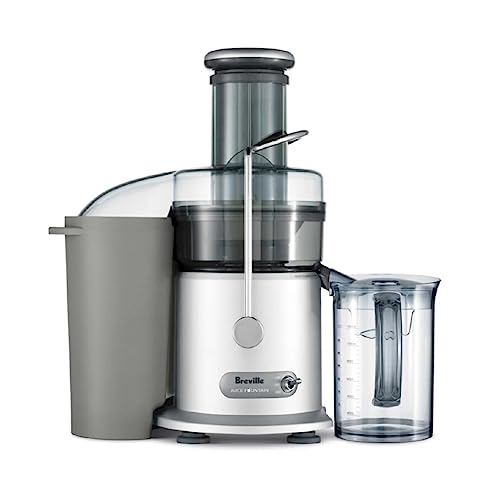 Breville Juice Fountain Plus JE98XL (centrifugal)
 Hamilton Beach Big Mouth Juicer Machine (centrifugal)
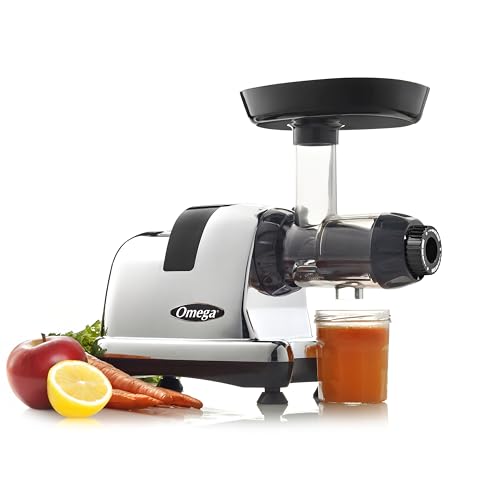 Omega J8006HDC Cold Press Juicer (masticating)
 Hurom H-AA Cold Press Juicer (masticating)
 Omega VSJ843QS Vertical Juicer (masticating)