Key takeaways
- Clean a frequently used dispenser about once a month; increase the schedule if several people share it or the unit sits in a warm, sunny area.
- Wipe spills immediately so water does not swell wood surfaces, stain grout, or leave mineral halos under accent lighting.
- Keep the area around the dispenser ventilated and uncluttered; heat-producing coolers should not be pushed tightly against cabinetry or curtains.
- Label the filter-change date inside a cabinet door or in your phone, and replace the bottle cap or jug before reconnecting a bottom-loading model.
What's inside
A clean water dispenser does more than protect the taste of your drinking water. It also helps preserve the calm, polished feeling of a well-designed kitchen, dining area, or home office—especially when the appliance is visible beneath warm lighting or beside carefully chosen furniture. Mineral film, drips, and cloudy reservoirs can quickly make even an attractive space feel neglected.
This guide explains the best way to clean a water dispenser in 2026, whether you use a countertop pitcher, top-loading cooler, or bottom-loading model. You’ll learn how often to clean each part, which solutions are suitable, how to reach narrow tubing and spouts, and when descaling or filter replacement matters more than surface wiping.
As an Amazon Associate we earn from qualifying purchases.




🛒 Best Price Today on Amazon
Prime members get fast, free shipping on everything above, plus member-only deals. New members get a 30-day free trial — cancel anytime.
Choose the Right Cleaning Approach
Start by identifying your dispenser type. A filtered pitcher such as the Waterdrop WFD-22L or the compact Brita Metro has fewer internal parts, so the main tasks are washing the reservoir, lid, spout, and removable filter compartment. A cooler such as the Brio 520 requires more care because water may travel through intake tubes, hot and cold tanks, drip trays, and dispensing nozzles.
Before cleaning, unplug an electric cooler and remove the bottle or empty the reservoir. Switch off hot-water and cooling functions if your model provides separate controls. Never immerse the electrical cabinet, controls, plug, or compressor area. Place a towel underneath the unit; this protects flooring and catches the first flush of cleaning liquid.
Clean Removable Parts First
Remove the drip tray, grate, bottle collar, reservoir lid, taps, and any detachable nozzle covers. Wash these parts in warm water with a small amount of mild dish soap, then rinse until no fragrance or foam remains. A long-handled brush is useful for tubes, bottle necks, caps, and narrow openings. The Holikme Bottle Brush Tube Cleaning Lab Set is the kind of compact brush collection that can reach places a sponge cannot.
Do not use abrasive pads on glossy plastic or brushed metal. They can create fine scratches that catch light and make the appliance look permanently dull. For a furniture-conscious setup, this detail matters: a clean, softly reflective surface sits more naturally under cabinet lighting than one marked by scuffs and residue.
Sanitize the Water Path
For routine cleaning, follow the dispenser manufacturer’s instructions and use a food-contact-safe cleaner. A purpose-made option such as the Water Cooler Cleaning Kit can be convenient for top- or bottom-loading machines, provided its label is compatible with your model. Mix and circulate the solution exactly as directed; stronger is not automatically better and may leave an odor or damage seals.
Dispense the solution through every outlet, including room-temperature, cold, and hot-water taps if your cooler has them. Let it sit for the stated contact time. Then drain the system fully and flush it several times with fresh water. Continue rinsing until the water is clear, odor-free, and free of any unusual taste. Never mix cleaning products, especially acids with chlorine-based bleach.
Remove Limescale Safely
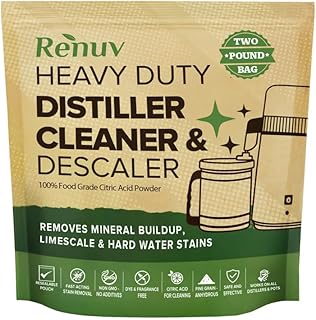
White, chalky deposits around a spout or inside a kettle-like hot tank are usually mineral scale. Hard water can also create a cloudy ring in a pitcher or leave a crust on the drip tray. Citric acid is commonly used for descaling, but it must be diluted and handled according to the product instructions. Renuv Citric Acid for Cleaning & Descaling is designed for appliances such as kettles, distillers, boilers, and dispensers.
Descaling is not the same as sanitizing. A citric-acid solution can dissolve mineral buildup, but it should not be treated as a complete disinfectant. After descaling, rinse repeatedly with clean water. Avoid acids on surfaces that the manufacturer identifies as incompatible, and do not pour descaler into a filter cartridge unless the appliance instructions specifically allow it.
Replace Filters and Reassemble Carefully
Cleaning cannot restore an exhausted filter. Replace cartridges according to the manufacturer’s schedule, water quality, and actual usage. A filter indicator—such as the SmartLight on the Brita Metro—can make timing easier, but it is still wise to inspect the cartridge compartment for sludge, discoloration, or a musty smell.
Before reassembly, allow washable parts to air-dry completely or dry them with a clean, lint-free towel. Refit every gasket, nozzle, and tray firmly. A loose seal can cause small leaks that collect beneath the dispenser and create a damp, visually messy zone around nearby furniture. Run a final glass of water through each outlet and discard it before normal use.
Tips
- Clean a frequently used dispenser about once a month; increase the schedule if several people share it or the unit sits in a warm, sunny area.
- Wipe spills immediately so water does not swell wood surfaces, stain grout, or leave mineral halos under accent lighting.
- Keep the area around the dispenser ventilated and uncluttered; heat-producing coolers should not be pushed tightly against cabinetry or curtains.
- Label the filter-change date inside a cabinet door or in your phone, and replace the bottle cap or jug before reconnecting a bottom-loading model.
Frequently Asked Questions
Can I use vinegar to clean a water dispenser?
Some manufacturers permit diluted white vinegar for light scale, while others advise against it because of odor, seals, or internal materials. Check the manual first. If vinegar is approved, rinse thoroughly and never combine it with bleach or another cleaner.
How often should a water dispenser be sanitized?
Monthly cleaning is a sensible baseline for a busy household. Clean sooner if the water tastes unusual, the unit has been unused for an extended period, a bottle leaked, or you notice slime, odor, or visible deposits.
Should I clean the filter before replacing it?
Usually, no. Disposable carbon or multi-stage cartridges are intended to be replaced, not scrubbed or chemically cleaned. Wash the surrounding housing and reservoir, then install a new cartridge as specified by the brand.
Why does my dispenser still taste strange after cleaning?
The cause may be cleaner residue, an overdue filter, stagnant water in tubing, a contaminated bottle, or scale in an internal tank. Flush with fresh water, inspect the bottle and filter, and repeat only the manufacturer-approved cleaning process. If the taste persists, stop using the unit and contact the manufacturer.
Conclusion
The best way to clean a water dispenser is to combine gentle surface washing, thorough water-path flushing, occasional descaling, and timely filter replacement. Use narrow brushes for hidden channels, never improvise chemical mixtures, and protect the floor and surrounding furniture from drips. With a consistent routine, the dispenser will taste fresher, operate more reliably, and remain a quiet, well-kept part of the room rather than a distracting appliance.