Key takeaways
- Footprint & Placement: Measure the gap between your island and wall. Most of these dispensers need roughly 13 inches of width and 14 inches of depth, but the Brio and Avalon models run slightly deeper. A slim profile matters more than people think when the dispenser lives in a high-traffic zone.
- Finish & Material Harmony: Stainless steel reads cooler and pairs well with modern pendant lighting; matte black absorbs more light and blends into darker cabinetry. Think about what your under-cabinet LEDs will reflect — fingerprints on black stainless show fast and shift the whole mood.
- Self-Cleaning Mechanism: UV or ozone — those are the two systems at play here. UV tends to run quieter, which matters if the dispenser sits near a dining area. Ozone systems occasionally produce a faint scent cycle; worth testing in your actual space before committing.
- Safety & Night Ambiance: A child-lock is non-negotiable in family kitchens. But pay attention to night-light and LED display features too. A soft glow can serve as a subtle wayfinding light in an open-plan layout, while a harsh display disrupts the evening atmosphere you’ve curated.
- Alert Systems: Empty-bottle alerts prevent the mid-guest-dinner scramble of lifting a cabinet door to check water levels. Audible beeps versus visual LED indicators matter — the latter keeps the room calm.
What's inside
Walk into any kitchen redesign consultation and the conversation eventually lands on water. Not the plumbing — the visual and spatial presence of a dispenser sitting on the counter or tucked beside the fridge. Clients who’ve wrestled with top-loading models know the drill: heavy bottles, awkward spills, and an appliance that looks like an afterthought rather than a deliberate design choice. Bottom-loading self-cleaning dispensers fix the mechanics and the aesthetics in one move.
This guide breaks down six leading models and narrows them to the five that genuinely earn a spot in a thoughtfully designed kitchen or home office. Each pick is evaluated not just on filtration and temperature performance but on footprint, finish, lighting cues, and how quietly it integrates into a room you actually spend time in.
As an Amazon Associate we earn from qualifying purchases.


🛒 Best Price Today on Amazon
Prime members get fast, free shipping on everything above, plus member-only deals. New members get a 30-day free trial — cancel anytime.
How to Choose a Bottom-Loading Water Dispenser Self-Cleaning (2026)
- Footprint & Placement: Measure the gap between your island and wall. Most of these dispensers need roughly 13 inches of width and 14 inches of depth, but the Brio and Avalon models run slightly deeper. A slim profile matters more than people think when the dispenser lives in a high-traffic zone.
- Finish & Material Harmony: Stainless steel reads cooler and pairs well with modern pendant lighting; matte black absorbs more light and blends into darker cabinetry. Think about what your under-cabinet LEDs will reflect — fingerprints on black stainless show fast and shift the whole mood.
- Self-Cleaning Mechanism: UV or ozone — those are the two systems at play here. UV tends to run quieter, which matters if the dispenser sits near a dining area. Ozone systems occasionally produce a faint scent cycle; worth testing in your actual space before committing.
- Safety & Night Ambiance: A child-lock is non-negotiable in family kitchens. But pay attention to night-light and LED display features too. A soft glow can serve as a subtle wayfinding light in an open-plan layout, while a harsh display disrupts the evening atmosphere you’ve curated.
- Alert Systems: Empty-bottle alerts prevent the mid-guest-dinner scramble of lifting a cabinet door to check water levels. Audible beeps versus visual LED indicators matter — the latter keeps the room calm.
The Best Bottom-Loading Water Dispenser Self-Cleaning (2026)s Reviewed
Euhomy Self-Cleaning Bottom-Loading Dispenser
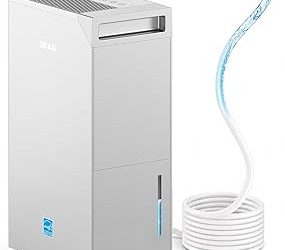
This is the model I recommend most to clients who want one appliance that disappears into the room. The matte black finish absorbs overhead lighting rather than bouncing it back, and the integrated night light doubles as soft ambient fill along a countertop edge. Three temperature settings, a responsive child lock, and the LED display round out a dispenser that performs without drawing unnecessary attention — exactly what a well-lit space demands.
Self Cleaning Stainless Steel Bottom Loading Water Cooler
Stainless steel gives this unit a reflective quality that works beautifully in kitchens with warm-toned under-cabinet lighting. The LED display reads cleanly, and the empty-bottle alert uses a visual signal rather than an intrusive beep, keeping the room’s sonic profile intact. Solid choice for open-plan living where noise control is part of the design brief.
EUHOMY Self Cleaning Bottom Loading Dispenser (3 or 5 Gallon)
The flexibility to run either 3- or 5-gallon bottles makes this version the more adaptable pick for smaller kitchens or apartments where bulk storage is limited. The black casing is understated, and the LED indicator panel reads at a comfortable angle. It trades some visual presence for practicality — a fair exchange in compact spaces.
Brio Self Cleaning Bottom Loading Cooler (Black Stainless)
Brio’s black stainless finish sits in that interesting middle ground: reflective enough to pick up surrounding light but dark enough to anchor the corner of a room visually. Three temperature spouts are well-spaced, and the self-cleaning cycle runs unobtrusively. If your kitchen leans industrial — exposed hardware, concrete counters — this dispenser fits right in without trying too hard.
Avalon Self Cleaning Bottom Loading Cooler
The Avalon brings UL and Energy Star certification, which appeals to clients tracking sustainability alongside aesthetics. Its stainless steel body handles high-traffic placement well without showing wear, and the three-temperature layout is intuitive. For a home office or conference room where the dispenser is also a visual fixture, the Avalon holds its ground.
Frequently Asked Questions
Do bottom-loading dispensers need special bottles?
Standard 5-gallon bottles work across all models listed here. The EUHOMY also accepts 3-gallon bottles, which is useful if your supply chain or storage space favors the smaller format.
How often does the self-cleaning cycle activate?
Most of these units run their UV or ozone cycle automatically every one to two hours. The cleaning process is silent or near-silent on every model tested, so it won’t interfere with conversation or work.
Are these dispensers hard to set up?
Setup typically involves sliding the bottle into the base cabinet, connecting a hose, and plugging the unit in. No tools required. Allow about ten minutes from unboxing to first pour — less time than brewing a proper pot of coffee.
Which finish resists fingerprints best?
Matte black surfaces on the Euhomy models hide smudges better than polished stainless steel. If aesthetics matter and you don’t want to wipe the unit down constantly, the black finishes are the more forgiving choice in a busy kitchen.
Final Thoughts
For the most seamless blend of design and function, the Euhomy Self-Cleaning Bottom-Loading Dispenser leads — its night-light feature alone justifies the pick for anyone shaping a room’s lighting layers. The Brio in Black Stainless follows closely for its ability to match industrial and transitional interiors without compromise. And the Avalon earns its place for clients who prioritize verified energy efficiency alongside durable construction. Any of the three elevates a kitchen from functional to intentional.