Key takeaways
- Clean on a warm, breezy day so the rug dries before nightfall and does not retain a musty smell.
- Test every cleaner on a hidden edge, including products labeled plant safe or bleach free.
- Place a waterproof pad beneath the rug if it rests on concrete or tile; trapped moisture is a common source of mildew.
- Rotate the rug every few months to distribute foot traffic and sunlight exposure more evenly.
What's inside
Outdoor rugs do more than soften a patio or define an entertaining zone: they control how light moves across the space. A clean rug reflects daylight evenly, makes nearby furniture look sharper, and prevents dark mildew patches from becoming the visual focus after sunset. Dirt, pollen, food spills, algae, and trapped moisture can also weaken fibers and create unpleasant odors.
This guide explains the best way to clean an outdoor rug in 2026, from identifying its material to choosing a cleaner, rinsing thoroughly, and drying it safely. You will also learn when a hose is enough, when a targeted stain treatment makes sense, and how to protect plants, flooring, and the rug’s color while you work.
As an Amazon Associate we earn from qualifying purchases.



🛒 Best Price Today on Amazon
Prime members get fast, free shipping on everything above, plus member-only deals. New members get a 30-day free trial — cancel anytime.
1. Check the Rug Before Cleaning
Start by reading the care label and checking the rug’s construction. Most outdoor rugs are made from polypropylene or another synthetic fiber, which generally tolerates water and mild cleaning solutions well. Natural-fiber rugs, painted designs, latex-backed mats, and rugs with glued seams need more caution; excess water can cause shrinking, bleeding, odor, or backing damage.
Move the rug away from walls, wood furniture, and light-colored paving. Shake it outdoors or vacuum both sides with a bare-floor setting to remove loose grit. Fine sand acts like abrasive powder when wet, so removing it first helps preserve the rug’s texture and keeps patio lighting from revealing a dull, dusty film.
2. Choose the Right Cleaning Method
For routine dust and surface grime, use a garden hose, a soft-bristle brush, and a small amount of mild detergent. Avoid high-pressure spray directly on the rug, since it can roughen fibers, force dirt deeper, or loosen the edges. A gentle fan of water is usually more effective than a concentrated jet.
For green or black organic staining, an outdoor cleaner may be useful. The 30 SECONDS Outdoor Cleaner Hose End Sprayer is convenient for larger rugs and surrounding hardscape, while the ready-to-use 30 SECONDS Outdoor Mold & Mildew Stain Remover Spray is better suited to localized treatment. Wet & Forget Outdoor Cleaner & Stain Remover is a bleach-free option designed to work gradually with wind and rain, so it suits owners who prefer less scrubbing.
Never assume that “outdoor” means “safe for every rug.” Read the label, follow its dilution instructions, and test the solution on an inconspicuous corner. A cleaner that performs well on concrete or fencing may still alter a rug’s color or backing.
3. Treat Stains Without Overworking the Fibers
For fresh spills, blot immediately with a clean, absorbent cloth. Do not rub outward from the center, which can spread the stain and fuzz the surface. Use cool or lukewarm water first, then apply a mild detergent solution if needed. Greasy marks may require several gentle passes rather than one aggressive scrubbing session.
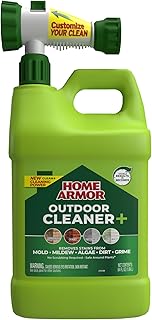
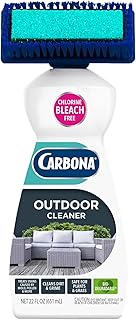
For small, stubborn spots, Carbona Oxy Powered Outdoor Cleaner with Built-In Brush offers a compact spot-cleaning approach. Use its brush lightly and only after a colorfastness test. For broader areas, Home Armor Outdoor Cleaner+ is formulated for mold, mildew, algae, dirt, and grime; use it exactly as directed and keep nearby plants protected. Oxygen- or peroxide-based formulas can be effective, but they are not automatically risk-free for dyed fibers.
4. Rinse and Dry Completely
Rinsing is one of the most important steps. Cleaner left in the pile can attract fresh dirt, leave a stiff residue, or irritate bare feet. Hose the rug from top to bottom until the runoff is clear and no slickness remains. Then lift one end and allow water to drain rather than leaving the rug folded or bunched.
Dry the rug on a clean, non-staining surface with good airflow. Turn it over once the top feels mostly dry. Bright sun can speed drying and help reduce lingering odor, but prolonged intense sunlight may fade certain colors. If your patio is shaded, use a fan or position the rug where evening air can circulate. From a lighting perspective, full drying matters: damp patches often appear as uneven dark zones under low-angle sconces and landscape lights.
5. Match the Cleaner to the Job
For occasional deep cleaning, Simple Green Oxy Solve Total Outdoor Cleaner Concentrate can be diluted for manual use or used with compatible equipment according to the label. It is marketed for several outdoor surfaces and carries EPA Safer Choice certification, but the rug’s own care instructions remain the deciding authority. Concentrates offer value for repeated cleaning, while ready-to-use sprays reduce measuring and are practical for small patios or spot treatment.
Choose a product based on the stain, rug size, and amount of control you need—not simply the strongest formula. A gentle, well-rinsed treatment usually preserves the rug’s color and hand feel better than repeated heavy applications. Keep children and pets away until the cleaned surface is fully dry and the product label’s safety guidance has been met.
Tips
- Clean on a warm, breezy day so the rug dries before nightfall and does not retain a musty smell.
- Test every cleaner on a hidden edge, including products labeled plant safe or bleach free.
- Place a waterproof pad beneath the rug if it rests on concrete or tile; trapped moisture is a common source of mildew.
- Rotate the rug every few months to distribute foot traffic and sunlight exposure more evenly.
Frequently Asked Questions
Can I pressure-wash an outdoor rug?
It is usually better to avoid pressure-washing the rug itself. High pressure can damage fibers, separate seams, and drive grit into the backing. If you use a pressure washer with a compatible outdoor-cleaner product, reserve it for the surrounding hardscape and keep the spray away from the rug unless the manufacturer specifically approves that method.
How often should an outdoor rug be cleaned?
Rinse or lightly clean it when dirt becomes visible, typically every few weeks during heavy-use seasons. Deep-clean at least once or twice a year, and sooner if the rug is exposed to tree debris, frequent rain, food spills, or persistent shade. Quick maintenance prevents stains from becoming a larger visual problem.
What is the best cleaner for mildew on an outdoor rug?
There is no single best choice for every material. Start with the rug maker’s recommended solution and a small test area. Bleach-free products such as Wet & Forget may suit gradual outdoor treatment, while a ready-to-use spray can offer more control on a localized mark. Always rinse thoroughly and never mix cleaning products.
Why does my clean outdoor rug still smell?
Odor usually indicates retained moisture, residue, or organic matter beneath the rug. Rinse again with clean water, lift it so air reaches both sides, and allow complete drying. Clean the surface underneath as well. If the smell returns quickly, inspect the backing for mildew or consider replacing a rug that has deteriorated.
Conclusion
The best way to clean an outdoor rug is gentle, methodical, and material-aware: remove dry grit, test a suitable cleaner, treat stains without aggressive scrubbing, rinse until residue is gone, and dry every layer completely. With that routine, your rug will look brighter in daylight, sit more confidently beneath evening lighting, and remain a comfortable foundation for outdoor furniture.