Key takeaways
- Motor Power and Amp Rating: A 15-amp motor handles hardwoods and sustained ripping without bogging down. If you’re cutting dense species like white oak or maple regularly, anything less than 15 amps will leave you fighting the feed. For occasional softwood projects, 10 amps can suffice, but headroom matters more than most people think.
- Rip Capacity and Table Size: A wider rip capacity — 30 inches or more — means you can handle full plywood sheets and large tabletop slabs without improvising awkward support. Measure your typical workpiece before shopping, then add six inches. That buffer prevents a lot of regret.
- Portability vs. Stationary Setup: If your shop doubles as a parking spot on weekends, a folding stand with wheels is non-negotiable. Dedicated workshop spaces benefit from heavier, more vibration-resistant cabinets that stay put and stay square.
- Dust Collection Compatibility: A saw without proper dust extraction turns a clean shop into a haze within an hour. Look for a standard 2-1/2 inch port and a blade guard with integrated collection — both dramatically improve air quality and keep your cut line visible under shop lighting.
- Blade Quality and Bevel Range: Factory blades are stopgap measures at best. Prioritize saws that accept standard 10-inch blades with a clear bevel scale from 0 to 45 degrees. A reliable bevel mechanism with positive stops at common angles saves recalibration time on every mitered joint.
What's inside
Choosing a table saw is less about chasing specs on a spec sheet and more about understanding what kind of workspace you’re actually building. A bright, well-organized shop with the right saw at its center feels almost effortless to work in — but pair the wrong machine with a cramped garage or an underpowered circuit, and every cut becomes a negotiation. Most buyers get tangled up comparing horsepower numbers and rip capacities without first asking whether they need portability, whether their space handles dust, and how much precision their furniture projects genuinely demand.
This guide cuts through that noise. We evaluated the leading table saw brands through the lens of a real working shop — considering not just raw cutting ability but also how each machine shapes the rhythm and feel of a workspace: footprint, dust management, lighting compatibility, vibration, and whether the stand earns its floor space. Below you’ll find our top picks for 2026, followed by a straightforward buyer’s framework.
As an Amazon Associate we earn from qualifying purchases.


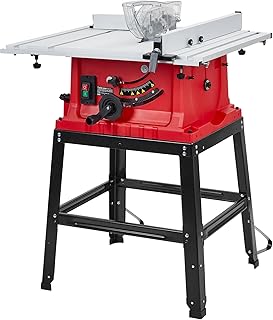

🛒 Best Price Today on Amazon
Prime members get fast, free shipping on everything above, plus member-only deals. New members get a 30-day free trial — cancel anytime.
How to Choose a Table Saw in 2026
- Motor Power and Amp Rating: A 15-amp motor handles hardwoods and sustained ripping without bogging down. If you’re cutting dense species like white oak or maple regularly, anything less than 15 amps will leave you fighting the feed. For occasional softwood projects, 10 amps can suffice, but headroom matters more than most people think.
- Rip Capacity and Table Size: A wider rip capacity — 30 inches or more — means you can handle full plywood sheets and large tabletop slabs without improvising awkward support. Measure your typical workpiece before shopping, then add six inches. That buffer prevents a lot of regret.
- Portability vs. Stationary Setup: If your shop doubles as a parking spot on weekends, a folding stand with wheels is non-negotiable. Dedicated workshop spaces benefit from heavier, more vibration-resistant cabinets that stay put and stay square.
- Dust Collection Compatibility: A saw without proper dust extraction turns a clean shop into a haze within an hour. Look for a standard 2-1/2 inch port and a blade guard with integrated collection — both dramatically improve air quality and keep your cut line visible under shop lighting.
- Blade Quality and Bevel Range: Factory blades are stopgap measures at best. Prioritize saws that accept standard 10-inch blades with a clear bevel scale from 0 to 45 degrees. A reliable bevel mechanism with positive stops at common angles saves recalibration time on every mitered joint.
The Best Table Saw Brands (2026) Reviewed
DEWALT DWE7491RS — 10 Inch with Rolling Stand
The DWE7491RS is the saw most home furniture builders land on and stay with. Its 32-1/2 inch rip capacity comfortably handles sheet goods, while the foldable rolling stand tucks away neatly when floor space is at a premium. At 4800 RPM, cuts come out clean with minimal tearout — the kind of result that makes sanding feel optional rather than mandatory.
DEWALT DWE7485 — 8-1/4 Inch Compact
Where the DWE7485 shines is in shops where every square foot costs something. This compact 15-amp unit sacrifices a couple inches of blade diameter but gains a dramatically smaller footprint. It handles dimensional lumber and plywood rips with surprising authority, and its low weight means one person can reposition it without ceremony.
SKIL SPT99-11 — 10 Inch Worm Drive
Worm drive gearing delivers torque that direct-drive motors simply cannot match at this price tier. The SPT99-11 plows through thick stock without hesitation, and the included stand is sturdier than most competitors in the same bracket. For furniture makers who routinely rip 8/4 hardwood, this is the saw that refuses to slow down.
DEWALT DWE7491X — 10 Inch with Scissor Stand
Functionally similar to the DWE7491RS but paired with a scissor-style stand, this variant trades rolling mobility for a lower profile and quicker collapse. The integrated dust collector port keeps your overhead shop lights from getting coated in fine particulate — a practical detail that makes a visible difference in a well-lit workspace over time.
SKIL TS6307-00 — 10 Inch Portable
SKIL’s TS6307-00 strikes a compelling balance between capability and convenience. The folding stand sets up in seconds, the 15-amp motor runs smooth, and the fence locks repeatably — which is the single quality metric that separates frustrating saws from dependable ones. At its price point, it punches well above its weight class.
Frequently Asked Questions
What rip capacity do I need for furniture projects?
For most table tops, shelving, and cabinet panels, 30 to 32 inches covers the majority of cuts. If you work with full 4-foot plywood sheets regularly, look for 32-1/2 inches or more to avoid secondary ripping on a circular saw.
Is a worm drive table saw worth the premium over a direct-drive?
Yes, if you cut hardwoods frequently. Worm drive gears multiply torque at the blade, so dense material feeds through without motor strain. For softwood and occasional use, a direct-drive 15-amp saw delivers comparable results at a lower cost.
How important is dust collection on a jobsite saw?
Extremely. Beyond keeping your workspace breathable, effective dust extraction maintains visibility of your cut line — critical for precision. A saw with a proper 2-1/2 inch port connected to even a basic shop vac outperforms any blade guard alone.
Can I use these saws for cutting metal or plastic?
Some, with the correct blade. The Vevor 10-inch model in this roundup is explicitly rated for wood, metal, and plastic with appropriate blade swaps. Always verify that the saw’s RPM range is compatible with non-ferrous metal blades before attempting mixed-material cuts.
Final Thoughts
For a dedicated home furniture shop, the DEWALT DWE7491RS remains the strongest all-around choice — its rip capacity, portability, and cut quality form a combination that’s hard to undercut. The SKIL SPT99-11 is the pick if torque and raw power matter most, while the compact DEWALT DWE7485 earns its place in small or shared spaces where a full-size saw simply won’t fit. Match the machine to your room, your materials, and the workflow you actually live with — the right table saw should feel like part of the shop, not an obstacle in it.