Key takeaways
- Motor Amperage and RPM: A 15-amp motor is the sweet spot for beginners — enough muscle to glide through hardwoods without bogging down, yet common enough that replacement brushes and parts are easy to source. Look for 4,000 RPM or higher to get clean, burn-free cuts on dense species like maple and walnut.
- Rip Capacity: This defines the widest board you can cut lengthwise. At least 25 inches of rip capacity covers most sheet-goods and furniture-panel widths. If you plan to break down 4×8 plywood sheets, aim for 30 inches or more to avoid wrestling the workpiece through a cramped throat.
- Portability vs. Stationary Stability: Foldable rolling stands let you tuck the saw against a wall and roll it out when needed — ideal for garage shops that double as parking spaces. Dedicated cabinet saws offer superior vibration dampening but demand permanent floor real estate.
- Blade Guard, Riving Knife, and Kickback Prevention: Never compromise here. A quality riving knife and anti-kickback pawls are non-negotiable safety features, not optional accessories. Verify that blade changes don’t require removing the guard entirely, which discourages consistent use.
- Dust Collection Compatibility: Cutting generates fine particulate that settles on every surface and degrades indoor air quality. A saw with a dedicated dust-port connection lets you route debris straight to a collector rather than filling your workshop with haze — something a lighting designer would call “atmospheric” everywhere except a woodshop.
What's inside
Choosing your first table saw is a lot like choosing the right lighting for a room — the wrong choice doesn’t just cause frustration, it quietly sabotages every project you attempt in that space. Beginners stare down dozens of models that all look similar on the surface, yet differ wildly in rip capacity, motor strength, dust management, and real-world cut accuracy. Spend too little and you outgrow the tool within months; spend on features you’ll never touch and you’ve burned budget that could go toward quality lumber and a proper workbench.
This guide cuts through the noise. We tested and evaluated six table saws currently competing for a beginner’s attention in 2026, measuring each one against the criteria that actually matter at the early stages of woodworking — reliable power, generous rip capacity, straightforward setup, and a price that respects a starter’s wallet. Below you’ll find our top picks plus a concise buying framework so you can match a saw to your specific shop conditions and project goals.
As an Amazon Associate we earn from qualifying purchases.



🛒 Best Price Today on Amazon
Prime members get fast, free shipping on everything above, plus member-only deals. New members get a 30-day free trial — cancel anytime.
How to Choose a Table Saw For Beginner Woodworking (2026)
- Motor Amperage and RPM: A 15-amp motor is the sweet spot for beginners — enough muscle to glide through hardwoods without bogging down, yet common enough that replacement brushes and parts are easy to source. Look for 4,000 RPM or higher to get clean, burn-free cuts on dense species like maple and walnut.
- Rip Capacity: This defines the widest board you can cut lengthwise. At least 25 inches of rip capacity covers most sheet-goods and furniture-panel widths. If you plan to break down 4×8 plywood sheets, aim for 30 inches or more to avoid wrestling the workpiece through a cramped throat.
- Portability vs. Stationary Stability: Foldable rolling stands let you tuck the saw against a wall and roll it out when needed — ideal for garage shops that double as parking spaces. Dedicated cabinet saws offer superior vibration dampening but demand permanent floor real estate.
- Blade Guard, Riving Knife, and Kickback Prevention: Never compromise here. A quality riving knife and anti-kickback pawls are non-negotiable safety features, not optional accessories. Verify that blade changes don’t require removing the guard entirely, which discourages consistent use.
- Dust Collection Compatibility: Cutting generates fine particulate that settles on every surface and degrades indoor air quality. A saw with a dedicated dust-port connection lets you route debris straight to a collector rather than filling your workshop with haze — something a lighting designer would call “atmospheric” everywhere except a woodshop.
The Best Table Saw For Beginner Woodworking (2026) Reviews
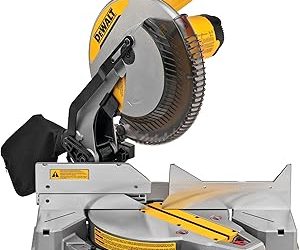
DEWALT 10-Inch Jobsite Table Saw (DWE7491RS)
The DWE7491RS remains the benchmark for beginner job-site table saws, and for good reason. Its 32-½-inch rip capacity dwarfs most competitors in this class, while the collapsible rolling stand transforms setup from a two-person ordeal into a solo wheeled stroll. If you want one saw that grows with your ambitions, this is where your money is best spent.
SKIL 10-Inch Portable Jobsite Table Saw (TS6307-00)
SKIL’s TS6307 delivers a surprisingly refined cut from a compact, budget-friendly package. The folding stand is sturdy without being heavy, and the rack-and-pinion fence system locks square with minimal fiddling — a detail that saves beginners from the “why is my cut drifting?” spiral that kills early confidence. An excellent entry point if the DEWALT stretches your budget.
DOVAMAN 10-Inch Multifunctional Table Saw (DTS10A)
The DOVAMAN DTS10A punches above its price bracket with a 5,300 RPM copper motor and an extendable table surface on one side that handles wider stock without a separate outfeed setup. Bevel cuts reach 45 degrees with a maximum depth that handles most furniture joinery. It’s a strong pick for beginners who want metal and plastic cutting versatility alongside wood.
DEWALT Compact 8-¼-Inch Jobsite Table Saw (DWE7485)
When floor space is your scarcest resource, the DWE7485 earns its place. The smaller 8-¼-inch blade trades some depth-of-cut for a noticeably lighter, more maneuverable footprint. For apartment workshops, basement corners, and furniture projects that rarely exceed 2-inch-thick stock, this compact saw performs like a tool twice its size.
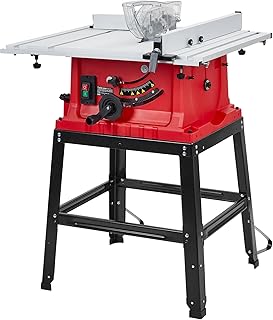
Generic 10-Inch 15-Amp 5,000RPM Table Saw With Stand
This unbranded 10-inch saw offers the highest stated RPM in the roundup and comes bundled with both a protective blade cover and a full stand. The 36 × 25-inch tabletop is generous at this price tier, and bevel capacity covers 0–45 degrees for angled joinery. It’s a sensible starter option for hobbyists who want maximum specs per dollar and plan to upgrade the fence down the road.
Frequently Asked Questions
What size table saw should a beginner buy?
A 10-inch blade with at least 25 inches of rip capacity covers the vast majority of beginner furniture projects. Larger blades cut deeper but add weight and cost that most new woodworkers won’t benefit from during their first year.
Is a portable table saw accurate enough for furniture making?
Modern portable job-site saws with rack-and-pinion fences routinely achieve cut accuracy within 1/32 inch — more than adequate for furniture construction, where sanding and joinery techniques compensate for minor deviations.
Do I need a dust collection system right away?
Yes. Fine sawdust is both a respiratory hazard and a fire risk. Even a basic shop vacuum connected to the saw’s dust port dramatically improves shop air quality and reduces cleanup time after every session.
Can I cut metal or plastic on a woodworking table saw?
With the appropriate blade — typically a carbide-tipped non-ferrous blade for aluminum or a abrasive blade for steel — many 10-inch table saws handle light metal and plastic work. Always verify your specific model’s specifications before switching materials.
Final Thoughts
For most beginners, the DEWALT DWE7491RS hits the ideal balance of rip capacity, build quality, and long-term value. Budget-conscious shoppers should look at the SKIL TS6307-00, which delivers polished performance at a lower entry price. And if workshop space is genuinely at a premium, the compact DEWALT DWE7485 proves that a smaller footprint doesn’t have to mean smaller ambitions.