Key takeaways
- Adjustable steam output: Non-negotiable. Vinyl wants the lowest useful setting, and single-speed blasters give you no way to back off. Variable or multi-mode controls let you tune to the finish rather than the dirt.
- Fast heat-up, low dwell: Machines that reach temperature in under a minute encourage short, moving passes. Long warm-ups tempt you to park the mop, and a parked mop is how seams swell.
- Pad material and count: Soft microfiber lifts residue; stiff scrub pads can burnish a matte wear layer into an uneven shine that raking light will expose. Two or three washable pads keep you from re-spreading grime.
- Weight and swivel: Under seven pounds with a true swivel head means you can keep the head sliding through a full stroke. Heavy, stiff units stall at furniture legs, and stalls are where marks form.
- Cord length and tank size: Twenty feet or more clears an open-plan room without unplugging. A larger tank cuts refills, but check that it is removable — topping up with distilled water is the single best defense against mineral haze.
What's inside
Lighting is my job, so I notice floors before most people do. Drop a wall washer at a shallow angle across luxury vinyl plank and everything the mop left behind shows up: the faint arc of a wrung-out pad, a cloudy film where hard water dried, the slightly darker seam where too much moisture sat too long. Homeowners tell me their new floors “look dull” and ask about warmer bulbs. Nine times out of ten the bulbs are fine — the floor is wearing a haze, and grazing light is simply telling the truth about it.
Steam is the fix, but vinyl asks for restraint. The wear layer that gives LVP its sheen is a thin plastic film over a core that does not love heat, and the seams between planks are the weak point. This guide covers what actually matters for vinyl — steam that can be dialed down, pads that glide instead of drag, and controlled water delivery — plus honest notes on five machines worth your money in 2026.
As an Amazon Associate we earn from qualifying purchases.




🛒 Best Price Today on Amazon
Prime members get fast, free shipping on everything above, plus member-only deals. New members get a 30-day free trial — cancel anytime.
How to Choose a Steam Mop Vinyl Floors (2026)
- Adjustable steam output: Non-negotiable. Vinyl wants the lowest useful setting, and single-speed blasters give you no way to back off. Variable or multi-mode controls let you tune to the finish rather than the dirt.
- Fast heat-up, low dwell: Machines that reach temperature in under a minute encourage short, moving passes. Long warm-ups tempt you to park the mop, and a parked mop is how seams swell.
- Pad material and count: Soft microfiber lifts residue; stiff scrub pads can burnish a matte wear layer into an uneven shine that raking light will expose. Two or three washable pads keep you from re-spreading grime.
- Weight and swivel: Under seven pounds with a true swivel head means you can keep the head sliding through a full stroke. Heavy, stiff units stall at furniture legs, and stalls are where marks form.
- Cord length and tank size: Twenty feet or more clears an open-plan room without unplugging. A larger tank cuts refills, but check that it is removable — topping up with distilled water is the single best defense against mineral haze.
The Best Steam Mop Vinyl Floors (2026)s Reviewed
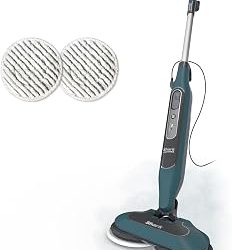
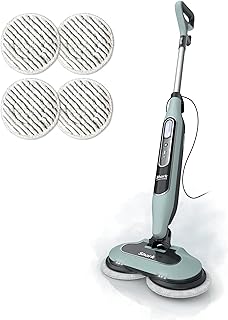
Shark Steam & Scrub S8001
The self-cleaning pad rotation genuinely reduces streaking, and the LED headlights do something I appreciate professionally: they throw low-angle light exactly where residue hides, so you see your work as you go. Swap to a fresh soft pad rather than leaning on the scrub texture, and keep the XL tank filled with distilled water.
BISSELL PowerFresh 1940A
Still the reference point for variable steam, and the low setting is genuinely low — which is the whole ballgame on vinyl. The 12-inch path covers ground quickly, and the flip-down scrubber is best reserved for grout and left off vinyl entirely.
Amazon Basics Steam Mop
Thirty-second heat-up and three washable pads for the price of a decent lamp; the trade-off is no steam adjustment, so use it in constant motion and never let it idle mid-plank. A sensible pick for sealed vinyl in smaller homes where the mop earns its keep weekly rather than daily.
Lightweight Adjustable Steam Mop (23ft Cord)
Adjustable steam modes plus adjustable height is an unusually thoughtful combination — the taller setting keeps your wrist neutral, which in practice means smoother, more even passes. The 23-foot cord is the real luxury here, letting you finish a great room in one go.
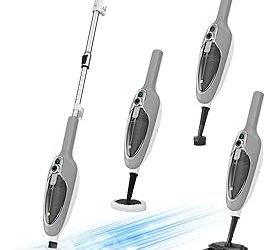
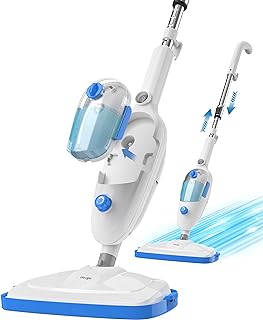
Multi-Purpose Steam Mop with Handheld
The detachable handheld turns one purchase into a baseboard, grout, and upholstery tool, which is why it lands well in homes with pets. On vinyl, start at the lowest mode and rely on the microfiber pads rather than the brush attachments.
Frequently Asked Questions
Is steam safe on luxury vinyl plank?
On modern sealed, click-lock LVP or LVT, yes — at low steam, with a moving head. Avoid steam on older glue-down sheet vinyl, peel-and-stick tiles, or any floor whose manufacturer warranty explicitly prohibits it.
Why does my vinyl look cloudy after mopping?
Usually mineral deposits from tap water, or leftover detergent from a previous cleaner. Switch to distilled water and run two or three plain-steam passes with clean pads to strip the film.
How often should I steam vinyl floors?
Weekly is plenty for most homes; high-traffic entries can take twice that. Dry-sweep first every time, since steam turns loose grit into a fine abrasive slurry.
Do I still need floor cleaner?
Rarely. Heat and a clean pad handle everyday soil, and skipping chemicals removes the main cause of residue buildup — which is precisely what makes a floor read flat under directional light.
Final Thoughts
If you want the most control, the BISSELL PowerFresh 1940A remains the safest bet for vinyl thanks to its genuinely gentle low setting. The Shark Steam & Scrub S8001 is the pick for larger open floors where the illuminated head and self-cleaning pad keep results even, while the Amazon Basics model covers the essentials for anyone with a modest footprint and a distilled-water habit.