Key takeaways
- Color Temperature Under Your Fixtures: A stain that looks balanced on a sunlit porch can skew brassy or ashen beneath 2700K pendants. Always test a sample board directly under your dining lighting at night before committing.
- Grain Contrast Level: Oil-based formulas sink into open grain and amplify figure, creating dramatic light-to-dark variation. Water-based options tend to sit more uniformly, which suits tighter, less expressive woods.
- Drying and Recoat Windows: Fast-drying stains like the Varathane Premium give you same-day recoating, but they also demand confident, quick brushwork. Slower-drying formulas offer more blending time for large tabletop surfaces.
- Topcoat Compatibility: Stain and polyurethane systems from the same manufacturer are formulated to bond reliably. Mixing oil-based stain with water-based topcoat can cause adhesion issues or clouding — a headache nobody needs mid-project.
- Room Ventilation and Lifestyle: If your dining area flows openly into a kitchen or living space, low-odor and low-VOC formulas matter more than specs suggest. Strong fumes linger across open floor plans long after the can is sealed.
What's inside
Few decisions reshape a dining room’s atmosphere quite like the color of the table itself. Choose the wrong stain and the piece fights your lighting — pulling too orange under warm pendants, turning muddy under daylight LEDs, or clashing with the grain patterns you spent months selecting. The gap between a swatch test and the final result under your actual chandelier can feel enormous, especially when every manufacturer describes its finish with the same vague adjectives.
This guide sidesteps that confusion. I’ve narrowed the field to six finishes that each bring something distinct to a dining space — whether you’re after deep walnut warmth that absorbs evening light like a hearth, or a smoke-gray tone that gives a modern room the cool restraint it needs. Below you’ll find straight assessments of each option, plus the criteria I use when selecting a finish for client projects.
As an Amazon Associate we earn from qualifying purchases.


🛒 Best Price Today on Amazon
Prime members get fast, free shipping on everything above, plus member-only deals. New members get a 30-day free trial — cancel anytime.
How to Choose a Stain For Your Dining Room Table (2026)
- Color Temperature Under Your Fixtures: A stain that looks balanced on a sunlit porch can skew brassy or ashen beneath 2700K pendants. Always test a sample board directly under your dining lighting at night before committing.
- Grain Contrast Level: Oil-based formulas sink into open grain and amplify figure, creating dramatic light-to-dark variation. Water-based options tend to sit more uniformly, which suits tighter, less expressive woods.
- Drying and Recoat Windows: Fast-drying stains like the Varathane Premium give you same-day recoating, but they also demand confident, quick brushwork. Slower-drying formulas offer more blending time for large tabletop surfaces.
- Topcoat Compatibility: Stain and polyurethane systems from the same manufacturer are formulated to bond reliably. Mixing oil-based stain with water-based topcoat can cause adhesion issues or clouding — a headache nobody needs mid-project.
- Room Ventilation and Lifestyle: If your dining area flows openly into a kitchen or living space, low-odor and low-VOC formulas matter more than specs suggest. Strong fumes linger across open floor plans long after the can is sealed.
The Best Stain For Dining Room Table (2026) Reviewed
SENVEN Walnut Wood Stain (100ml)
This water-based walnut stain earns its keep in dining rooms where the table shares space with families and pets. The non-toxic, low-odor formula means you can refinish a weekend project without relocating the household. At 100ml it covers small to mid-size tables with enough walnut depth to read as genuinely warm rather than artificially reddish — a balance that matters under soft overhead lighting.
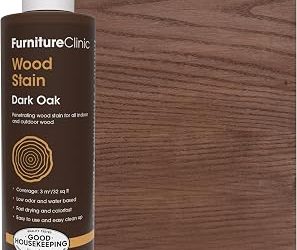
Furniture Clinic Wood Stain — Dark Oak
Furniture Clinic’s Dark Oak is the designer’s quick-fix workhorse. Water-based and touch-dry within minutes, it layers cleanly without raising the grain, so you can move straight to a protective topcoat. The 250ml bottle produces a rich, chocolate-leaning oak tone that photographs beautifully under warm ambient light — a real advantage if you shoot interiors for social channels.
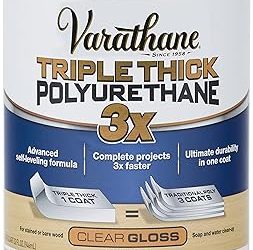
Varathane Triple Thick Polyurethane Gloss
This isn’t a stain but a topcoat — and it belongs in this roundup because what seals your stain defines the final sheen. One thick, self-leveling coat builds a crystal-clear gloss layer with genuine scratch resistance, perfect for a dining surface that takes daily use. For designers, the glossy finish doubles the perceived depth of whatever stain lies beneath, acting almost like a lens over the grain.
Varathane Water-Based Ultimate Semi-Gloss Polyurethane
If gloss reads too formal for your space, this semi-gloss water-based polyurethane delivers a balanced sheen — reflective enough to catch candlelight, matte enough to hide fingerprints between dinner parties. It dries fast, covers roughly 125 square feet per quart, and maintains clarity over both light and dark stains without yellowing over time.
Varathane Total Control Smoke Gray Gel Stain
Smoke gray is having a moment in dining rooms that lean Scandinavian or industrial, and this gel stain nails it. The thick consistency clings to vertical surfaces without drips, but on a flat tabletop it spreads into an even, translucent wash that lets the natural grain ghost through. Under cool-toned LED pendants it reads sophisticated; under warm light it softens into a warm greige.
Varathane Premium Fast Dry — Aged Wheat
Aged Wheat is the quiet powerhouse for anyone chasing that effortlessly sun-bleached farmhouse look without the sanding. Oil-based with a one-hour dry time, it deposits a golden-warm mid-tone in a single coat that makes plain pine or birch look like it has decades of patina. For open-plan dining areas lit by mixed natural and artificial light, this hue holds its character across changing conditions throughout the day.
Frequently Asked Questions
How many coats of stain does a dining table need?
Most solid-color stains reach full depth in one to two coats, but the real variable is absorption. Open-grained woods like oak may accept two coats for uniform coverage, while maple often looks best with a single carefully wiped application to avoid blotching.
Should I use a pre-stain wood conditioner?
Yes — especially on pine, birch, or maple. Pre-stain conditioner partially seals the wood so stain absorbs more evenly, preventing the patchy, uneven tones that frustrate most first-time refinishers.
Oil-based or water-based stain for a dining table?
Oil-based stains penetrate deeper and produce richer color, but they dry slowly and emit strong fumes. Water-based stains dry faster, clean up with soap and water, and resist yellowing — making them the better default for indoor dining furniture unless you specifically need the depth that oil delivers.
How long before I can use the table after staining?
Plan on 24 to 48 hours after your final topcoat before placing dishes on the surface. Full chemical cure takes roughly 30 days, during which the finish gradually hardens and gains its rated scratch resistance.
Final Thoughts
For most dining rooms, the Varathane Premium Fast Dry in Aged Wheat paired with the Varathane Semi-Gloss topcoat hits the sweet spot of warmth, durability, and low maintenance. If your space leans modern and cool, the Varathane Smoke Gray Gel Stain delivers striking character with minimal effort. And for smaller projects or families prioritizing low odor, Furniture Clinic’s Dark Oak offers a dependable, beautifully balanced result straight out of the bottle.