Key takeaways
- Pile height and light interaction: Ultra-low pile runners (under 0.25 inches) bounce light evenly, making them ideal under cool-toned LEDs. Medium pile adds shadow depth but can look uneven if your hallway lighting is directional or unevenly spaced.
- Color temperature compatibility: Warm beige and cream runners amplify the glow of 2700K bulbs, creating a golden corridor effect. Greys and blacks absorb more light, which works well in bright, sunlit halls but can make dim passages feel cave-like.
- Backing and subfloor safety: A true rubber backing—not just a latex coating—prevents the slow creep that ruins the clean sightline down a hallway. Check that the backing is suitable for hardwood, tile, or vinyl without leaving residue.
- Washability vs. structural integrity: Machine-washable is essential in entryways and kitchens where spills are inevitable. But the rug should hold its shape after multiple cycles; stiffened edges or curled corners defeat the purpose entirely.
- Dimensions relative to ceiling height: A 2-by-8 or 2-by-10 runner elongates a narrow hall and works best where ceilings are 8 feet or higher. In shorter, lower spaces, a 2-by-6 keeps proportions from feeling stretched and maintains visual balance.
What's inside
A hallway runner rug sits in one of the most unforgiving zones of a home: narrow, high-traffic, and often lit by overhead fixtures that cast every scuff and wrinkle into sharp relief. Buyers scroll through hundreds of listings only to land on something that bunches underfoot, fades within months, or clashes with the warm-toned pendants they just installed over the entryway. Getting the texture, tone, and grip right isn’t just about aesthetics—it reshapes how light moves through a corridor and whether the space feels intentional or accidental.
This guide evaluates six current runner rugs through the lens of ambience: how each one reads under recessed cans, sconces, and natural sidelight, and how its surface holds up to real foot traffic. Every pick here is washable and backed by a non-slip rubber base. After the cards below, you’ll find a concise buying checklist and honest take on each option so you can match the right runner to your hallway’s lighting conditions and daily demands.
As an Amazon Associate we earn from qualifying purchases.



🛒 Best Price Today on Amazon
Prime members get fast, free shipping on everything above, plus member-only deals. New members get a 30-day free trial — cancel anytime.
How to Choose a Runner Rug (2026)
- Pile height and light interaction: Ultra-low pile runners (under 0.25 inches) bounce light evenly, making them ideal under cool-toned LEDs. Medium pile adds shadow depth but can look uneven if your hallway lighting is directional or unevenly spaced.
- Color temperature compatibility: Warm beige and cream runners amplify the glow of 2700K bulbs, creating a golden corridor effect. Greys and blacks absorb more light, which works well in bright, sunlit halls but can make dim passages feel cave-like.
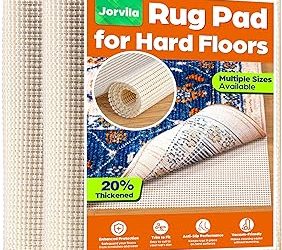
- Backing and subfloor safety: A true rubber backing—not just a latex coating—prevents the slow creep that ruins the clean sightline down a hallway. Check that the backing is suitable for hardwood, tile, or vinyl without leaving residue.
- Washability vs. structural integrity: Machine-washable is essential in entryways and kitchens where spills are inevitable. But the rug should hold its shape after multiple cycles; stiffened edges or curled corners defeat the purpose entirely.
- Dimensions relative to ceiling height: A 2-by-8 or 2-by-10 runner elongates a narrow hall and works best where ceilings are 8 feet or higher. In shorter, lower spaces, a 2-by-6 keeps proportions from feeling stretched and maintains visual balance.
The Best Runner Rugs (2026) Reviewed
2×6 Hallway Washable Vintage Runner
This distressed farmhouse-style runner is a standout for rooms lit by warm Edison bulbs or amber-toned pendants. The muted, faded pattern scatters light softly rather than reflecting it in hot spots, which gives a hallway an almost painted quality. Its low-profile weave stays flat on hardwood, and the stain resistance holds up well near kitchen sinks and laundry areas where water splashes are constant.
2×8 Non-Slip Beige Runner Rug
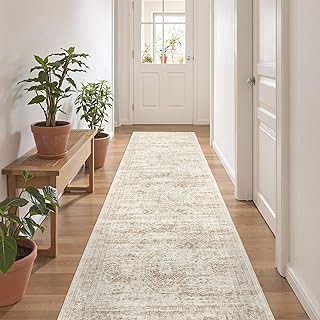
At eight feet long, this neutral beige option stretches a corridor’s visual axis beautifully under overhead flush-mount fixtures. The thin profile means it won’t create a trip hazard at transition points between rooms, and the beige tone acts as a warm reflector that softens harsh white LEDs. It’s an especially smart pick for nurseries and bathrooms where a calming, low-contrast floor surface matters.
Heavy-Duty 2×10 Extended Entryway Mat
Built for the longest hallways and busiest front doors, this extended mat covers ground that most runners can’t. The rubber backing grips aggressively on tile and stone—surfaces that tend to be the slipperiest in dimly lit foyers. Under cool daylight from a sidelight window, the beige weave reads clean and architectural, lending an institutional crispness that actually suits modern entryways.
AREDO Solid Black Pointillism Runner
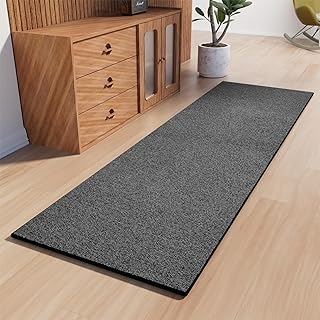
The AREDO’s micro-dot pointillist texture is what elevates it from a basic black rug. Under task lighting or track heads, the stippled surface creates a subtle tonal shift that reads almost like a charcoal drawing on the floor. It absorbs light aggressively, making it ideal for over-lit hallways where you need visual grounding, but less forgiving in narrow passages with a single overhead fixture.
Ompaa Abstract Grey Runner
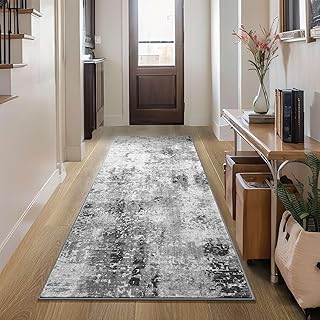
The Ompaa’s flowing abstract pattern introduces movement into a hallway without overwhelming the eye. Its grey palette sits right in the middle of the reflectance scale—neither too dark for a dim corridor nor too light for a bright kitchen galley. The soft hand-feel is a genuine surprise at this price point, and the rubber backing anchors it firmly on laminate without shifting during daily use.
Frequently Asked Questions
Can I put a runner rug over heated floors?
Most thin, low-pile runners work safely over radiant heating as long as the total combined thermal resistance stays below the manufacturer’s limit for the heating system. A rubber-backed mat can trap heat, so check your flooring documentation and consider a breathable rug pad if you notice reduced output.
How do I keep a runner from sliding on tile?
Non-slip rubber-backed runners like all six picks here grip tile surfaces directly. If you’re still experiencing movement, a cotton rug pad underneath adds friction without trapping moisture. Avoid double-sided tape, which can damage grout lines and leave adhesive residue.
Do lighter runners show more dirt in hallways?
Yes, particularly beige and cream tones under bright overhead light, where every footprint and dust particle becomes visible. The trade-off is that lighter runners brighten a dark corridor significantly. If your hallway gets limited natural light, the illumination benefit usually outweighs the maintenance cost.
What size runner works best for a standard 3-foot-wide hallway?
A 2-by-6 or 2-by-8 runner leaves roughly 6 to 12 inches of exposed floor on each side, which is the proportion most interior designers aim for. Going wider narrows the passage visually and creates a cramped feel, while a narrower rug can look like an afterthought.
Final Thoughts
For most households, the Ompaa Abstract Grey offers the best balance of ambience, grip, and value—it performs reliably under varied lighting and cleans up without fuss. The Heavy-Duty 2×10 is the clear winner for long, high-traffic corridors where coverage and durability matter most. And if your hallway leans dark and you need a rug that actively brightens the space, the 2×8 Beige Runner does that job quietly and well.