Key takeaways
- Sheen before color: Matte and low-satin finishes scatter light and stay calm under downlights. High-gloss tops behave like mirrors, catching ceiling fixtures and bouncing them at seated eye level. If your room has any overhead lighting, favor a soft, open-grain finish over a lacquered one.
- Diameter versus your light pool: A table shade lamp throws roughly a 30 to 40 inch circle of usable light. Match your tabletop to that footprint and the surface feels lit rather than half-shadowed. Rooms with a single side lamp do better at 30 to 32 inches; a 42 inch top wants two light sources or a central pendant.
- Height against your shade line: Aim for a top between 16 and 18 inches, roughly level with or just below your sofa seat. Anything taller starts intruding on the lower edge of nearby lampshades and creates an awkward bright band across the table’s near edge.
- Texture that earns its shadows: Fluting, tambour, and reeded drum bases are the reason a round table reads as sculpture at night. Raking light from a floor lamp turns those ridges into fine vertical shadow lines. Flat cylinders under the same lamp look like a blank shape.
- Storage that hides the clutter: Remotes, chargers, and coasters are the enemy of a clean nightscape. Sliding doors and interior compartments let you clear the surface in a second. Check the load rating too, as thin MDF drums often stop around 110 pounds while heavier builds handle 200.
What's inside
Most round coffee tables are chosen under the wrong light. Showroom ceilings run cool, bright, and evenly diffused, which flatters every finish equally. Your living room does not: it runs on two or three warm lamps at 2700K, a bit of screen glow, and whatever the window gives you until four in the afternoon. That mismatch is why a table that looked rich and grainy online arrives home reading flat, or worse, throws a hard white smear of lamplight straight into your line of sight from the sofa.
I light rooms for a living, so I judge a coffee table the way I judge any surface in a scheme: by how it handles reflectance, how it holds shadow, and whether it sits in the right relationship to the lamps around it. This guide covers the round tables worth owning in 2026, with notes on finish sheen, diameter versus your lamp’s light pool, seated sightlines, texture, and the storage details that keep cords and remotes out of the visual field.
As an Amazon Associate we earn from qualifying purchases.




🛒 Best Price Today on Amazon
Prime members get fast, free shipping on everything above, plus member-only deals. New members get a 30-day free trial — cancel anytime.
How to Choose a Round Coffee Table (2026)
- Sheen before color: Matte and low-satin finishes scatter light and stay calm under downlights. High-gloss tops behave like mirrors, catching ceiling fixtures and bouncing them at seated eye level. If your room has any overhead lighting, favor a soft, open-grain finish over a lacquered one.
- Diameter versus your light pool: A table shade lamp throws roughly a 30 to 40 inch circle of usable light. Match your tabletop to that footprint and the surface feels lit rather than half-shadowed. Rooms with a single side lamp do better at 30 to 32 inches; a 42 inch top wants two light sources or a central pendant.
- Height against your shade line: Aim for a top between 16 and 18 inches, roughly level with or just below your sofa seat. Anything taller starts intruding on the lower edge of nearby lampshades and creates an awkward bright band across the table’s near edge.
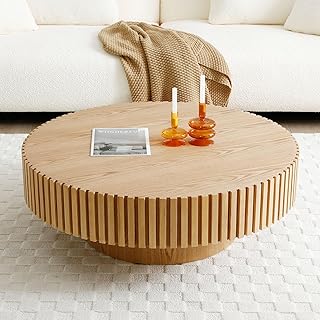
- Texture that earns its shadows: Fluting, tambour, and reeded drum bases are the reason a round table reads as sculpture at night. Raking light from a floor lamp turns those ridges into fine vertical shadow lines. Flat cylinders under the same lamp look like a blank shape.
- Storage that hides the clutter: Remotes, chargers, and coasters are the enemy of a clean nightscape. Sliding doors and interior compartments let you clear the surface in a second. Check the load rating too, as thin MDF drums often stop around 110 pounds while heavier builds handle 200.
The Best Round Coffee Tables of 2026, Reviewed
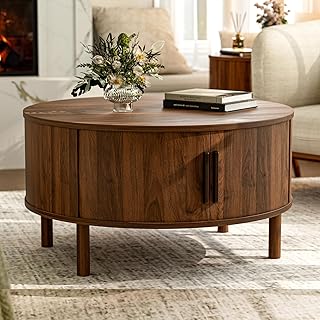
Mid-Century Walnut Round Table with Sliding Doors
Walnut is the most forgiving tone under warm bulbs, absorbing enough of a 2700K lamp to keep the surface glare-free while still showing grain. At 30 inches across with a 200 pound rating and dual sliding doors, it is the pick for a small room where one good lamp has to do all the work. Budget about 45 minutes for assembly.
Furniture of America Carys 42″ Round Table
The plinth base is the story here: a solid, uninterrupted volume that reads as a deliberate shadow mass at floor level rather than a set of spindly legs catching light from three directions. Solid rubberwood with oak veneer in a pale finish, and at 42 inches it needs a second light source or a pendant above to avoid a dim outer ring.
31.5″ Natural Oak Round Table with Fluted Sliding Door
Pale oak is the high-reflectance choice, useful in north-facing rooms where you want the tabletop bouncing daylight back up into the space. The fluted door catches side light beautifully, and hidden compartments handle the cable mess. Load capacity tops out around 110 pounds, so treat it as a display surface rather than a footrest.
Fluted Oak Drum Coffee Table
A full drum silhouette with fluting carried around the body, which means the texture works from every seat in the room instead of one favored angle. At just under 31.5 inches it suits apartments, and it looks its best with a floor lamp positioned low and to the side to rake across the ribs.
JOINICE 31.5″ Round Oak Table with Bun Feet
The bun feet lift the drum just enough to let light slip underneath, which visually floats the piece and stops it from reading as a solid block on the rug. Same natural oak tone and fluted sliding door as its sibling, with a slightly softer, more relaxed profile.
Frequently Asked Questions
What diameter should I choose for a small living room?
Stay between 30 and 32 inches, and leave 16 to 18 inches of walking clearance around it. That range also matches the light pool from a single table or floor lamp, so the whole surface stays usable after dark.
Does finish color really change how a room feels at night?
Considerably. Pale oak reflects roughly two to three times more light than a dark walnut or black finish, so it brightens a dim room. Black absorbs, which is why it works in sunny spaces that need a visual anchor and a place for the eye to rest.
Is a glass or high-gloss top ever a good idea?
Only in rooms lit entirely by lamps and wall lights, with no ceiling fixtures overhead. Glossy surfaces reflect whatever is above them, and a recessed downlight becomes a small, irritating hotspot from the sofa.
How much weight can these tables actually take?
Solid wood builds with plinth or heavy bases commonly handle 200 pounds. Lighter fluted drums with veneer panels typically rate around 110 pounds, which is plenty for books, trays, and candles but not for sitting on.
Final Thoughts
For most rooms, the mid-century walnut table with sliding doors is the safest bet: low sheen, generous capacity, and storage that keeps the surface clear for a lamp and a tray. If your space is larger or leans bright, the Furniture of America Carys 42″ gives you real presence and a plinth base that grounds the whole arrangement, while the JOINICE 31.5″ oak drum is the better call for apartments that need a lighter, light-reflecting piece on a small footprint.