Our Top Picks
 INSINKERATOR BADGER 5 Garbage Disposal with Cord0.5 HP6.31 x 6.31 x 11.5 inches5 poundsCheck on Amazon
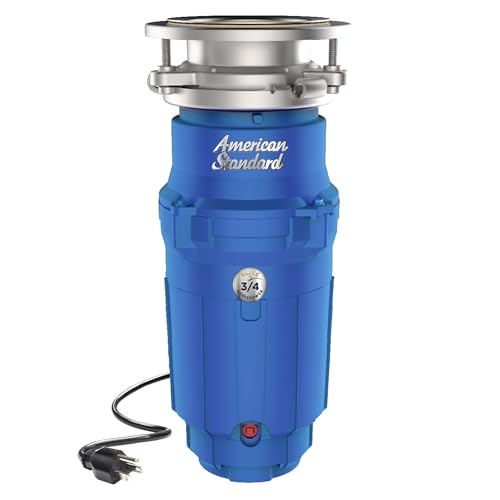 American Standard Elite 3/4 HP Garbage Disposal3/4 HP5.2 x 5.2 x 14.1 inches12 poundsCheck on Amazon
For most kitchens, an InSinkErator Evolution disposal with SoundSeal technology, either the 3/4 HP or the 1.0 HP, is the quiet choice that 2026 reviews keep naming, while a step-down model such as the Badger line suits lighter use and a batch-feed unit such as the Evolution Cover Control suits households that want the unit to run only with the stopper in place. A disposal is never silent, but sound insulation, a baffle and a vibration mount make a large difference.
At a Glance: Quiet Disposal Options
Noise figures below come from reviewers, not from a single standard test, so use them as relative guidance. Confirm current models on the maker’s site, since lineups change.

INSINKERATOR Power Series Garbage Disposal, 3/4 HP Continuous Feed, .75HP | Power Series, EZ CONNECT, 55% Quieter than Badger 5, 2-Stage MULTIGRIND Technology, 6-Year Limited Warranty, Septic Safe
Chosen because it specifies 3/4 HP Continuous Feed and .75HP.
View on AmazonINSINKERATOR BADGER 5 Garbage Disposal with Cord, 1/2 HP Continuous Feed | BADGER Series, LIFT AND LATCH Technology, Power Cord Included, Septic Safe, 5-Year Limited Warranty, Compact Disposer
Chosen because it specifies 1/2 HP Continuous Feed and BADGER Series.
View on AmazonAmerican Standard Elite 3/4 HP Garbage Disposal, Continuous Feed, Noise Insulated, Powerful Food Waste Disposer for Kitchen Sink
Chosen because it specifies Continuous Feed and Noise Insulated.
View on Amazon
InSinkErator Badger 5 Garbage Disposal, Badger Series 1/2 HP Continuous Feed Food Waste Disposer
Chosen because it specifies Badger Series 1/2 HP Continuous Feed Food Waste Disposer.
View on Amazon| Model | Best for | Maker-stated or reviewer-reported traits | Limits |
|---|---|---|---|
| InSinkErator Evolution 1.0 HP (Advanced Series) | Quietest setup, heavy use | Maker lists the quietest SoundSeal technology and 4-stage MultiGrind; ShouldIt calls it the upgrade pick for insulation | Premium tier, heavier |
| InSinkErator Evolution 1.0 HP LED | Quiet plus odor-control lighting | Maker lists LEDefense, which it says targets odor-causing bacteria | Highest tier in the range |
| InSinkErator Evolution 3/4 HP | Best balance for most homes | ShouldIt names it a top pick for build, performance and noise control; maker lists 3-stage grinding | Not the quietest in the line |
| Evolution with Quiet Collar sink baffle | Noise-focused buyers | FixDisposal ranks it quietest overall, citing about 60 to 65 dB | Reviewer estimate |
| Evolution Cover Control | Batch-feed convenience | Food Network names it best batch-feed | Needs stopper to run |
| Evolution Essential XTR | Previous generation | ShouldIt says it was recently discontinued; reviewers praised its sound damping | May be hard to find |
| InSinkErator Badger 5 and Badger 1 | Lower tier | FixDisposal puts Badger 5 at roughly 75 to 80 dB; maker’s range starts with Badger 1 | Louder than Evolution |
What Makes a Disposal Quiet
- Sound insulation: the shell around the motor. InSinkErator markets SoundSeal on its Advanced Series, which it describes as the quietest among leading brands.
- Vibration-reducing mount: a cushion between the unit and the sink flange limits the hum transferred into the sink and cabinet. ShouldIt cites such a mount on the Evolution.
- Sink baffle: a quieter baffle design, such as a Quiet Collar, reduces noise leaving the opening.
- Multi-stage grinding: the maker lists three or four stages on Evolution models, meaning waste is broken down in steps so the motor works less roughly.
- Motor size: more horsepower often means less strain on tough scraps, but it does not guarantee a lower decibel reading.
Noise also depends on the sink. A thin stainless sink with no undercoating rings more than a thick granite composite basin, and a loose mount adds rattle.
Horsepower, Feed Type and Household Size
A 3/4 HP unit usually covers a small family cooking at home. A 1.0 HP model gives more headroom for large households, frequent cooking and fibrous scraps. Continuous-feed models start with a wall switch or air switch and run while you add scraps. Batch-feed models, such as the Evolution Cover Control, run only when the stopper is in place, which some buyers prefer around children. Check the control type and the switch location available in your kitchen.
Fit and Installation Notes
- Sink opening: most sinks use a standard 3-bolt mount; the maker’s EZ Connect system is meant to simplify installation.
- Clearance under the sink: measure the depth below the flange. Larger models are taller and heavier, and ShouldIt notes the Essential XTR’s weight and bulk.
- Dishwasher inlet: if you have a dishwasher, you need to remove the knockout plug inside the inlet following the manual.
- Power: some models include a power cord for a plug-in outlet under the sink; others are hardwired. Check which you need and where an outlet exists.
- Switch: a wall switch or air switch needs a suitable location and installation. If you are adding wiring or an outlet, hire a licensed electrician.
- Plumbing: the drain trap and slope must suit the unit. A licensed plumber is the right call when drain lines need to change.
Safety and Care
- Disconnect power at the breaker or unplug the unit before working on it, and never reach into the chamber by hand. Use tongs or the maker’s wrench to clear a jam.
- Run cold water while operating and for a short time afterward.
- Avoid grease, coffee grounds in bulk, large bones, fibrous stalks and starchy scraps in quantity, in line with the manual.
- Do not pour drain chemicals into a disposal unless the maker allows it.
- If you use a septic system, check the manual and local guidance before installing one.
- Check warranty terms; InSinkErator lists warranties from two to ten years depending on the series.
- For persistent odors, reviewers and makers suggest cleaning with ice, citrus peel or a cleaning product the manual approves. The LEDefense feature on LED models is a maker claim.
Budget Tiers
- Budget tier: Badger 1 and Badger 5. Lower-cost ways to get a working disposal, but expect more noise.
- Mid-range tier: Evolution 3/4 HP, and the Evolution with a Quiet Collar or Cover Control. The best balance of sound control and price.
- Premium tier: Evolution 1.0 HP and 1.0 HP LED. Strongest insulation and grinding stages in the range.
Pick X If… Decision Table
| If you want… | Pick | Why |
|---|---|---|
| The quietest model overall | Evolution 1.0 HP (Advanced Series) or Quiet Collar version | Quietest SoundSeal; reviewers cite lowest decibel range |
| A good balance for a family | Evolution 3/4 HP | Top recommendation in a major review |
| Odor-control lighting | Evolution 1.0 HP LED | LEDefense, per the maker |
| Safer feel around kids | Evolution Cover Control | Batch-feed operation |
| The lowest tier | Badger 1 or Badger 5 | Lower tier, more noise |
| A small cabinet | A compact 3/4 HP model | Less height and weight |
Alternatives
- Compost pail and bin: no electricity or plumbing; good for households wanting less noise and waste.
- Sink strainer and trash only: the simplest choice for a rental or a septic home.
- Other disposal brands: the roundups reviewed here concentrate on InSinkErator; if you compare other brands, look for the same insulation and mount details.
Getting the Most Quiet From Any Disposal
Even a well-insulated unit can sound loud if the installation is poor. Make sure the mounting assembly is tightened evenly so the disposal hangs without touching the cabinet wall or pipes. Check that the drain connection is not rigidly fixed to a pipe that can carry vibration into the cabinet. Soft pads or foam on the cabinet floor can absorb some low-frequency hum. A thicker sink with undercoating transmits less noise than a thin one.
Habits matter too. Run cold water before feeding scraps, add waste gradually rather than all at once, and cut large pieces into smaller ones first. Hard items like bones, fruit pits and utensils cause the loudest noises and can damage the grinding parts, so keep them out. Allow the unit to run until the sound changes, which tells you the chamber is clear, then let water run for another short while to flush the drain line.
Reading Noise Claims Carefully
Decibel figures in reviews depend on distance, kitchen acoustics, the sink and the type of waste being ground. A reading of 60 to 65 dB at a given distance does not mean your kitchen will measure the same. Makers also describe noise in relative terms, such as “quietest among leading brands,” which is a comparison to selected competitors rather than a standard number. Use the figures to compare models inside the same review, and pay attention to what reviewers say about pitch and vibration as well as loudness, since a low rumble can be less irritating than a high whine.
Lifespan and Warranty Thinking
Warranty length gives a rough hint about the maker’s confidence. InSinkErator lists warranties from two to ten years depending on the series, with higher series carrying longer terms. Read what the warranty covers, whether it includes in-home service, and whether it applies to residential use only. Corrosion-resistant grinding components and stainless steel parts are common selling points, but treat claims as the maker’s statements unless a reviewer reports on durability over time.
Frequently Asked Questions
What is the quietest garbage disposal?
Reviewers most often name the InSinkErator Evolution line, with the Advanced Series and 1.0 HP at the top. FixDisposal cites about 60 to 65 dB for the Quiet Collar version. Decibel figures vary by test method, so treat them as relative.
Is a 1.0 HP disposal quieter than a 3/4 HP?
Not always by horsepower alone. Insulation, mounts and baffle design matter more. ShouldIt calls the 1.0 HP the upgrade pick for noise insulation and build.
Can I install a disposal myself?
Many handy owners do, using the maker’s instructions and turning power off first. Hire a licensed electrician for wiring or outlet work and a plumber for drain changes. Follow the manual closely.
Is the Evolution Essential XTR still available?
ShouldIt says it was recently discontinued, so stock may vary. The Evolution 3/4 HP and 1.0 HP are the current alternatives that reviewers point to.
Will a disposal damage my pipes or septic system?
Disposals are designed for ordinary food scraps but can add solids to the line. Follow the manual, avoid grease, and ask the maker or a plumber about septic suitability before installing.
Why does my disposal still sound loud?
A thin sink, loose mounting, or hard items in the chamber can add noise. Check the mount, run cold water, and remove foreign objects with the power off, never by hand. If it hums but will not turn, follow the manual’s reset and jam-clearing steps or call a plumber.