Key takeaways
- Room Size First: Match BTU output to square footage. A 5,000 BTU unit handles a small bedroom or home office up to 150 sq. ft., while 8,000–10,000 BTU models cover medium rooms and 12,000 BTU units tackle spaces above 500 sq. ft. Oversizing wastes energy; undersizing forces the compressor into constant overdrive.
- Sound Profile Over Decibel Ratings: Manufacturers print dB numbers, but the tonal quality matters more for comfort. A unit that emits a steady, low hum blends into a room’s soundscape far better than one with a high-pitched compressor whine, even at the same rated level.
- Installation Footprint: Consider window type, sill depth, and whether you need a U-shaped design that lets you close the window further. Units with slimmer profiles leave more natural light and preserve sightlines — something I weigh heavily in residential projects.
- Control Flexibility: Mechanical dials are reliable and repairable, but digital remotes, timers, and smart-home integration give you real-time adjustments without leaving the couch. For multi-use rooms, programmable schedules prevent the classic “forgot to turn it off” scenario.
- Energy Draw and Efficiency: Look at EER or combined energy-efficiency ratings rather than marketing claims. A slightly pricier unit with better efficiency pays itself back within one or two cooling seasons on your electricity bill.
What's inside
Buying a window air conditioner in 2026 feels oddly harder than it should be. The gap between a budget unit that rattles like a screen door in a storm and a premium model that quietly turns a sweltering room into a sanctuary is enormous — yet every listing on the page looks almost identical. Shoppers end up toggling between spec sheets, second-guessing BTU numbers, and wondering whether the extra forty dollars actually buys them something meaningful.
This guide cuts through that noise. As someone who spends his professional life shaping how spaces look, feel, and breathe, I evaluated today’s most popular window AC units not just on raw cooling power but on the quieter details: sound character, airflow evenness, and how each unit affects the room’s overall comfort profile. Below you’ll find honest takes on five standout models, plus a straightforward buyer’s guide so you can match the right unit to your space without overthinking it.
As an Amazon Associate we earn from qualifying purchases.



🛒 Best Price Today on Amazon
Prime members get fast, free shipping on everything above, plus member-only deals. New members get a 30-day free trial — cancel anytime.
How to Choose a Window Air Conditioner in 2026
- Room Size First: Match BTU output to square footage. A 5,000 BTU unit handles a small bedroom or home office up to 150 sq. ft., while 8,000–10,000 BTU models cover medium rooms and 12,000 BTU units tackle spaces above 500 sq. ft. Oversizing wastes energy; undersizing forces the compressor into constant overdrive.
- Sound Profile Over Decibel Ratings: Manufacturers print dB numbers, but the tonal quality matters more for comfort. A unit that emits a steady, low hum blends into a room’s soundscape far better than one with a high-pitched compressor whine, even at the same rated level.
- Installation Footprint: Consider window type, sill depth, and whether you need a U-shaped design that lets you close the window further. Units with slimmer profiles leave more natural light and preserve sightlines — something I weigh heavily in residential projects.
- Control Flexibility: Mechanical dials are reliable and repairable, but digital remotes, timers, and smart-home integration give you real-time adjustments without leaving the couch. For multi-use rooms, programmable schedules prevent the classic “forgot to turn it off” scenario.
- Energy Draw and Efficiency: Look at EER or combined energy-efficiency ratings rather than marketing claims. A slightly pricier unit with better efficiency pays itself back within one or two cooling seasons on your electricity bill.
The Best Window Air Conditioners (2026) Reviewed
Frigidaire 5,000 BTU Window AC
The Frigidaire 5,000 BTU earns its reputation through sheer consistency. Its effortless temperature control keeps a small room within a tight comfort band without the stuttering on-off cycling that plagues cheaper units, and the two fan speeds let you dial the airflow to match how the room actually feels at different times of day. For a bedroom or compact office, this is the quiet professional in the room.
Midea 5,000 BTU EasyCool
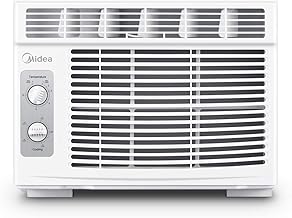
Midea’s EasyCool trades digital complexity for mechanical simplicity — and that’s a feature, not a compromise. The straightforward dial controls mean fewer things to break, and the reusable filter keeps maintenance genuinely low-effort. If you want a no-fuss unit for a small bedroom or home office that just quietly does its job, this model delivers exactly that.
Electactic 8,000 BTU Window AC
The Electactic steps up to mid-range cooling with six operating modes and a 24-hour timer that lets you pre-cool a room before you arrive. At 8,000 BTU it comfortably handles spaces up to 350 sq. ft., and the remote control adds genuine convenience for rooms where the window unit sits out of arm’s reach. A solid value proposition for apartments and living rooms.
Tehanld 10,000 BTU U-Shaped
The U-shaped form factor is the Tehanld’s real differentiator. It cradles the window sill while allowing the sash to close lower than traditional units, preserving a partial view and reducing the visual bulk that makes most window ACs feel like temporary intrusions. At 10,000 BTU with ultra-quiet operation, it handles medium rooms up to 450 sq. ft. without dominating the soundscape — a rare combination.
BLACK+DECKER 12,000 BTU Window AC
When a room demands serious cooling muscle, the BLACK+DECKER 12,000 BTU unit delivers without becoming a noise nuisance. Three distinct cooling speeds plus a fan-only function give you control over how aggressively the room cools, and it comfortably covers spaces up to 550 sq. ft. For larger living areas or open-plan rooms, this is the heavyweight pick that still maintains composure.
Frequently Asked Questions
How many BTUs do I actually need for my room?
Roughly 20 BTU per square foot is a reliable starting point: 5,000 BTU for 150 sq. ft., 8,000 for 350 sq. ft., and 12,000 for 550 sq. ft. Add 10–20% if the room gets heavy direct sunlight, has high ceilings, or regularly holds multiple occupants.
Are window air conditioners worth it compared to portable units?
Generally yes. Window units vent heat more efficiently through the wall, consume less electricity for the same cooling output, and produce less room-level noise. Portable units offer flexibility in placement but sacrifice performance.
What does a U-shaped window AC actually improve?
The U-shaped chassis lets the window sash close further around the unit, creating a tighter seal, reducing vibration transfer, and freeing up a window view that standard units completely block.
How often should I clean the filter?
Every two to four weeks during peak cooling season. A clogged filter restricts airflow, forces the compressor to work harder, and degrades both cooling performance and indoor air quality.
Final Thoughts
For small rooms where quiet operation and reliability matter most, the Frigidaire 5,000 BTU remains the benchmark. The Tehanld 10,000 BTU U-shaped stands out for anyone who wants serious cooling without sacrificing natural light and window access. And the BLACK+DECKER 12,000 BTU is the clear pick for larger spaces that demand consistent, powerful coverage. All three balance performance with the kind of unobtrusive design that keeps a room feeling like a room — not a machine.