Key takeaways
- Clean the filter every two to four weeks during heavy cooling, adjusting the schedule for pets, smoke, pollen, or renovation dust.
- Use a flashlight to inspect coil surfaces; angled light reveals dust that disappears in ordinary room lighting.
- Take a photo before removing grille screws or clips, and keep fasteners in a small labeled container.
- After cleaning, run fan-only mode briefly if available, then check for unusual noise, vibration, leaking, or icing.
What's inside
A clean window air conditioner does more than lower the temperature. It protects the quality of the light in a room, too: dusty filters and clogged fins make the unit run noisier, cast a harsher visual presence, and circulate stale-smelling air when the room should feel calm. Regular cleaning also helps the appliance move air efficiently instead of forcing it to work harder.
This guide explains the safest, most effective way to clean a window AC in 2026, from preparing the room and protecting nearby furniture to cleaning the filter, coils, fins, fan area, and drain path. You’ll also learn which tools are useful, when a foaming cleaner makes sense, and when a unit needs professional service rather than another round of household maintenance.
As an Amazon Associate we earn from qualifying purchases.




🛒 Best Price Today on Amazon
Prime members get fast, free shipping on everything above, plus member-only deals. New members get a 30-day free trial — cancel anytime.
Prepare the Room and the Air Conditioner
Before touching the unit, switch it off, unplug it, and wait several minutes. Never spray liquid into a plugged-in appliance. Move lamps, curtains, rugs, and upholstered furniture away from the work area; even a small amount of dirty runoff can stain fabric or wood. If the AC cannot be removed from the window, place a waterproof towel or shallow tray beneath the exterior side and use an appliance-cleaning bag designed to direct drips away from the room.
For larger units, the Oiktylr Mini Split Cleaning Kit with 2L Pressure Sprayer includes a reusable waterproof bag and sprayer. Although marketed primarily for split systems, its collection-bag approach can be useful when the dimensions suit a window unit. Check the measurements before buying rather than assuming a universal fit.
Clean the Filter and Cabinet First
Remove the front grille and slide out the filter according to the manufacturer’s instructions. Vacuum loose dust before washing it, so damp debris does not become sludge. Rinse a washable filter with lukewarm water and mild dish soap, then let it dry completely in shade. Do not reinstall a damp filter: moisture trapped inside the unit encourages odors and microbial growth.
Wipe the grille and cabinet with a barely damp microfiber cloth. Keep moisture away from the control panel, display, wiring, and motor housing. If the filter is torn, permanently gray, or no longer holds its shape, replacement is usually more effective than repeated washing. A cleaner filter also helps the room’s ambience by reducing the low mechanical strain that can make an AC sound intrusive.
Brush the Coils and Straighten the Fins
Dust on the evaporator coil, located behind the indoor filter, restricts airflow and can contribute to icing. Use a soft brush or a vacuum with a brush attachment, working in the direction of the fins. Never press hard across the coil; the thin aluminum edges bend easily. On the outdoor side, clear leaves, lint, and dust from the condenser coil so warm air can escape.
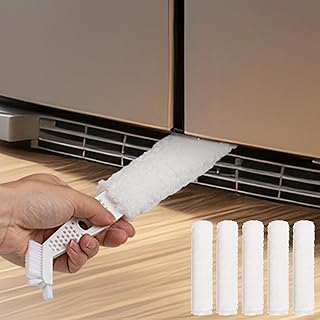
A 3-Piece Air Conditioner Fin Comb Cleaning Tools set is helpful when fins are visibly flattened. Select the comb that matches the fin spacing and pull gently in straight lines. The Air Conditioner Cleaner Set Mini Split Cleaning Kit Under Fridge Cleaning Tool Window Unit Kit is another practical option for narrow spaces, especially because its replaceable brush cloths can reach around the front edge without disassembling furniture or appliances. Avoid trying to restore severely crushed fins; a technician can assess whether the coil is damaged.
Use Coil Cleaner Selectively
For light seasonal dust, dry brushing and vacuuming are often enough. If the coil has greasy buildup, persistent odor, or compacted grime, use a product specifically labeled for air-conditioning coils. The Arm & Hammer Biodegradable HVAC and Air Conditioner Coil Cleaner Foam Aerosol Spray, 19 fl. oz, AHCC-19 by Diversitech offers a convenient small-format option. Larger maintenance jobs may suit a Foaming AC Coil Cleaner, 38oz or the Foaming AC Coil Cleaner, 57 oz version.
Read the label carefully before spraying. “No-rinse” does not mean “safe to spray everywhere”; protect electrical parts and surrounding surfaces, apply only to approved coil surfaces, and allow the stated dwell time. If rinsing is required, use a controlled, low-pressure amount and capture the runoff. High-pressure water can bend fins, drive dirt deeper, or reach electrical components. Never combine coil cleaner with bleach, ammonia, or another chemical.
Clean the Fan Area and Check Drainage
Dust and biofilm can collect on the blower wheel, where they reduce airflow and create a musty smell. With power disconnected, clean reachable blades using a soft brush or a purpose-made narrow cleaning tool. Rotate the wheel slowly by hand if the design permits, but do not force it or remove panels unless the manual explicitly supports that procedure.
Inspect the condensate drain opening and exterior drain channel. A blockage can cause indoor dripping, water damage, or unpleasant odors. Clear loose debris gently; do not poke deeply into the unit with a rigid wire. After reassembly, confirm that the AC is level according to the manufacturer’s guidance and that the outside portion can drain safely.
Tips
- Clean the filter every two to four weeks during heavy cooling, adjusting the schedule for pets, smoke, pollen, or renovation dust.
- Use a flashlight to inspect coil surfaces; angled light reveals dust that disappears in ordinary room lighting.
- Take a photo before removing grille screws or clips, and keep fasteners in a small labeled container.
- After cleaning, run fan-only mode briefly if available, then check for unusual noise, vibration, leaking, or icing.
Frequently Asked Questions
How often should I deep-clean a window AC?
Most homes benefit from a thorough cleaning at the beginning and end of the cooling season, with more frequent filter care in dusty or high-occupancy rooms. Clean sooner if airflow drops, odors develop, or the unit begins icing.
Can I hose down a window air conditioner?
Usually not. A garden hose or pressure washer can force water into electronics and bend condenser fins. Use a controlled method recommended by the manufacturer, keeping water away from controls, wiring, and the motor.
Why does my clean AC still smell musty?
Odor can remain in the blower wheel, drain pan, insulation, or hidden coil surfaces. Check drainage and clean reachable fan components. If the smell persists, particularly with visible mold-like growth or repeated water leakage, arrange professional service.
When should I replace rather than clean the unit?
Consider replacement when the unit has a damaged power cord, persistent refrigerant-related icing, severe corrosion, repeated leaks, or repair costs that approach the price of a newer efficient model. A qualified technician should diagnose sealed-system problems.
Conclusion
The best window AC cleaning routine is controlled rather than aggressive: disconnect power, protect the room, clean from filter to coil to drain, and use specialized products only where their labels permit. A cleaner unit supports steadier airflow, quieter operation, and a more comfortable visual atmosphere—so the room feels cool, fresh, and composed instead of dominated by its appliance.