Key takeaways
- Load Capacity: Match the stand’s rated capacity to your saw’s weight plus the material you feed through it. Stands rated at 330–350 lbs cover most contractor and jobsite saws with margin to spare. Undersizing leads to flex mid-cut, which ruins accuracy.
- Wheel Diameter and Material: 8-inch rubber wheels roll over shop debris and thresholds without bouncing. Smaller plastic casters catch on every crack. If your stand travels between garage and jobsite, rubber is non-negotiable.
- Fold-Down Design: A stand that collapses to a slim profile frees floor space when the saw is idle. Look for a locking mechanism that engages positively — a lever that clicks, not a latch that drifts open.
- Tool Compatibility: Universal mounting patterns fit most major brands, but some stands are engineered for a specific manufacturer’s bolt layout. The POWERTEC MT4009, for instance, aligns precisely with Dewalt bases. Always verify your saw’s mounting-hole spacing before purchasing.
- Height and Ergonomics: The working height of the stand determines your posture during long sessions. Adjustable-height models let you dial in a position that keeps your wrists neutral and your line of sight clear, much the way a well-positioned desk lamp puts light exactly where your hands work.
What's inside
Every woodworker who has hauled a table saw across a garage knows the moment: you finish a cut, step back, and catch the last raking beam of evening light slicing across sawdust on the floor. In that pause, the stand beneath your saw stops being invisible. It wobbles, or it doesn’t. It folds flat into a dark corner, or it refuses to. A good portable table saw stand is the invisible architecture of a functional shop — the thing you notice only when it fails.
Choosing one in 2026 means sorting through dozens of listings that look nearly identical on screen. Load capacity, wheel type, fold-down geometry, and brand compatibility all matter, but the differences only reveal themselves under real use. We spent time with the most popular rolling stands available now, evaluating how each one performs in a workshop that runs on space, light, and efficiency. Below, you will find our top picks along with a buying guide to help you match a stand to your workflow.
As an Amazon Associate we earn from qualifying purchases.


🛒 Best Price Today on Amazon
Prime members get fast, free shipping on everything above, plus member-only deals. New members get a 30-day free trial — cancel anytime.
How to Choose a Portable Table Saw Stand (2026)
- Load Capacity: Match the stand’s rated capacity to your saw’s weight plus the material you feed through it. Stands rated at 330–350 lbs cover most contractor and jobsite saws with margin to spare. Undersizing leads to flex mid-cut, which ruins accuracy.
- Wheel Diameter and Material: 8-inch rubber wheels roll over shop debris and thresholds without bouncing. Smaller plastic casters catch on every crack. If your stand travels between garage and jobsite, rubber is non-negotiable.
- Fold-Down Design: A stand that collapses to a slim profile frees floor space when the saw is idle. Look for a locking mechanism that engages positively — a lever that clicks, not a latch that drifts open.
- Tool Compatibility: Universal mounting patterns fit most major brands, but some stands are engineered for a specific manufacturer’s bolt layout. The POWERTEC MT4009, for instance, aligns precisely with Dewalt bases. Always verify your saw’s mounting-hole spacing before purchasing.
- Height and Ergonomics: The working height of the stand determines your posture during long sessions. Adjustable-height models let you dial in a position that keeps your wrists neutral and your line of sight clear, much the way a well-positioned desk lamp puts light exactly where your hands work.
The Best Portable Table Saw Stands (2026) Reviewed
VEVOR Portable Table Saw Stand
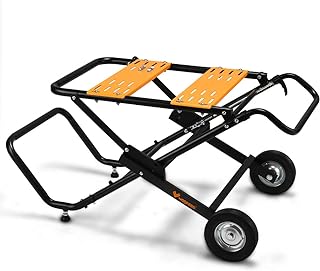
At 350 lbs of load capacity and equipped with 8-inch rubber wheels, the VEVOR handles heavy contractor saws without complaint. Its fold-down frame locks into a compact footprint that slides against a wall, and the universal mounting plate accepts nearly every popular saw brand. It is the stand we recommend first for shops where space and portability share equal priority.
POWERTEC Table Saw Stand (MT4009)
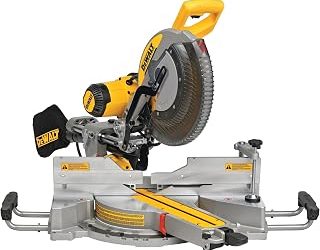
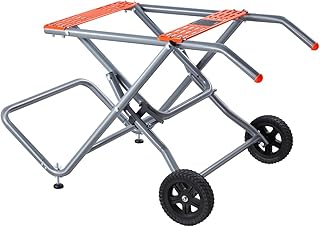
The MT4009 is purpose-built for Dewalt table saws, and that specificity pays off. The mounting pattern matches Dewalt bases with zero adapter hardware, producing a connection that feels bolted rather than clamped. Its 330 lb capacity and fold-flat geometry make it a natural fit for Dewalt owners who want an OEM-level fit at a lower price.
DEWALT DWE74911 Rolling Stand
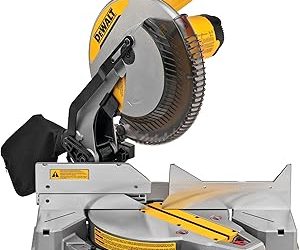
Dewalt’s own rolling stand pairs with the DWE7491 series and delivers the kind of fit-and-finish you expect from the brand. The wheels track straight under load, and the folding mechanism is among the most intuitive on the market — one hand on the release lever, one hand guiding the frame down. If you already own a Dewalt saw, this is the path of least friction.
HRVEOCEI Portable Table Saw Stand
What sets the HRVEOCEI apart is its adjustable-height leg system, which lets you set the working surface to match your stature or your infeed table height. Combined with a 350 lb rating and a heavy-duty frame, it works equally well in a permanent garage setup and a temporary jobsite station. The adjustability is a rare and genuinely useful feature at this price point.
Goplus Portable Table Saw Stand
The Goplus trades raw capacity (331 lbs) for a lighter overall weight that makes one-person setup genuinely possible. Its universal mounting plate covers most saw brands, and the fold-down design collapses thin enough to hang on a wall hook. For woodworkers who move their saw frequently, the reduced carry weight matters more than the extra nineteen pounds of rated capacity you might never use.
Frequently Asked Questions
Can I use a universal stand with any table saw?
Most universal stands use a bolt pattern that accommodates major brands like Dewalt, Bosch, Makita, and Craftsman. However, some saws have non-standard base dimensions. Measure your saw’s mounting-hole spacing and compare it to the stand’s specifications before ordering to avoid fitment issues.
What is the difference between a rolling stand and a fixed stand?
A rolling stand includes wheels and a folding mechanism, allowing you to move the saw across a shop or load it into a truck and then store it vertically. A fixed stand stays in one position, is typically lighter and less expensive, and offers no portability. Choose based on whether your saw needs to travel.
How much weight capacity do I actually need?
Add your saw’s shipping weight to the heaviest stock you typically cut. For most contractors running a 10-inch jobsite saw with sheet goods, 330 lbs is sufficient. If you run a heavier cabinet-style portable saw, step up to a 350 lb stand for an appropriate safety margin.
Are rubber wheels better than plastic ones?
Yes, for nearly every real-world scenario. Rubber wheels absorb vibration, roll over shop debris without jamming, and grip smooth concrete floors without sliding. Plastic casters are cheaper but degrade faster and perform poorly on uneven surfaces.
Final Thoughts
For most woodworkers, the VEVOR stand offers the best balance of capacity, build quality, and universal fit. Dewalt owners should look first at the POWERTEC MT4009 or the DWE74911 for a seamless pairing. And if adjustable height matters to your workflow, the HRVEOCEI is the only stand in this group that lets you fine-tune the working surface to match your setup. Any of these five will turn a wobbly, space-hogging arrangement into something that folds away clean and stands ready when you need it.