Key takeaways
- Center of the stall, not the edge of the room: Humidity pools where air stops circulating — behind furniture, in closed alcoves, at the bottom of stairwells. Position the unit where it can draw from open air on at least three sides, roughly 6 to 12 inches off the wall, so intake and exhaust aren’t fighting each other.
- The source, then the space: If moisture has an origin — a shower, a laundry stack, a crawlspace hatch, a drying rack — place the unit near it rather than in the geometric middle of the floor plan. Intercepting vapor before it migrates is far cheaper than pulling it back out of drywall and textiles.
- Light temperature and placement height: A dehumidifier with a 7-color LED becomes part of your evening scene whether you planned it or not. On a low shelf or nightstand, warm amber reads as a soft floor wash; on the ground behind a chair it throws upward shadow that can feel restless. Choose a spot where the glow grazes a surface instead of hitting the eye directly.
- Drainage geometry: Continuous drainage only works downhill. If you want hose operation in a basement or bathroom, the unit needs to sit above a floor drain, sink, or sump — often on a low platform or block. Confirm that before you commit to a corner.
- Noise distance in sleeping rooms: A 28dB unit at three feet is calmer than a 40dB unit across the room, but only if nothing hard sits behind it. Avoid tucking a quiet model into a tiled or glass-backed niche, which turns modest fan noise into a reflected hum.
What's inside
Damp air announces itself before you can measure it. The mirror hazes over an hour after a shower, the basement carries that mineral-and-paper smell, and the corner where your armchair meets two exterior walls develops a chill that no throw blanket fixes. Most people buy a dehumidifier and set it wherever there’s a free outlet, then wonder why the room still feels heavy. Placement does most of the work, and the machine only finishes the job.
This guide approaches the question the way I approach a lighting plan: by mapping where air stalls, where it moves, and where a glowing object earns its place in the room. You’ll find placement rules that actually change performance, plus six units worth considering in 2026 — from compact bedside models with soft color-cycling ambient light to whole-basement compressors that run on a drain hose and never need emptying.
As an Amazon Associate we earn from qualifying purchases.


🛒 Best Price Today on Amazon
Prime members get fast, free shipping on everything above, plus member-only deals. New members get a 30-day free trial — cancel anytime.
How to Choose a/an Place To Put Dehumidifier (2026)
- Center of the stall, not the edge of the room: Humidity pools where air stops circulating — behind furniture, in closed alcoves, at the bottom of stairwells. Position the unit where it can draw from open air on at least three sides, roughly 6 to 12 inches off the wall, so intake and exhaust aren’t fighting each other.
- The source, then the space: If moisture has an origin — a shower, a laundry stack, a crawlspace hatch, a drying rack — place the unit near it rather than in the geometric middle of the floor plan. Intercepting vapor before it migrates is far cheaper than pulling it back out of drywall and textiles.
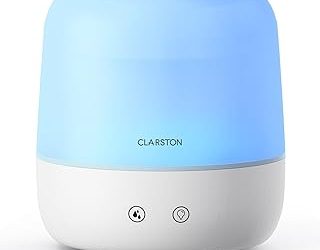
- Light temperature and placement height: A dehumidifier with a 7-color LED becomes part of your evening scene whether you planned it or not. On a low shelf or nightstand, warm amber reads as a soft floor wash; on the ground behind a chair it throws upward shadow that can feel restless. Choose a spot where the glow grazes a surface instead of hitting the eye directly.
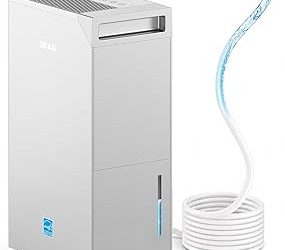
- Drainage geometry: Continuous drainage only works downhill. If you want hose operation in a basement or bathroom, the unit needs to sit above a floor drain, sink, or sump — often on a low platform or block. Confirm that before you commit to a corner.
- Noise distance in sleeping rooms: A 28dB unit at three feet is calmer than a 40dB unit across the room, but only if nothing hard sits behind it. Avoid tucking a quiet model into a tiled or glass-backed niche, which turns modest fan noise into a reflected hum.
The Best Place To Put Dehumidifier (2026)s Reviewed
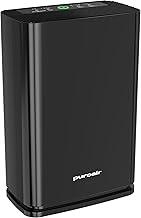
95OZ Dehumidifier for Home, 1000 sq ft (Black)
The black housing disappears into a room after dark, which makes the color-cycling ring read as intentional accent light rather than an appliance indicator. Coverage suits an open living room or a finished basement corner, and auto shut-off means the tank filling overnight won’t wake you with an alarm chirp.
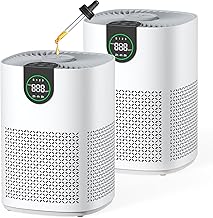
ToLife 1000 Sq Ft Dehumidifier, 95 oz Tank (White)
Sleep mode dims the display and drops the fan, so this is the one I’d put in a bedroom on a low bench where its light can wash a wall instead of a face. The white shell reflects whatever color you select, giving you a slightly softer, more diffuse glow than the dark version.
1000 Sq. Ft Dehumidifier with 95oz Tank (Grey)
Grey is the quietest choice visually — it sits comfortably beside oak, walnut, or painted cabinetry without demanding a design decision. Same 95oz capacity and quiet operation, which makes it a sensible pick for a hallway landing or a bathroom that opens onto a bedroom.
35 OZ Dehumidifier for Bedroom and RV, 280 Sq. Ft
At 28dB this is genuinely nightstand-viable, and the small footprint suits closets, RVs, and box rooms where a full-size unit would be absurd. Expect to empty the 35oz tank more often — the tradeoff for something you can place within arm’s reach.
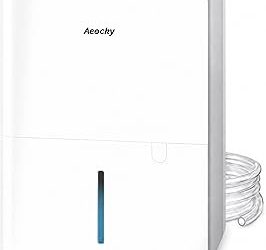
4500 Sq. Ft Compressor Dehumidifier with Drain Hose
Compressor-based and built for real basement volume, with intelligent humidity control that holds a setpoint instead of running flat out. Place it near a floor drain, run the hose, and it becomes infrastructure you stop thinking about.
Frequently Asked Questions
Should a dehumidifier go in the middle of the room?
Roughly, yes — but “middle” means unobstructed rather than exactly centered. Clear airflow on multiple sides matters more than the precise coordinates.
Can I put one in a closet?
Only if the door stays ajar or louvered. A sealed closet has too little air volume to circulate, and the unit will cycle without accomplishing much.
Does the ambient light affect sleep?
It can. Choose warm amber or red over blue and cyan for evening use, or switch to sleep mode where available.
How high off the floor should it sit?
Floor level is fine for most rooms since cool damp air settles low. Raise it only when hose drainage requires gravity.
Final Thoughts
For a bedroom or study where the unit doubles as ambient light, the ToLife 1000 Sq Ft in white is the most considered choice; the Grey 95oz version is the better fit if you’d rather it recede entirely. For genuine basement moisture, the Waykar 80 Pints with continuous drainage and auto-defrost is the one that solves the problem permanently rather than managing it nightly.