Key takeaways
- Vented or double-top construction: An open crown lets pressure escape rather than lifting the canopy like a sail. Double-top designs such as the PURPLE LEAF Cantilever handle this best, and the gap also softens the shadow edge underneath, giving you a gentler falloff instead of a hard rim of darkness.
- Rib count and material: Eight ribs is the practical minimum for exposed sites. Fiberglass flexes and returns; cheap steel bends once and stays bent, which throws off the canopy’s symmetry and every shadow it casts.
- Fabric weight and weave: Look for 240GSM or commercial-grade solution-dyed cloth. Denser weave resists tearing at the rib pockets and, importantly for ambience, transmits a cleaner diffused glow rather than the blotchy pinholing you get from thin polyester.
- Canopy color as a light source: Whatever is overhead becomes your fill light. Beige and taupe throw flattering warm bounce; navy and black absorb, giving crisp contrast and deeper shade but almost no reflected light, so plan on more lamps or lanterns at seat level.
- Base mass and mounting: Freestanding umbrellas need 50 pounds minimum, cantilevers considerably more. A weighted base plus a through-table fit is the most stable arrangement, and stability is what lets you leave the umbrella open into the evening when the light gets good.
What's inside
Wind is the one variable most patio umbrella shoppers underestimate, and it shows up twice: once when a gust folds a canopy inside out, and again every evening when the light on your patio goes flat because the shade you bought is either stowed away or leaning at a useless angle. I spend my working hours shaping outdoor ambience, and the canopy overhead is the single largest light-modifying surface most homeowners own. It bounces color onto faces, diffuses hard midday sun into something usable, and after dark it becomes the reflector that makes string lights read warm instead of thin.
This guide looks at patio umbrellas through both lenses: structural resilience in exposed, breezy locations, and the quality of light each one delivers. Below you will find the shortlist, followed by the specifications that actually correlate with wind survival, honest notes on each model, and answers to the questions that come up most often once a canopy has weathered its first real storm.
As an Amazon Associate we earn from qualifying purchases.


🛒 Best Price Today on Amazon
Prime members get fast, free shipping on everything above, plus member-only deals. New members get a 30-day free trial — cancel anytime.
How to Choose a Patio Umbrella For Windy Area (2026)
- Vented or double-top construction: An open crown lets pressure escape rather than lifting the canopy like a sail. Double-top designs such as the PURPLE LEAF Cantilever handle this best, and the gap also softens the shadow edge underneath, giving you a gentler falloff instead of a hard rim of darkness.
- Rib count and material: Eight ribs is the practical minimum for exposed sites. Fiberglass flexes and returns; cheap steel bends once and stays bent, which throws off the canopy’s symmetry and every shadow it casts.
- Fabric weight and weave: Look for 240GSM or commercial-grade solution-dyed cloth. Denser weave resists tearing at the rib pockets and, importantly for ambience, transmits a cleaner diffused glow rather than the blotchy pinholing you get from thin polyester.
- Canopy color as a light source: Whatever is overhead becomes your fill light. Beige and taupe throw flattering warm bounce; navy and black absorb, giving crisp contrast and deeper shade but almost no reflected light, so plan on more lamps or lanterns at seat level.
- Base mass and mounting: Freestanding umbrellas need 50 pounds minimum, cantilevers considerably more. A weighted base plus a through-table fit is the most stable arrangement, and stability is what lets you leave the umbrella open into the evening when the light gets good.
The Best Patio Umbrella For Windy Area (2026)s Reviewed
EliteShade 9ft 3-Tier Market Umbrella
The three-tier crown is the smartest wind solution at this price, releasing pressure through two separate gaps while the commercial-grade fabric holds its shape. The black canopy delivers deep, contrasty shade that pairs beautifully with warm candlelight below, though it returns almost no bounce, so add table-level lighting.
PURPLE LEAF 12ft Cantilever, Double Top
This is the model I specify for exposed decks where a center pole would ruin the layout, with a genuine double-top canopy and six tilt positions that let you track the sun through late afternoon. The taupe fabric is the best ambience choice in this roundup, scattering a soft neutral-warm fill across everything beneath it.
PURPLE LEAF 12ft Wood-Grain, Navy Blue
The braced aluminum frame and 240GSM cloth give this oversized umbrella genuine authority in gusts, and the coverage is generous enough for a full dining set. Navy reads dramatic and cool overhead, which makes uplit greenery and warm lanterns pop by contrast.
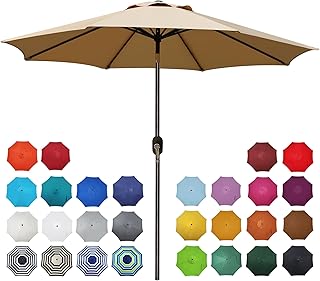
EliteShade 9ft Market Umbrella, Heather Beige
A vented top, crank lift and tilt, and the same fade-resistant commercial cloth make this the sensible workhorse for average suburban wind exposure. Heather beige is the most forgiving canopy tone I know: it produces a flattering, slightly warm diffusion that photographs well and never tints skin green.
10ft Patio Umbrella with Push Button Tilt
Eight sturdy ribs, waterproof canopy, and a wider 10-foot span make this a strong value pick for sheltered courtyards and side yards. In persistent wind it needs a heavier base than most buyers assume, so budget for that separately.
Frequently Asked Questions
What wind speed can a patio umbrella actually handle?
Vented, fiberglass-ribbed models typically tolerate sustained breezes around 20 to 25 mph. Above that, close and secure the canopy regardless of what the marketing claims.
Do vents really make a difference?
Yes, measurably. A vented crown reduces uplift and frame stress, and it is the clearest single indicator that a manufacturer designed for wind rather than photographs.
Can I hang string lights from the ribs?
Lightweight LED strands are fine, run along the ribs rather than across the span. Keep total weight low and never attach anything that adds surface area for the wind to catch.
Which canopy color lasts longest?
Solution-dyed mid-tones hold up best. Very dark and very saturated fabrics show fading soonest, which is why the 10-year non-fading warranties on the EliteShade models are worth noting.
Final Thoughts
For serious exposure and the most refined light, the PURPLE LEAF 12ft Cantilever with its double top is the pick worth stretching for. The EliteShade 9ft 3-Tier is the value champion in real wind, and the Heather Beige EliteShade remains my quiet favorite for anyone who cares how the patio looks at golden hour.