Key takeaways
- Vented canopy tiers: A two- or three-tier top lets pressure escape through the gap instead of loading the ribs. Tiered vents also bounce a sliver of sky-light downward, which softens the hard-edged shadow you get from a flat single canopy.
- Rib count and material: Eight ribs distribute load far better than six, and fiberglass flexes and recovers where aluminum tends to take a permanent bend. Fewer, stiffer ribs mean more visible canopy ripple, and ripple reads as flicker on faces below.
- Canopy weight and weave: Look for 200 GSM and up. Heavy polyester or solution-dyed fabric hangs taut in a breeze and diffuses light evenly; thin fabric backlights into a hot, glaring panel and telegraphs every gust.
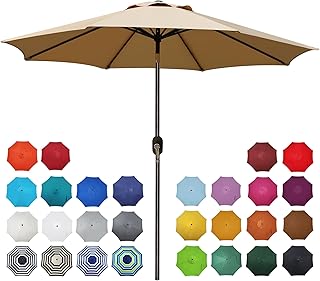
- Canopy color as a light filter: Everything under the umbrella takes on its color. Beige and taupe cast warm, flattering light. Navy and black kill glare and read crisp at night but push cool shadows onto skin and food during the day.
- Base mass and pole diameter: Budget at least 50 lbs of base for a 9-foot market umbrella and 200+ lbs for a cantilever. A stable pole is also your lighting anchor: wrapping a string or clamping a puck light only works if nothing sways.
What's inside
Wind ruins ambience before it ruins hardware. On an exposed deck, the first gust flexes the canopy, the light under it goes from soft and even to strobing and patchy, and everyone at the table starts glancing up instead of at each other. As someone who designs outdoor lighting schemes for a living, I evaluate umbrellas the way I evaluate a diffusion panel: how steadily it holds shape, how it filters daylight, and whether it gives me somewhere to hang a bulb string once the sun drops. A shade that shudders is a shade that flickers.
This guide covers the patio umbrellas that stay composed in real wind, from budget market styles with reinforced ribs to a cantilever built for 35 MPH gusts. For each pick I note the structural details that matter (vent design, rib count, tilt mechanism, canopy weight) alongside the qualities that shape the mood underneath: canopy translucency, reflected color cast, and how forgiving the frame is when you want to add lighting.
As an Amazon Associate we earn from qualifying purchases.


How to Choose a Patio Umbrella For Windy Areas (2026)
- Vented canopy tiers: A two- or three-tier top lets pressure escape through the gap instead of loading the ribs. Tiered vents also bounce a sliver of sky-light downward, which softens the hard-edged shadow you get from a flat single canopy.
- Rib count and material: Eight ribs distribute load far better than six, and fiberglass flexes and recovers where aluminum tends to take a permanent bend. Fewer, stiffer ribs mean more visible canopy ripple, and ripple reads as flicker on faces below.
- Canopy weight and weave: Look for 200 GSM and up. Heavy polyester or solution-dyed fabric hangs taut in a breeze and diffuses light evenly; thin fabric backlights into a hot, glaring panel and telegraphs every gust.
- Canopy color as a light filter: Everything under the umbrella takes on its color. Beige and taupe cast warm, flattering light. Navy and black kill glare and read crisp at night but push cool shadows onto skin and food during the day.
- Base mass and pole diameter: Budget at least 50 lbs of base for a 9-foot market umbrella and 200+ lbs for a cantilever. A stable pole is also your lighting anchor: wrapping a string or clamping a puck light only works if nothing sways.
The Best Patio Umbrellas For Windy Areas (2026) Reviewed
PURPLE LEAF Cantilever 10′ x 10′ Square Double Top
The 35 MPH-rated frame and 240 GSM double top make this the most composed option here in sustained wind, and the offset pole clears the table entirely, which is a gift if you light from a central pendant or centerpiece. The beige canopy throws a genuinely warm daylight wash, and the square geometry casts a clean rectangular shadow that lines up neatly with most dining sets.
EliteShade USA 9ft 3-Tier Market Umbrella
Commercial-grade construction with a three-tier vented top, this is the one I recommend for restaurants and exposed poolside setups where the umbrella lives outdoors all season. The black canopy is the strongest glare-killer of the group and makes ambient lighting read with real contrast after dusk, though expect cooler-toned shade at midday.
9ft 3-Tier Patio Umbrella with 8 Ribs (Navy)
A well-judged balance of triple venting and eight-rib support at a mid-tier price, with push-button tilt that lets you chase low sun without cranking the whole canopy down. Navy holds its color better than most mid-range fabrics and produces a calm, slightly cool shade that pairs well with warm 2200K bulb strings.
JEAREY 9FT Outdoor Table Umbrella (Beige)
Eight sturdy ribs, a waterproof canopy and a smooth crank make this an easy everyday pick for moderately breezy yards rather than genuinely gusty ones. The beige fabric is the standout feature for anyone who cares about mood: it diffuses midday sun into a soft golden light that flatters skin tones and timber decking alike.
9′ Market Umbrella with 8 Sturdy Ribs, Tilt and Crank
The value option, and a sensible one if your patio only sees intermittent wind and you weight the base properly. Tilt and crank both operate cleanly, and the generous 9-foot span gives you enough shade depth to keep glare off a screen or a table setting.
Frequently Asked Questions
Do vented canopies really help in wind?
Yes. The vent gap bleeds off the pressure differential that would otherwise lift the canopy, reducing the load on ribs and the pole joint. Three-tier designs do this more effectively than single vents.
How heavy should my base be?
For a 9-foot market umbrella in a table, 50 lbs is a reasonable floor and 75 lbs is safer freestanding. Cantilevers need 200 lbs or more, usually via a cross base loaded with sand or paver weights.
Can I hang string lights from a patio umbrella?
You can, using rib-clip sets or a light strand woven along the ribs. Keep total weight low and symmetrical, use outdoor-rated LED bulbs, and take the lights down when you close the canopy.
Which canopy color looks best at night?
Dark canopies disappear against the night sky and let your lighting do the work. Light canopies act as a reflector, bouncing uplight back down for a softer, more even glow.
Final Thoughts
For genuinely windy sites, the PURPLE LEAF cantilever is the most stable and the most flexible to light around, while the EliteShade 9ft 3-Tier is the durability pick for exposed commercial-style patios. If you want warm, flattering shade on a normal breezy backyard, the JEAREY 9FT in beige is the easiest recommendation.