Our Top Picks
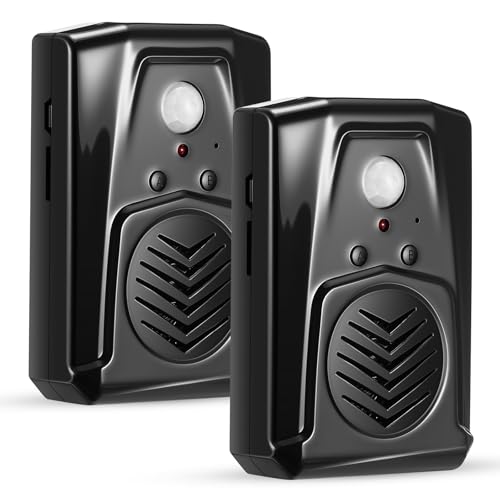 Saysurey 2 Pcs Motion Activated Speaker PIR Sensor4.53 x 2.76 x 2.76 inches0.49 PoundsCheck on Amazon

Motion-activated decorations are the props people talk about the next day: the skeleton that sits up as a child walks past, the witch who cackles when the doorbell is rung. They are also the most likely to disappoint, because the sensor, speaker and batteries all have to work outdoors, in the dark, in late-October weather. This guide covers how these props work, what goes wrong, and how to pick ones that will still be working on Halloween night.
How motion activation works
Most props use a passive infrared (PIR) sensor that reacts to body heat moving across its field of view. Others use a sound sensor or a “try me” button. PIR sensors work well at short range, usually a few feet to a few meters, and poorly through glass, in direct sun, or when wind moves warm air and objects around them. Many props also include a switch between motion mode and always-on mode, which is useful if the sensor is too sensitive.
Types of motion-activated props
| Type | Effect | Best spot | Common problem |
|---|---|---|---|
| Animated figures (witches, reapers, zombies) | Movement, lights, sound | Covered porch | Mechanisms stiffen in cold; not waterproof |
| Jumping or rising props | Jump scare | Beside the path, not on it | Can startle small children too much |
| Talking skulls and heads | Sound with moving jaw | Porch tables, mailboxes | Speakers are quiet outdoors |
| Sound boxes | Screams, laughter, creaks | Hidden in bushes or planters | Repetitive after the tenth trigger |
| Light-up eyes and stakes | Glowing eyes in bushes | Gardens, hedges | Low impact alone |
Weather is the main enemy
Most animated props are not designed to be rained on. Their motors, circuit boards and battery boxes are open to moisture, and one wet night can end them. Put animated figures under a porch roof or covered entry, and use plastic bags or a small shelf to keep battery boxes off wet ground. Props explicitly rated for outdoor use cost more but are the right choice for uncovered yards. Fabric costumes on animatronics also absorb water and become heavy, which strains the motor.
Batteries or plug-in
Battery props are easier to place but drain quickly, especially if a busy sidewalk triggers them every few seconds. Expect to replace batteries during the season, and keep spares for Halloween night itself. Many larger animatronics include an AC adapter option; if yours does, use it with an outdoor-rated extension cord and GFCI outlet. Rechargeable batteries are cheaper over a season, but some props run slightly slower or quieter on rechargeables because of their lower voltage. You can compare motion-activated outdoor Halloween props by power source and size.
Placement and sensor tips
- Point the sensor across the path visitors walk, not straight at the street, so passing cars and pedestrians do not trigger it constantly.
- Keep the sensor out of direct afternoon sun, which can cause false triggers or none at all.
- Place jump-scare props a step or two away from the walking path so nobody trips backward off a step.
- Test after dark from the angle visitors will approach.
Scary enough, but not too scary
Trick-or-treaters range from toddlers to teenagers. Loud jump scares right at the door can make young children refuse to approach. Many props have a volume switch or a tamer “try me” mode; turn it down early in the evening and turn it up after the youngest kids have gone home. Sound-only boxes hidden in a bush give atmosphere without blocking the path.
Which props suit your setup
Covered porch: an animated figure near the door plus a talking skull on the table. Open lawn: weatherproof light-up eyes in the bushes and a sound box, with animatronics kept under cover. Small budget: one good sound box and some lighting usually beat a cheap animatronic that stops working in a week. For hidden effects, look at Halloween motion sensor sound boxes.
FAQ
Can motion-activated Halloween props stay outside in the rain?
Most cannot. Keep them under cover unless the listing specifically says the prop is weatherproof or outdoor rated.
Why does my prop keep going off by itself?
Wind, sunlight and passing traffic can trigger PIR sensors. Re-aim the sensor across the path and away from the street.
How long do the batteries last?
It depends on how often the prop is triggered. A busy sidewalk can drain batteries within days, so carry spares.
Are jump-scare props safe for little kids?
Lower the volume or switch to button mode during early trick-or-treat hours, and keep props off the walking path.