Our Top Picks


Outdoor Halloween decorations live a hard life. They sit in rain, wind and sometimes an early frost for four or five weeks, then get stuffed into a bin until next October. The pieces that earn their storage space are the ones that survive weather, read clearly from the street after dark, and take less than an afternoon to put up. This guide sorts the main types of yard décor by what they actually do well, where they fail, and which kind of yard each one suits.
What matters more than the theme
Before you pick skeletons versus pumpkins, decide three practical things.
Visibility at night. Most trick-or-treaters see your yard after sunset. A large unlit prop disappears into the dark; a small lit one does not. If you only buy one thing, buy something that lights up or reflects light.
Weather rating. Look for “outdoor rated” or an IP44-or-higher rating on anything electrical. Indoor-only light strings and plug-in props are the most common cause of tripped outlets in a rainy October.
Anchoring. Lightweight blow-molds, signs and poseable skeletons blow over or blow away. Ground stakes, zip ties and a few sandbags matter as much as the decoration itself.
The main types, compared
| Type | Best for | Main weakness | Setup effort |
|---|---|---|---|
| Inflatables | Big impact from the street, kids | Needs a constant power and a fan that can fail; sags when off | Low |
| Poseable skeletons | Scenes and humor, reusable for years | Light plastic, must be anchored | Medium |
| Light strings and projectors | Night visibility on any budget | Projectors wash out on light-colored siding | Low |
| Yard stakes and signs | Lining paths, small front yards | Small; mostly invisible at night unless lit | Low |
| Animated props | Porches where people walk close | Batteries drain fast; sensors trigger in wind | Medium |
| Fake tombstones and fencing | Graveyard scenes on a lawn | Foam cracks and fades after a few seasons | Medium |
Inflatables: biggest impact per dollar, with caveats
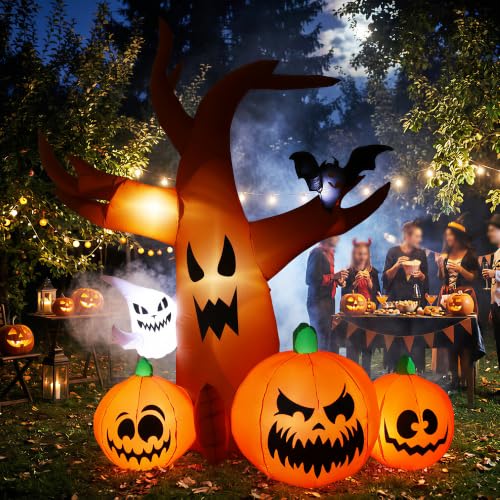
A six- to twelve-foot inflatable is the fastest way to make a yard read as “Halloween” from a block away. Built-in LEDs make them visible at night with no extra lighting. The trade-offs: the blower needs an outdoor outlet or an outdoor-rated extension cord, the fabric looks like a puddle during the day if you run it on a timer, and gusty yards will knock them around unless every tether is staked. If your street gets wind, choose wider, shorter shapes over tall skinny ones. You can browse outdoor Halloween inflatables by height and lighting.
Skeletons and poseable figures
Life-size poseable skeletons became a staple because they are cheap, durable and reusable: you can stage them climbing a fence, sitting on a bench or “gardening” in a flowerbed. Joints that lock in place are worth paying for, because floppy joints sag within days. Run a zip tie from the spine to a stake or railing; a 5.5-foot plastic skeleton weighs very little and the first storm will relocate it. Larger statement skeletons and giant figures look dramatic but need serious anchoring and a plan for storage, which is where many buyers regret the purchase.
Lighting does most of the work
Orange and purple light strings, spotlights aimed at props, and projectors cover a lot of ground for little money. A pair of colored floodlights pointed at a tree or the front of the house changes the whole yard. Projectors are easy but show up poorly on white or light gray siding and on brick with deep mortar lines; they work best on a garage door or a flat, darker surface. Put everything on one outdoor timer so you are not running power at 3 a.m. See outdoor Halloween lights for strings and spotlights rated for wet locations.
Building a scene instead of scattering props
The yards people remember tell one small story: a graveyard by the walkway, a witch’s cauldron with a fog machine, skeletons having a picnic. Group three to five pieces together rather than spreading single items across the lawn. One lit focal point near the door plus a lit path is usually enough for a standard front yard.
Which approach suits your yard
- Small front yard or townhouse: lit path stakes, a wreath or door cover, and one animated prop on the porch.
- Open lawn visible from the street: one large inflatable or a skeleton scene, plus floodlights.
- Windy or exposed lot: heavy resin pieces, ground-staked tombstones and lighting instead of inflatables.
- Renters or HOA rules: removable pieces that do not need nails or permanent hooks; check rules on inflatables and projectors.
Make it last more than one season
Dry everything completely before packing it away; fabric inflatables stored damp will mildew. Remove batteries from animated props so they do not corrode the contacts. Coil light strings around a piece of cardboard instead of stuffing them into a bag. A labeled bin per scene saves an hour next year. Large plastic holiday storage bins with lids keep foam and fabric away from garage moisture and pests.
FAQ
When should I put up outdoor Halloween decorations?
Most people start in early October. Inflatables and electrical pieces are better put up closer to the end of the month to limit weather wear.
Are Halloween inflatables safe to leave on overnight?
They are designed for long run times, but a timer that shuts them off overnight reduces fan wear, saves power and avoids blowers running in storms.
How do I keep decorations from blowing away?
Use every tether and stake provided, add zip ties to railings or fences, and put sandbags on the bases of lightweight props.
Can I use indoor lights outside for one month?
No. Indoor strings are not sealed against moisture. Use outdoor-rated lights and an outdoor GFCI outlet or outdoor-rated extension cords.