Key takeaways
- Fence Length: Longer fences — 18 inches and above — support wider stock without auxiliary jigs. If you regularly crosscut sheet goods or wide boards, prioritize an extendable fence that reaches 30-plus inches. Shorter 360mm fences suit narrow trim and small-box work.
- Angle-Stop Resolution: More positive stops do not automatically equal better results. What matters is how precisely each detent locks. Look for gauges offering at least 13 distinct stops spanning the most-used miters, with stops that seat cleanly without play.
- Micro-Adjust Mechanism: Between-detent adjustment is where finesse lives. A micro-adjust flip stop lets you dial in fractions of a degree for compound miters — the kind of fine-tuning that makes crown molding sit flush against a ceiling plane.
- Slot Compatibility: Most contractor and cabinet saws use a standard 3/4″ × 3/8″ miter slot, but confirm yours before ordering. A gauge that rattles inside the slot defeats every other feature on the tool.
- Build Materials: Aluminum alloy bodies keep weight manageable while maintaining rigidity. Steel-and-brass construction adds heft that can feel more planted during heavy crosscuts. Avoid all-plastic components at the pivot point — that is where long-term accuracy lives or dies.
What's inside
Walk into any well-lit workshop and the first thing you notice is how precision changes the feel of a space — clean cuts catch light differently, tight joints read as intentional rather than accidental. The miter gauge sitting in your table saw slot is the quiet architect of those moments, yet most woodworkers tolerate the flimsy stock gauge shipped with their saw until frustration forces an upgrade. A mediocre gauge introduces fractions-of-a-degree errors that compound across a project, turning what should be a seamless frame into a gap-riddled headache.
This guide breaks down the best miter gauges available in 2026 for home furniture builders and weekend shop enthusiasts. We evaluated each option on fence length, angle-stop resolution, micro-adjust capability, and slot fit — the variables that separate a satisfying crosscut from a ruined workpiece. Below you will find curated recommendations and a straightforward buyer’s framework to help you match a gauge to your specific workflow.
As an Amazon Associate we earn from qualifying purchases.


🛒 Best Price Today on Amazon
Prime members get fast, free shipping on everything above, plus member-only deals. New members get a 30-day free trial — cancel anytime.
How to Choose a Mitre Gauge For Table Saw (2026)
- Fence Length: Longer fences — 18 inches and above — support wider stock without auxiliary jigs. If you regularly crosscut sheet goods or wide boards, prioritize an extendable fence that reaches 30-plus inches. Shorter 360mm fences suit narrow trim and small-box work.
- Angle-Stop Resolution: More positive stops do not automatically equal better results. What matters is how precisely each detent locks. Look for gauges offering at least 13 distinct stops spanning the most-used miters, with stops that seat cleanly without play.
- Micro-Adjust Mechanism: Between-detent adjustment is where finesse lives. A micro-adjust flip stop lets you dial in fractions of a degree for compound miters — the kind of fine-tuning that makes crown molding sit flush against a ceiling plane.
- Slot Compatibility: Most contractor and cabinet saws use a standard 3/4″ × 3/8″ miter slot, but confirm yours before ordering. A gauge that rattles inside the slot defeats every other feature on the tool.
- Build Materials: Aluminum alloy bodies keep weight manageable while maintaining rigidity. Steel-and-brass construction adds heft that can feel more planted during heavy crosscuts. Avoid all-plastic components at the pivot point — that is where long-term accuracy lives or dies.
The Best Mitre Gauge For Table Saw (2026) Reviewed
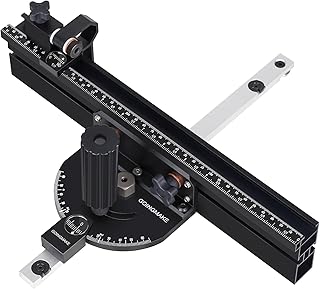
GOINGMAKE Extendable Fence Miter Gauge
The standout for versatility: its fence extends from 18 to 32 inches, giving you serious reach when cutting wider panels without bolting on a sacrificial auxiliary. Thirteen angle stops and a micro-adjust flip stop round out a package that handles everything from mitered drawer fronts to angled shelf brackets. This is the gauge to buy if you want one solution that grows with your shop.
GOINGMAKE 18″ Fence Miter Gauge with Micro Adjust
For furniture builders who work primarily within a breadboard-width envelope, this compact 18-inch model delivers the same micro-adjust flip stop and 13 precision detents in a lighter, easier-to-store package. It tracks straight through repeated cuts — essential when you are batching out chair rail segments or picture-frame components and need every piece to match.
VEVOR Precision Miter Gauge
VEVOR’s aluminum-alloy offering brings a spring-loaded plunger and 15 angle stops at a price point that undercuts most competitors. The removable disc feature is genuinely useful for zero-clearance setups. If you are outfitting a first shop on a budget, this gauge punches well above its price tag.
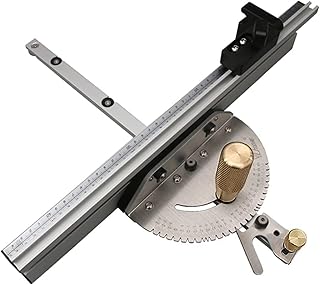
WEN WA1401 Premium Miter Gauge
Steel-and-brass construction gives the WA1401 a reassuring density in hand. Twenty-seven angle stops across 270 degrees provide granularity that the others lack, making it ideal for luthiers, instrument makers, and anyone whose work demands unusual compound angles. The build quality suggests it will still be accurate a decade from now.
GOINGMAKE Compact 360mm Miter Gauge
The most compact option here pairs a 360mm fence with a multifunction flip stop and generous angle-stop coverage. It excels in tight spaces — under-cabinet work, small-batch crafts, or shops where every square inch of benchtop matters. Consider it the precision instrument of the group.
Frequently Asked Questions
Can I use these miter gauges on a router table?
Yes. Most of the gauges reviewed here fit standard 3/4″ × 3/8″ slots found on router tables, band saws, and disc sanders. Always measure your slot before purchasing, but the universal sizing on these models covers the vast majority of machines.
How much accuracy improvement will I notice over a stock miter gauge?
Substantial. Factory gauges typically allow 1–2 degrees of slop in the slot. A quality aftermarket gauge eliminates that play entirely, meaning miter joints close tightly without clamping pressure masking gaps. You will notice the difference on your very first crosscut.
Do I need an extendable fence?
Not necessarily. If your projects involve stock narrower than 16 inches, an 18-inch fence is sufficient. But once you begin cutting panels, wide drawer fronts, or anything requiring a reference surface beyond your body’s reach, an extendable fence becomes a safety feature as much as an accuracy one.
What maintenance do miter gauges require?
Keep the bar clean and lightly waxed so it slides without binding. Periodically check your detents for debris buildup, and if your gauge has a micro-adjust screw, apply a drop of threadlocker after dialing in your calibration. Beyond that, store it flat and treat it with respect — these are precision instruments.
Final Thoughts
For most home furniture builders, the GOINGMAKE Extendable Fence Miter Gauge hits the best balance of range, precision, and value. Budget-conscious shoppers should look closely at the VEVOR, while those demanding maximum angle resolution will find the WEN WA1401 worth the premium. Any of these five will elevate your crosscuts from acceptable to genuinely precise — and that precision is what turns raw lumber into furniture worth keeping.