Key takeaways
- Sheen level over color: Aim for a satin or low-sheen finish, roughly 10 to 25 percent gloss. Matte finishes absorb too much of your ambient layer and make rooms read gloomy under warm bulbs, while semi-gloss and lacquered tops throw specular hotspots that fight your TV and catch every overhead fixture.
- Raised-panel glare geometry: When lifted, the top tilts or rises into a new plane. Check whether that plane sits between your lamp and your seated eye level. Tables that rise straight up with minimal tilt cause fewer reflection problems than steeply angled designs.
- Edge and texture detail: Fluting, beveled edges, and visible grain create micro-shadows that give a surface depth under directional light. Flat, featureless slabs look flat under lamplight no matter how good the material is.
- Interior visibility: Hidden compartments are dark caves. Light-colored interiors, shallow depths, or open shelving mean you can actually find things without a phone torch, which matters more than it sounds at low evening light levels.
- Gas spring versus friction hinge: A gas spring holds position and moves smoothly one-handed. Friction mechanisms drift and require both hands, which is a genuine annoyance when you’re holding a drink in a dim room.
What's inside
Lift top coffee tables get judged on mechanism and storage, and almost never on how they behave under light. That’s a mistake. This is the one piece of furniture sitting directly beneath your primary evening light source, at the exact height where lamplight rakes across a surface rather than falling straight down. A high-gloss top will bounce your floor lamp back into your eyes at sofa-seated height. A raw matte finish will swallow the same lumens and leave the room feeling dim at 8pm. And the moment you lift that top, you’ve created a new reflective plane roughly 8 inches higher, angled slightly, right in the sightline of anyone watching a screen.
I light rooms for a living, so this guide reads these tables the way I’d read any surface in a lighting plan: sheen level, edge behavior, shadow depth, and what happens to the ambience when the top is raised. Below are six lift top tables assessed for mechanism quality and storage volume, yes, but also for how they hold light in a real living room at real evening brightness levels.
As an Amazon Associate we earn from qualifying purchases.


🛒 Best Price Today on Amazon
Prime members get fast, free shipping on everything above, plus member-only deals. New members get a 30-day free trial — cancel anytime.
How to Choose a/an Lift Top Coffee Table (2026)
- Sheen level over color: Aim for a satin or low-sheen finish, roughly 10 to 25 percent gloss. Matte finishes absorb too much of your ambient layer and make rooms read gloomy under warm bulbs, while semi-gloss and lacquered tops throw specular hotspots that fight your TV and catch every overhead fixture.
- Raised-panel glare geometry: When lifted, the top tilts or rises into a new plane. Check whether that plane sits between your lamp and your seated eye level. Tables that rise straight up with minimal tilt cause fewer reflection problems than steeply angled designs.
- Edge and texture detail: Fluting, beveled edges, and visible grain create micro-shadows that give a surface depth under directional light. Flat, featureless slabs look flat under lamplight no matter how good the material is.
- Interior visibility: Hidden compartments are dark caves. Light-colored interiors, shallow depths, or open shelving mean you can actually find things without a phone torch, which matters more than it sounds at low evening light levels.
- Gas spring versus friction hinge: A gas spring holds position and moves smoothly one-handed. Friction mechanisms drift and require both hands, which is a genuine annoyance when you’re holding a drink in a dim room.
The Best Lift Top Coffee Table (2026)s Reviewed
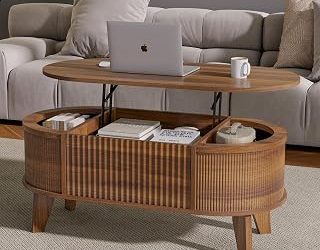
LYNCOHOME Fluted Lift Top Table (Walnut)
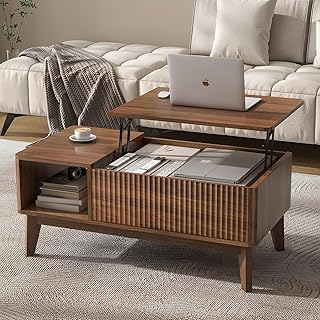
The fluted front is the standout feature from a lighting perspective: those vertical channels catch grazing light from a floor lamp and produce a soft ribbed shadow pattern that adds real dimension to the room at low brightness. The walnut tone keeps reflectance moderate, so it grounds a seating area without going murky.
VASAGLE 3-in-1 Lift Top Center Table
The two-tone honey brown and rustic white treatment does something clever: the pale surfaces lift ambient light back into the room while the darker frame keeps the piece visually anchored. Gas spring assist, two drawers, three hidden compartments, and an open shelf make it the most storage-dense option here, and the white interior surfaces genuinely help you see inside.
Solid Oak Wood Lift Top Coffee Table
FAS-grade solid oak with open grain is the best light-responsive surface in this group. Warm bulbs at 2700K pull the amber tones forward and the grain texture reads beautifully under any directional source, plus arriving 95 percent pre-assembled means you aren’t building furniture on your living room floor.
VASAGLE Lift Top Dining Table (Rustic Brown)
This one lifts high enough to work as a genuine dining or laptop surface, which makes raised-position glare the real consideration. The low-sheen rustic brown finish handles it well, staying diffuse under overhead light instead of mirroring your ceiling fixture back at you.
Itaar 39.4″ Farmhouse Lift Top Table
The vintage white and walnut split gives you a bright top surface that acts as a subtle bounce panel for lamplight, paired with a warmer base. Adjustable interior shelves and a large hidden compartment make it practical, though the pale top will show ring marks under raking light.
Frequently Asked Questions
Does a dark coffee table make a room feel darker?
Somewhat, yes. A dark top absorbs light that a pale surface would reflect back up into the room. If you’re working with limited lighting, a lighter top adds usable bounce; if you’re already well lit, a darker table adds welcome contrast.
Will a glossy top reflect my TV?
Almost certainly, particularly in a dark room. Satin and matte finishes scatter that reflection instead of mirroring it, which is why I steer people away from lacquered tops in media rooms.
How much weight can a lift top hold?
Most gas spring mechanisms handle 30 to 50 pounds on the raised surface. Laptops, plates, and drinks are fine; don’t lean on it.
Do fluted or textured fronts actually matter?
Under directional light, absolutely. Texture creates micro-shadow that gives a piece visual depth, whereas flat panels look inert once the overhead light goes off.
Final Thoughts
For the best balance of light behavior and build, the Solid Oak Wood table wins on grain, warmth, and assembly ease. The LYNCOHOME Fluted model is my pick for anyone lighting with lamps rather than ceiling fixtures, since that ribbed front earns its keep after dark, and the VASAGLE 3-in-1 remains the smart choice if storage capacity is what’s actually driving the purchase.