
Key takeaways
- Target Audience: Adult
- Recommended Uses For Product: Endurance, Exercise and Fitness, Speed
- Item Length: 280 Centimeters
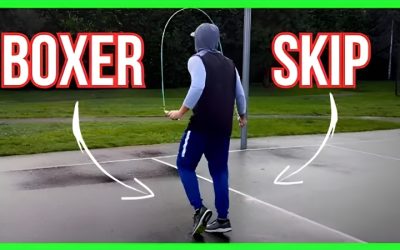
Jumping rope is one of the few skills where the equipment should change as you improve. A beginner needs a rope that gives feedback — something heavy and slow enough that you can feel where it is in the arc, so you learn timing rather than guessing. An intermediate jumper needs consistent, predictable rotation to build unbroken sets. Someone chasing double unders needs a thin cable that moves fast enough to pass under the feet twice. Those are three genuinely different tools, and trying to learn on the third one is why so many people conclude they are bad at skipping.
The classic mistake is buying a competition speed cable first. A 2 mm coated wire whips around invisibly, gives almost no tactile feedback, and punishes every timing error with a sting across the shins. Start with a beaded or heavier PVC rope, which rotates slowly enough to teach rhythm and makes an audible click on each pass so you learn the timing by ear. Once the movement is automatic, moving to a faster cable feels like an upgrade rather than a fight. Here is the gear that maps onto each stage of that progression.
Our top picks

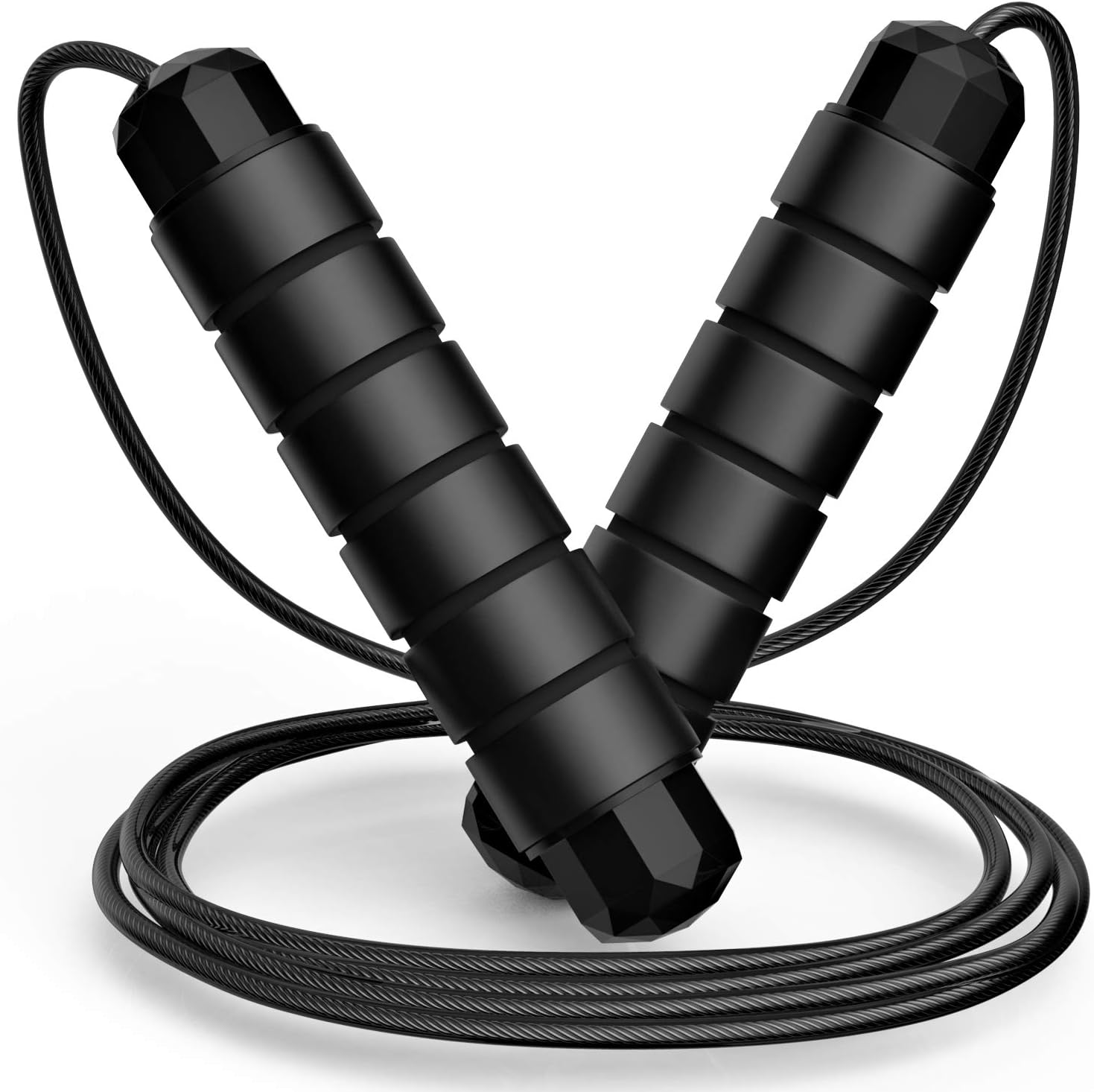 Jump Rope
- Target Audience: Adult
- Recommended Uses For Product: Endurance, Exercise and Fitness, Speed
- Item Length: 280 Centimeters
Ball bearings support fast, tangle-free rotation
Foam handles stay comfortable even during longer sessions
Adjustable 280 centimeter length suits most adult heights
Steel-core rope is less forgiving than soft training ropes
Suited more to smooth flooring than rough outdoor surfaces


As an Amazon Associate we earn from qualifying purchases at no extra cost to you.
Quick Comparison
| Product | Best For | Standout Feature | Watch Out For |
|---|---|---|---|
| 101 Best Jump Rope Workouts | Structuring progression | Ready-made sessions by level | Assumes you can already skip |
| Tangle-Free Speed Rope | Intermediate consistency | Ball bearings, smooth rotation | Too fast for absolute beginners |
| Honor Athletics Pro Boxing Rope | Long conditioning rounds | 5.3 mm cord, durable outdoors | Heavier on the shoulders |
| YUEDONG Beaded Rope for Kids | Learning the timing | Soft TPU beads, audible rhythm | Slow ceiling for advanced work |
| Kids Segmented Speed Rope | Younger beginners | Dual bearings, anti-tangle cord | Handle size suits small hands |
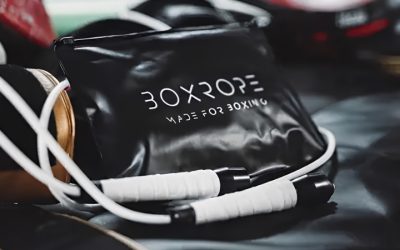
| BOXROPE Boxing Jump Rope | Building rhythm under fatigue | 15% heavier than standard PVC | Not suited to speed work |
How to Choose
- Start heavy, finish light: A heavier rope rotates slower and gives tactile feedback that teaches timing. Thin speed cables reward a skill you do not have yet, which is why they discourage beginners so effectively.
- Listen for the rhythm: Beaded ropes click audibly on each pass, and that sound is a genuine coaching tool. Many people learn the timing by ear faster than by feel.
- Size before you jump: Stand on the middle of the rope; the handles should reach roughly your armpits for learning and around chest height once you are proficient. A rope that is too long drags and trips you constantly.
- Bearings matter at speed: Ball-bearing handles keep rotation consistent as you get faster. At beginner speeds the difference is negligible, which is another reason not to pay for it too early.
- Have a plan, not just a rope: Unstructured skipping plateaus fast. A written progression from single unders through intervals to skill work is what turns a rope into training.
Top Picks Reviewed
Best for Learning: YUEDONG Beaded Rope for Kids
Despite the name, this is one of the most effective learning tools for adults too. The soft TPU beads add weight to the arc, slowing rotation to a pace you can actually track, and the click on each ground contact gives you an audible metronome. The thumb-groove grip also encourages the correct wrist-driven turning technique rather than swinging from the elbows.
Its ceiling is low. Once you can hold a hundred consecutive singles, the beaded rope becomes the limiting factor and you will want something faster. Treat it as a stage rather than a permanent rope.
Best for Younger Beginners: Kids Segmented Speed Rope
The segmented anti-tangle cord holds its shape and does not develop the permanent kinks that make cheap children’s ropes unusable within a week. Dual bearings keep rotation smooth even with the inconsistent turning speed a beginner produces.
The handles are sized for smaller hands, which means adults will find them cramped. This is genuinely a children’s rope rather than a small-handled general-purpose one.
Best Intermediate Rope: Tangle-Free Rapid Speed Rope
Once the basic timing is automatic, this is the natural next step. The ball-bearing handles deliver consistent rotation at higher cadences, and the tangle-free cable holds its shape between sessions, which matters more than it sounds when you are trying to string together long unbroken sets.
Given to a genuine beginner it is counterproductive — it moves too fast to learn on and it stings when it catches. Earn your way to it rather than starting here.
Best for Conditioning Rounds: Honor Athletics Pro Boxing Rope 3.0
The 5.3 mm cord is thick enough to survive concrete and outdoor surfaces that destroy thin coated cables, and it has the weight to feel substantial through long rounds. For three-minute conditioning blocks it is more satisfying than a whisper-light speed cable.
That weight accumulates in the shoulders and forearms. On extended sessions you will feel it in the arms before the legs, which is a genuine training stimulus but not what everyone is after.
Best for Rhythm Under Fatigue: BOXROPE Boxing Jump Rope
Around fifteen percent heavier than a standard PVC rope, this sits in a useful middle ground: fast enough for continuous work, heavy enough that you can feel the arc when your form starts to fall apart late in a round. That feedback is exactly what keeps a tired jumper from tripping every twenty reps.
It is not a speed rope. Double unders are possible but ungainly, so if fast skill work is the goal you will need a thinner cable alongside it.
Best Programming Resource: 101 Best Jump Rope Workouts
Most people skip in an unstructured way and stop improving after a few weeks. A book of graded sessions solves that, giving you intervals, rounds and skill progressions rather than a vague plan to jump for ten minutes.
It assumes you can already perform basic single unders reliably. An absolute beginner should spend a few weeks with a beaded rope building the fundamental timing before this becomes useful.
Frequently Asked Questions
What kind of jump rope should a complete beginner buy?
A beaded or heavier PVC rope. The extra weight slows rotation so you can feel and hear where the rope is, which is how timing is learned. Thin speed cables are far harder to learn on and discourage most beginners.
How long should my jump rope be?
Stand on the centre of the cord. For learning, the handles should reach roughly your armpits; as you improve, shortening to around chest height gives faster, tighter rotation. Most ropes adjust, so start long and trim gradually.
How long does it take to learn double unders?
Most people need a few weeks of consistent single unders first, then several sessions of dedicated practice. Trying them before you can hold a hundred unbroken singles usually just produces frustration and welts.
Is a weighted rope better for fitness?
It recruits more shoulder and forearm work and raises heart rate faster at the same cadence. It is also harder on the joints of the upper body over long sessions, so it works better as a variation than as your only rope.
Final Thoughts
If you are starting out, the YUEDONG Beaded Rope teaches timing faster than anything else here because you can hear and feel every rotation. Once the basics are automatic, the Tangle-Free Rapid Speed Rope is the natural progression for consistent, faster work. And to stop the plateau that catches most self-taught jumpers, 101 Best Jump Rope Workouts supplies the structure that a rope alone never will.

Write Your Review
No reviews yet. Be the first to share your experience!